No Major for s1mple? Valve’s New VRS Rule Kicks BC.Game Out of the Asia Race
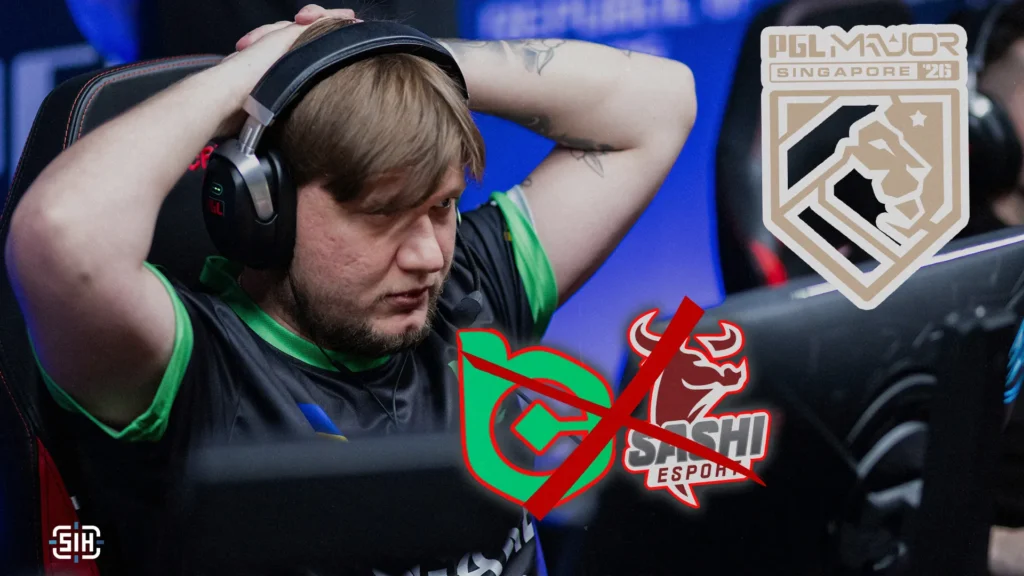
A week ago, s1mple’s road to the PGL Major Singapore 2026 looked all but paved. One surgical signing, a move to the Asian VRS, and BC.Game’s invite odds rocketed from single digits to 85%+. Then, on October 6, Valve tore the whole thing down with a single line in the rulebook — one month before invites go out.
As usual, the community split down the middle in minutes. Some call it long-overdue housekeeping. Others call it madness: a move that wrecks roster planning and kneecaps the biggest storyline of the season. Here’s what actually changed, who pushed Valve over the edge, and whether BC.Game still have a shot at “finding a solution.”
What changed
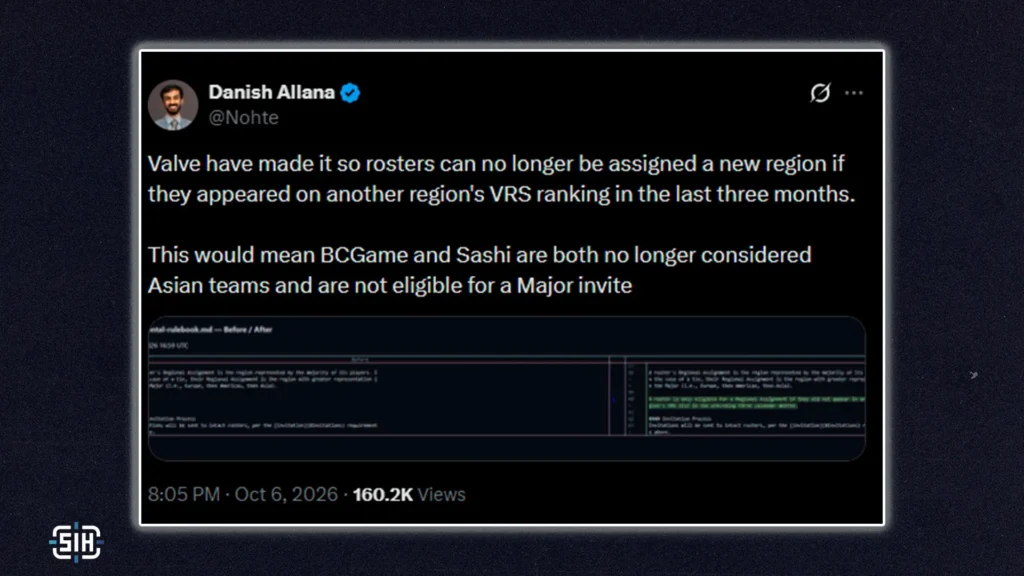
Valve added one sentence to the Major Supplemental Rulebook on GitHub: “A roster is only eligible for a Regional Assignment if they did not appear in any other region’s VRS list in the preceding three calendar months.” The commit itself is titled as an update to Regional Assignment rules for the upcoming Singapore Major.
The old rule is still there: a team’s region is decided by the majority of its players. Get three Asia-Pacific players on the roster and you’re an Asian team, no matter where the org is based or where it’s played all season. That’s exactly what every one of these switches was built on. Now the majority rule comes with a probation period.
HLTV reached out to Valve and got some key clarifications:
- The rule applies to the Singapore Major. Not next cycle — right now.
- The three months are counted back from when invites go out, not from the start of the event. The reference points are Valve’s official monthly VRS updates, released on the first Monday of each month. The final standings for Singapore invites drop on November 2, which means August, September and October all have to be clean.
- It only affects the Major. Teams still get VRS invites to other events based on their current region, and they can switch regions at any time.
- Teams that swapped regions ahead of Singapore are out of the Major race — unless they reach out to Valve and find a solution.
That last point is where the arguments started. The wording leaves the door cracked open, but nobody knows what’s on the other side.
How BC.Game ended up in Asia
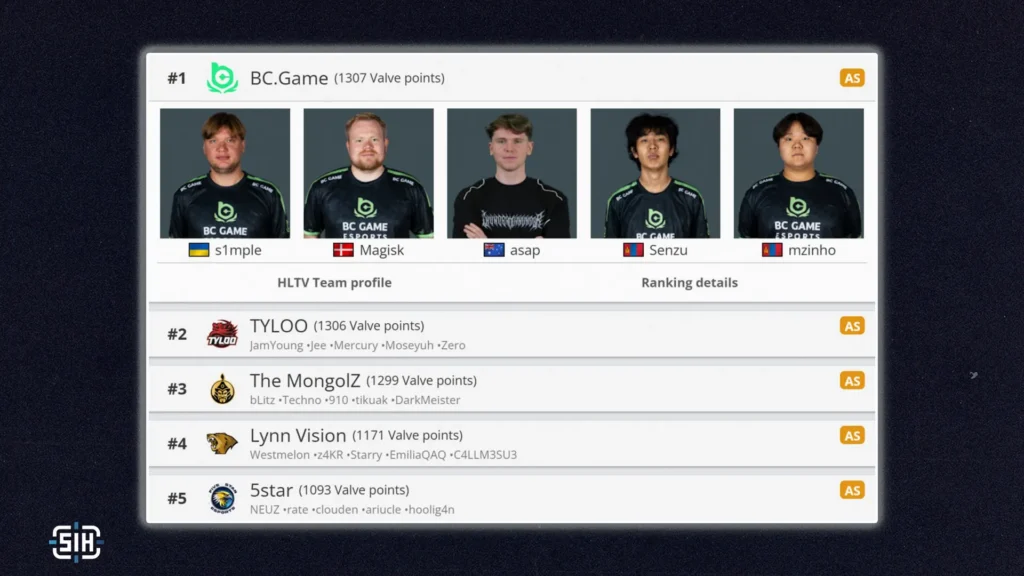
BC.Game’s path to the Asian side was built step by step. Senzu arrived in the summer, followed by mzinho — two Mongolian players, both with Major experience from their time with The MongolZ. That left the team one player short of a region switch.
That player was Australian rifler asap. On September 22, BC.Game benched electroNic, and the team automatically moved from the European VRS to the Asian one. With the exact same points, they went from 36th in Europe to fourth in Asia. Their invite odds, according to analysts’ simulations, jumped from 2–9% to 85–87%. And after their latest matches, BC.Game climbed all the way to the top of Valve’s Asian rankings.
s1mple later said on stream that he had no say in the electroNic call and found out about the swap roughly ten hours before the announcement (make of that what you will). The move drew criticism right away: on HLTV Confirmed, Professeur called it sad that a star-studded roster had to go looking for a back door.
Still, by Valve’s October VRS update, BC.Game were officially listed as an Asian team. It looked like a done deal.
The final straw: Sashi
On October 5, Danish side Sashi announced their own move to Asia. The org signed Australians TjP and Hatz on a temporary basis, benching MistR and Cabbi. The third “Asian” player was Anlelele, who holds Vietnamese citizenship. The maneuver would have taken Sashi from 54th in Europe to fifth in Asia without winning a single extra match.
Sashi titled their announcement “If you can’t beat them, join them.” The shot at BC.Game was obvious, and Sashi had their reasons:
- On October 2, BC.Game’s new Asian lineup knocked out Sashi, killing their chances at upcoming events.
- On October 6, a rule triggered by Sashi’s own move cost BC.Game the Major.
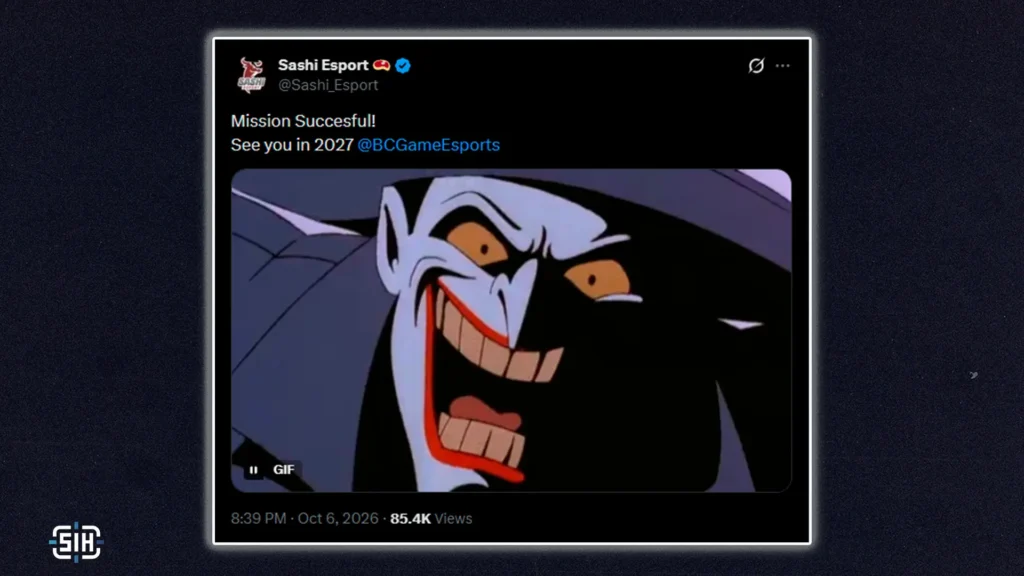
Once the new rule went public, Sashi’s first move was to gloat at BC.Game on social media — even though their own switch had just gone up in smoke too.
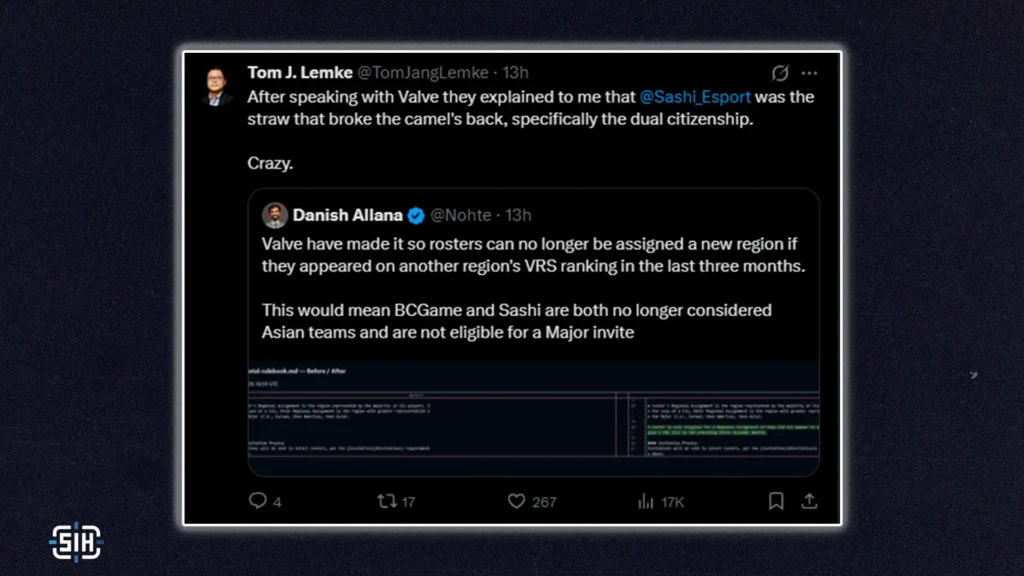
Tom Lemke — founder of SavageTech and co-founder of MOUZ and BIG — shed some light on what tipped the scales:
“After speaking with Valve they explained to me that Sashi was the straw that broke the camel’s back, specifically the dual citizenship. Crazy.”
Valve had apparently been watching the region-hopping for a while, but gaming passports for an invite crossed the line into outright abuse. And this time Valve moved unusually fast — the company tends to change rules cautiously and with plenty of lead time. Sashi’s stint as an Asian team lasted about 24 hours.
How it unfolded
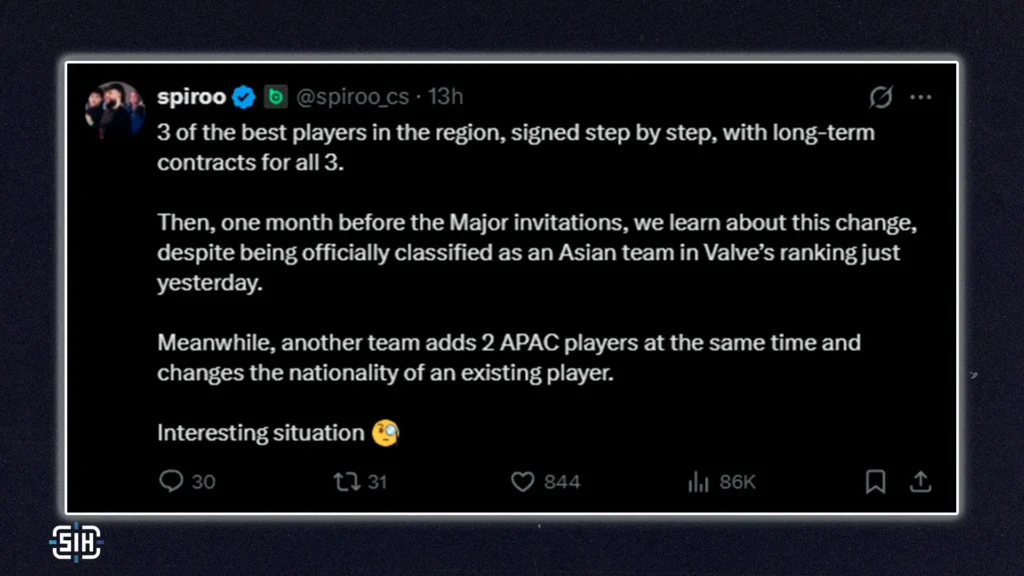
The news spread within minutes. HLTV senior writer Danish Allana was first to spell it out: BC.Game and Sashi are no longer considered Asian teams and aren’t eligible for a Major invite.
BC.Game CS team manager spiroo laid out the team’s side:
“Three of the best players in the region, signed step by step, on long-term contracts for all three. Then, a month before Major invites, we find out about this change, even though just yesterday the team was officially classified as Asian in Valve’s rankings. Meanwhile, another team adds two APAC players at once and switches the citizenship of one of its existing players. Interesting situation.”
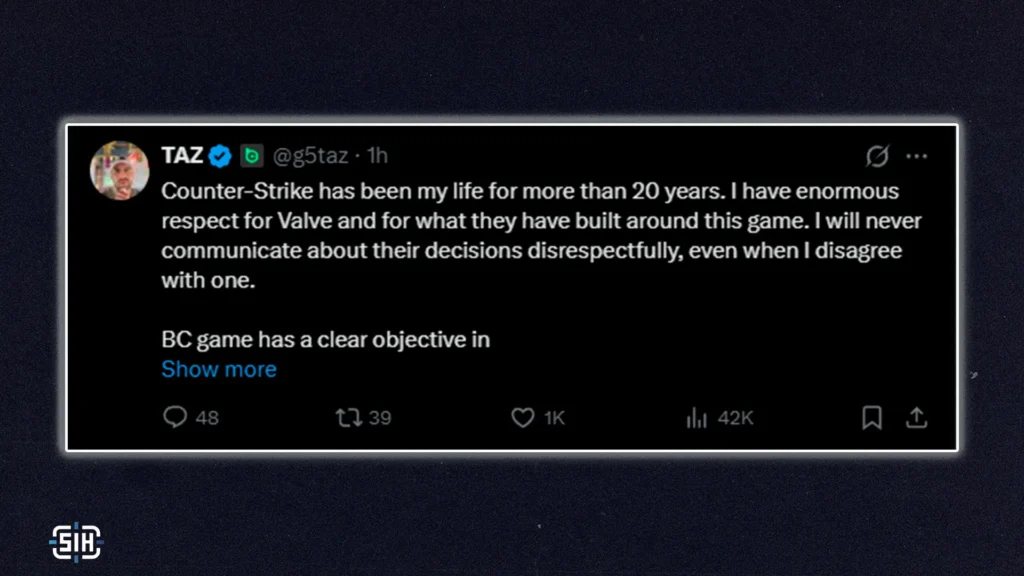
BC.Game coach TaZ followed up. He made a point of his respect for Valve but took issue with the timing:
“We followed the rules that were in place at the time. I made it clear internally that we wouldn’t switch regions just for the sake of it, and that we’d only sign a player if he genuinely made us better. I understand the purpose of the new rule — the problem is the timing. Teams sign contracts and plan their calendars around the rules as they stand, and changing them right before qualification sets a dangerous precedent. Nothing was guaranteed for us: we could still have missed out in both Europe and Asia. We’ll stay in contact with Valve and respect whatever final decision is made.”
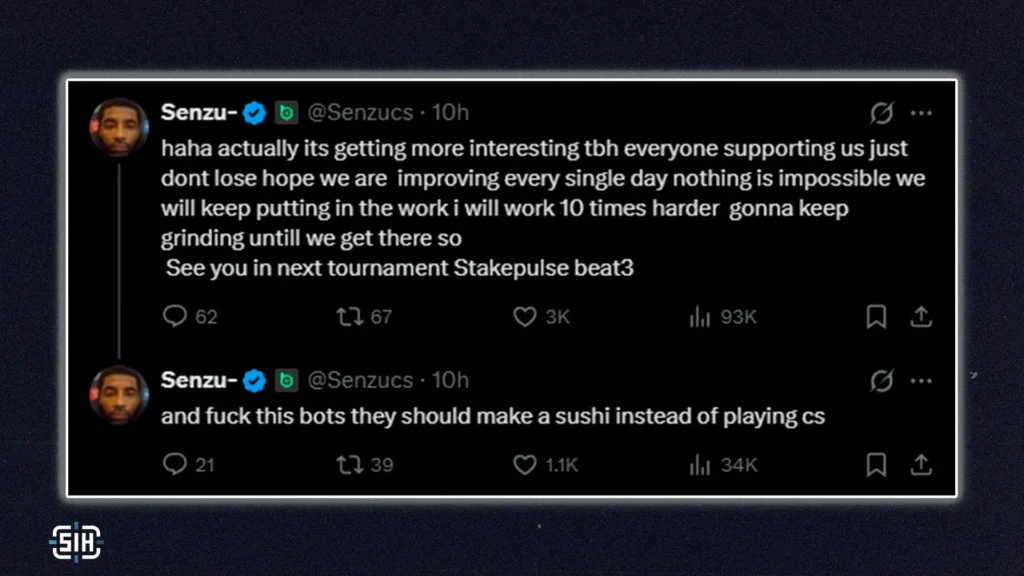
Senzu kept it upbeat, with a small jab at Sashi on the side:
“Haha, it’s actually getting more interesting. Everyone who supports us — don’t lose hope. We’re improving every day, nothing is impossible. I’ll work 10 times harder until we make it. See you at the next tournament! And screw those bots — they’d be better off making sushi than playing CS.”
BC.Game CEO akofocus, meanwhile, hinted that this story might not be over:
“I have some information. I’ll share it with you later.”
The scene read it as a signal that BC.Game may already be talking to Valve about that “solution.”
How the scene reacted
Against Valve's call

The loudest critic was Thorin, who put out a dedicated video. His case boils down to three points.
First, timing. Changing the rules right before invites, Thorin argues, is insane: how is anyone supposed to plan a roster when the rules shift a month out from the deadline? For teams like BC.Game, millions of dollars can be on the line.
Second, viewership. s1mple still carries enormous weight in CS and esports as a whole. His return to the Major would have drawn huge interest from the very first stage — and Valve crossed that out themselves.
Third, the mechanics. Thorin’s alternative: require teams to spend a set number of days in their new region. That way, Mongolian, Chinese or Australian teams would get to play against the incoming stars, learn from it and grow — so the region would gain from the move instead of losing a slot.
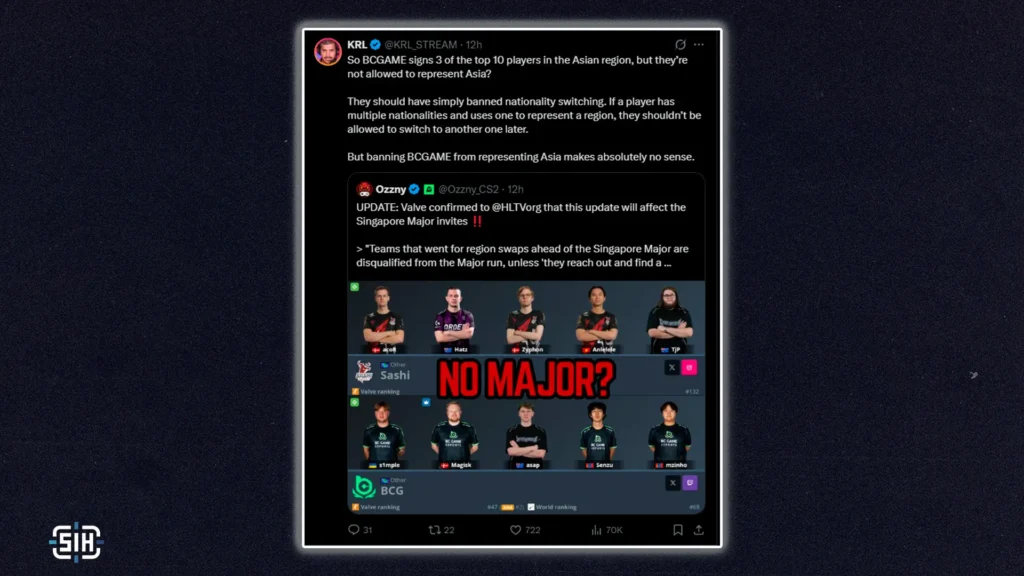
Streamer KRL put it even more bluntly:
“So BC.Game signed three of the top ten players in Asia, but they’re not allowed to represent Asia? They should’ve just banned citizenship switching. If a player has multiple nationalities and uses one to represent a region, he shouldn’t be allowed to switch to another later. But banning BC.Game from representing Asia makes no sense at all.”
In favor of Valve's call
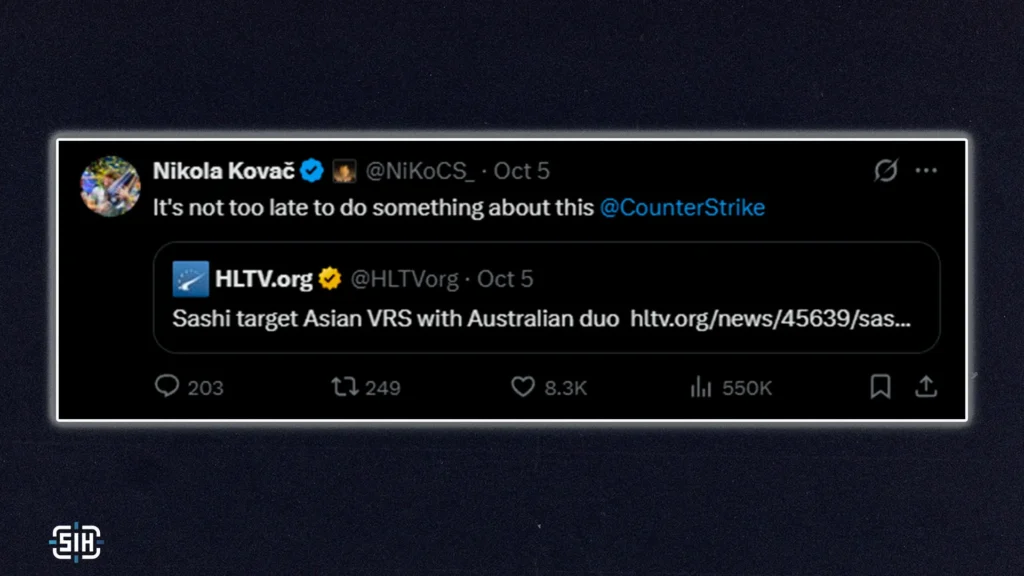
NiKo weighed in before the ruling, right after Sashi’s move, with a short post: “It’s not too late to do something about this.” As it turns out, Valve agreed.
Insider and Spirit scout Overdrive was even more direct:
“Beautiful move from Valve. Way too many freeloaders showed up wanting to stroll into the Major like it’s a weekend at the cottage.”
The decision also has plenty of backers in Asia itself. Their main argument: the region already gets the fewest Major slots, and every team migrating from Europe takes a spot from someone who spent the whole season grinding it out on the local scene.
SIH's take
It’s undeniably a good thing that Valve are finally paying attention to region-hopping. Interestingly, Mischief had already proposed a fix: assign a team’s region based on where it played most of its matches over the past two months, with a minimum of ten games. That would have weeded out “week-before-the-deadline” switches without punishing teams that are genuinely rebuilding. Valve went for something far simpler: a flat three months, no context considered.
And let’s call it what it is: on a global level, nothing about region switching has really changed. You can still build an Asian majority through signings and second passports — you just have to do it three months earlier. In practice, Valve reacted in the moment to keep specific teams out of Singapore. If the decision were truly about protecting fair competition in the region, the rules would be much tougher. Preserving CS’s geography clearly matters to Valve, but that calls for real structural steps — limits on citizenship switches, requirements for where a team is based or how many matches it plays in the region — not a three-month probation period.
Context matters here, too. BC.Game had been playing with two Mongolians for a long time, signed just one player, and did it well in advance — unlike Sashi, who threw together a temporary lineup overnight and leaned on a second passport. That’s why we wouldn’t rule out Valve making an exception for BC.Game and letting the region switch stand. That “find a solution” clause looks like it was written with exactly this kind of case in mind.
That said, let’s be honest: if BC.Game’s players weren’t the ones caught by the rule, the community probably wouldn’t be coming down on Valve this hard. Hardly anyone spoke up for Sashi or WW. But Valve really did need to think ahead — teams have been exploiting this gap for more than one season, and closing it a month before invites, retroactively knocking out teams that played strictly by the rules in force, is not the best way to restore order.
Valve, true to form, stepped in without wanting to deal with the bigger picture. Showing some backbone is good, and the company deserves credit for it. But doing it with half-measures looks a little careless. So we’re eager to see where this goes next — this story can’t end like this!

Alex
Alex is an author and esports observer with more than seven years of experience. He specializes in analyzing new releases in the world of computer games, gaming services, and in-game economies. Alex shares practical experience and an expert perspective on the development of gaming, helping readers understand complex mechanics and stay up to date with the latest news.

