Sixty-Four Teams Under One Roof: Why EWC in Paris Should Terrify the Major
For three days in Paris, Counter-Strike looked the way it hasn’t looked in twenty years. Sixty-four teams showed up for the Esports World Cup’s open LAN qualifier to fight over just four slots into the main bracket, where 28 more were already waiting. Add it up and you get a LAN event with nearly a hundred teams in one place — one shared hall, tables shoulder to shoulder, and s1mple sitting a couple of metres from a roster you’d never heard of the day before.
We watched the whole thing and landed on an uncomfortable thought: the biggest tournament of the year, in terms of sheer scale and emotion, isn’t being run by VALVE. So let’s get into it — why this matters, what EWC got right, where they dropped the ball, and what the people at VALVE’s Bellevue office need to take away from it.
Counter-Strike hasn't thrown a party like this since the 2000s
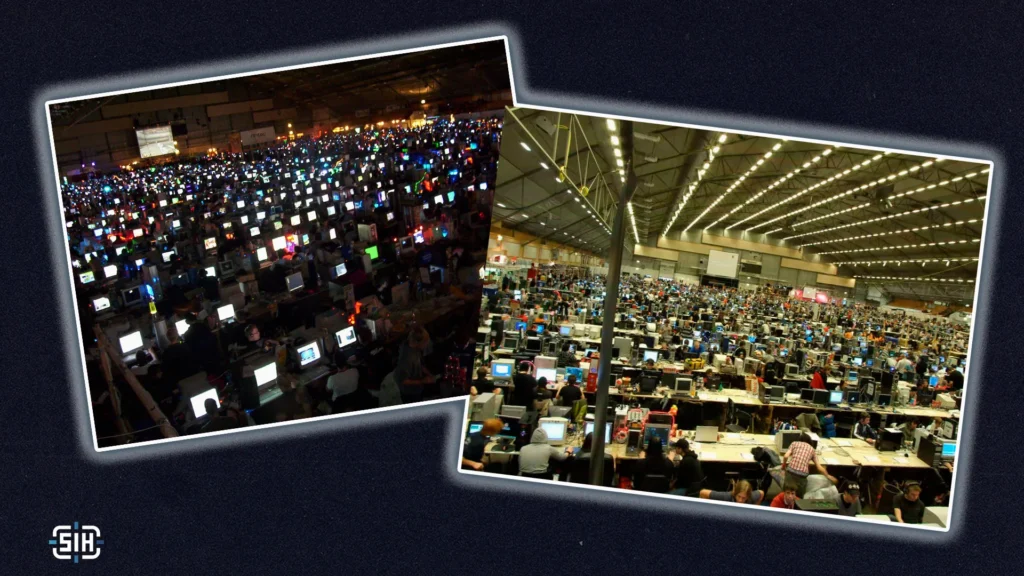
The community’s old heads went straight to the archives: Copenhagen Games, GameGune, the original DreamHack — back when open LANs with hundreds of entrants were just how things worked, not a novelty act. Back then, the road to the pro scene started with buying a ticket, hauling your own peripherals into a packed hall, and sitting down across from people you’d only ever seen on stream.
That’s exactly what EWC brought back. Yes, you had to get yourself there on your own dime — but nowhere else does that door even exist. No tier-1 operator today gives you a shot at going from complete unknown to the stage of a $2 million event in three days. You either grind VRS points online for years, or you don’t exist.
And that’s the real value of the format: it gave Counter-Strike back the feeling of an open door. Not an abstract one, not a “theoretically reachable after eighteen months of grinding” one — right there, right now. Sign up, show up, sit down, play.
An operation VALVE has never matched
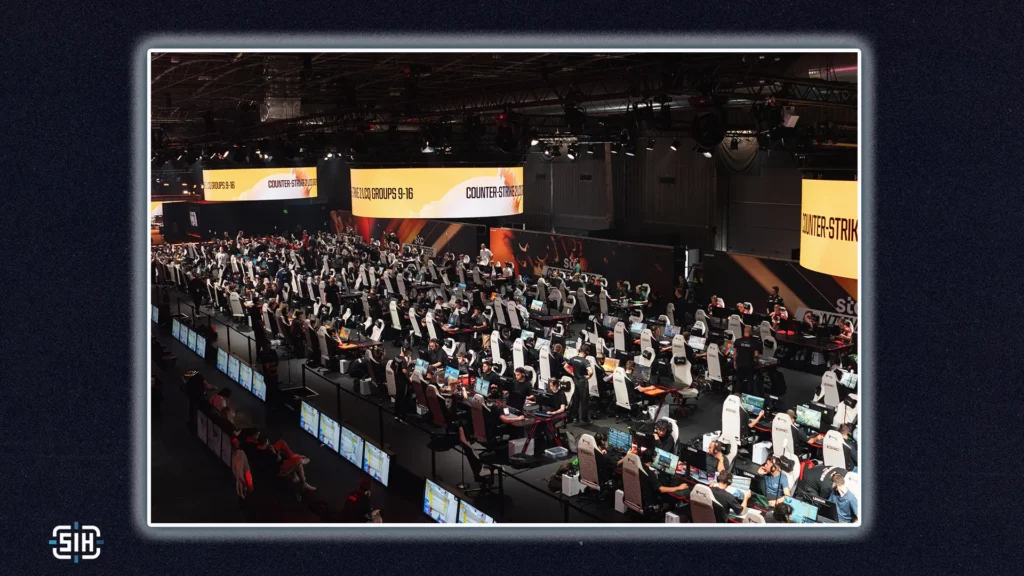
Let’s talk about the part that usually goes unnoticed. Sixty-four teams, sixteen groups of four, double elimination, then a 32-team single-elimination bracket — and that entire playoff was played out in a single day. Twenty-eight Bo3 series in twenty-four hours, with barely a delay and no drawn-out technical pauses.
Anyone who’s watched a schedule collapse at an eight-team event knows what that takes. That’s logistics. That’s backup machines. That’s an admin crew that got through the whole thing without a single ugly incident.
There’s a catch, and we’ll come back to it — but on pure operational execution, EWC delivered something VALVE should be studying very closely.
The Saudis never came to be "just another event" — and it worked
Remember how this started. EWC was pitched as an esports Olympics, and almost nobody in the club scene bought it. The scepticism made sense: another tournament with deep pockets and zero history, good for a couple of seasons before it faded.
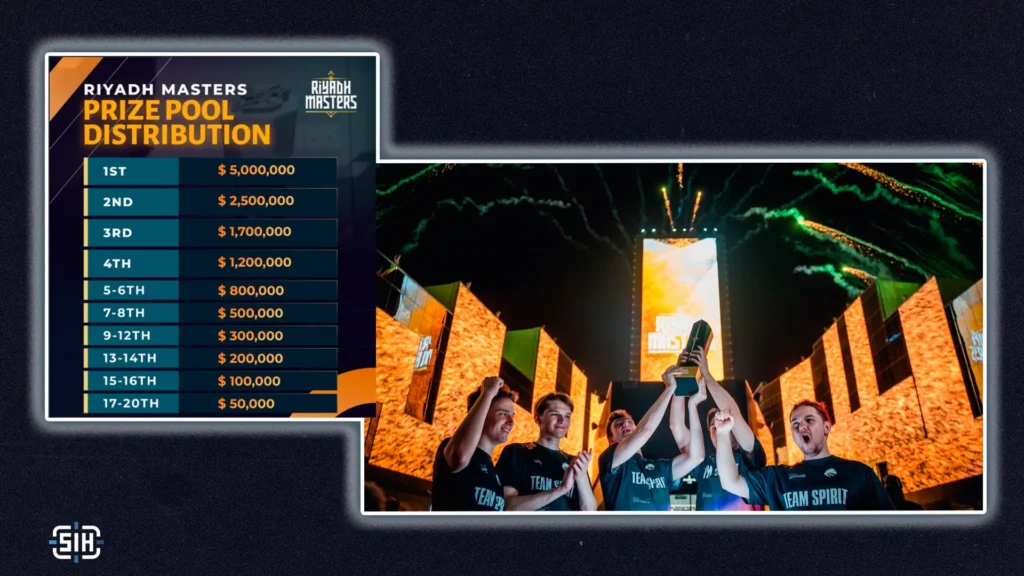
But the Saudis weren’t aiming to slot into the calendar — they were aiming to become the single most significant event in esports, full stop. And they backed it with numbers you simply can’t wave away: the Riyadh Masters 2024 prize pool in Dota 2 was $15 million. After figures like that, the “will it even take off” conversation ended on its own. Players, orgs and viewers went where the money was.
Format, money, venue, field — four boxes, and the Major in 2026 comes out worse in every one of them.
Two million against the Major: the money went somewhere else
Here’s the headline number. The EWC prize pool for CS2 is $2,000,000. That’s more than VALVE puts up for the Major.
A few years back that comparison would have been meaningless. The Major never won on raw prize money — it won on everything else. Legendary status, and, crucially, stickers. Capsule royalties were the line item that made teams willing to play the Major for any purse at all, because the actual money was never in the prize pool.
We broke down what happened to that model in our piece on the end of the capsule era. Quick recap: Major Shop, direct sales, royalties tied to VRS seeding and final placement, and record-low attribution sales. Plenty of people said it out loud — the worst Major for sticker sales by a mile, and a tournament that’s now worth dramatically less to organisations in financial terms.
Now stack two facts on top of each other. The Major is no longer the main revenue source for teams. And at the same time, an event has appeared that pays more, pulls in every top roster, and opens its doors to teams no VRS ranking would ever let near a Major. This isn’t a fight over viewers anymore. It’s a fight over what the Major is even for.
Viewers want a story, and VALVE took the script away
This is the point we consider the most important one.
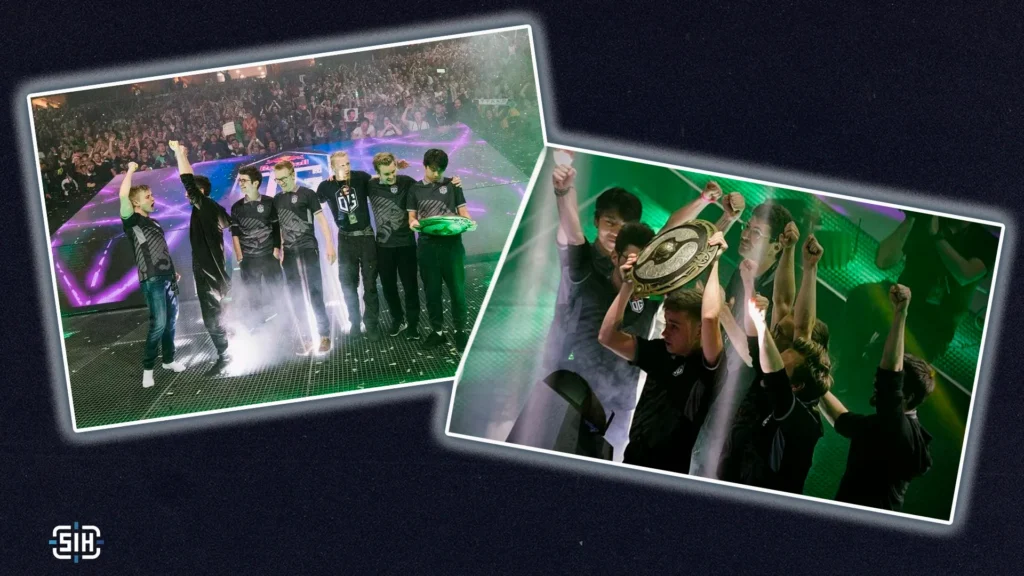
Everyone remembers OG in Dota 2: a team that came through open qualifiers and won The International. That wasn’t just a nice result — it was a storyline that pulled an entire generation of viewers into the game. Nobody becomes a legend. It works every time, in every sport, with every audience.
So here’s the problem: that story is possible at EWC, and all but impossible at the Major.
VALVE’s system is more meritocratic, no argument there. VRS, transparent criteria, no “got lucky in the qualifier.” But fair and watchable aren’t the same thing. Counter-Strike used to have its own version of the fairytale: a tier-3 roster punches through to the Major, lands in the capsule, and the stickers pay them more than the org earned all year. Not a trophy, but still a story with a happy ending.
That fairytale is gone. Stickers no longer feed the lower tiers, and the Major hasn’t had open qualifiers you could punch above your weight in for a very long time.
And we already know where this road ends. The International lost its aura gradually, year by year, until it became just another tournament. The Major is on the same trajectory — slowly, but it’s moving. Paris was another wake-up call, and not the first one.
The catch: a bracket that needs fixing
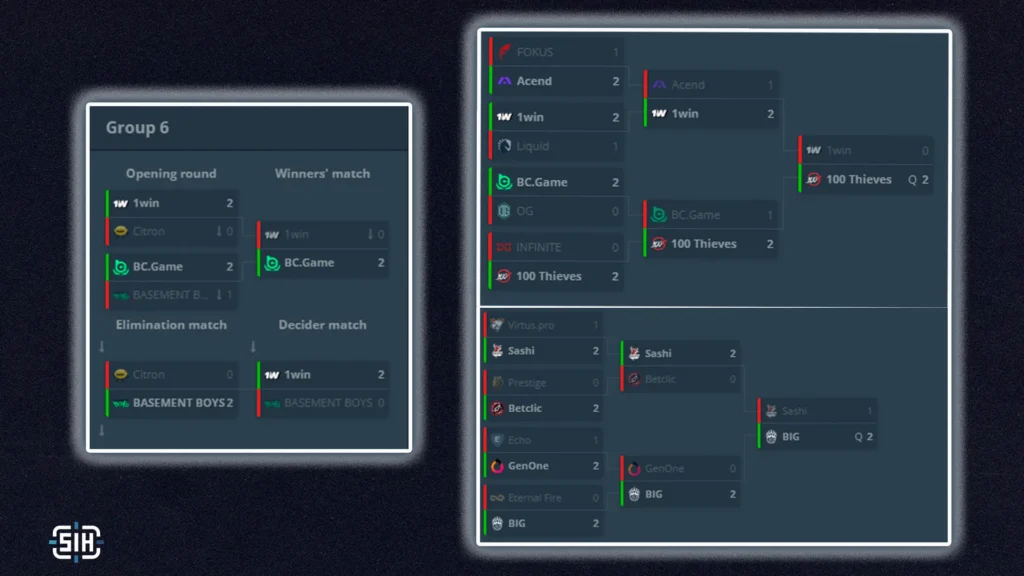
Our main complaint about EWC is seeding. Open qualification means everyone starts equal, and we’re willing to accept random groups as part of that philosophy. But then things get strange: teams from the same group can land in the same half of the playoff bracket.
That’s exactly what happened with the new-look 1win and BC.Game. They played each other in the group, and then could have run into each other again in the quarterfinal — the round that decides the slot. Same matchup twice in three days, the second time as an elimination series.
And the imbalance ran deeper than that. The same section of the bracket held 1win, BC.Game, Liquid, OG, 100 Thieves and FOKUS — six teams with tier-1 experience and rosters that are very much alive. Exactly one of them could come out with a slot. Elsewhere in the bracket, you’d find two or three teams of that calibre among eight contenders, tops.
Separating same-group teams into opposite halves is a one-line fix in the rulebook. Not doing it at an event this size is a frustrating bit of sloppiness.
The other issue, flagged by reporters on site: a PUBG Mobile tournament was running in the hall next door, and players weren’t given noise-cancelling headsets. From a competitive integrity standpoint, that’s bad, and there’s no point pretending otherwise. Sure, in terms of old-school LAN atmosphere it’s exactly the right vibe — but a $2 million professional event has to pick integrity over nostalgia.
What VALVE should be stealing
We’re not saying copy EWC — VALVE has a different philosophy and different obligations to the scene. But two conclusions write themselves.
First, the format. In one day in Paris they played as many elimination matches as the Major spreads across a full week. The Swiss stage is fairer, no argument, but it’s noticeably less watchable and painfully slow. The first two stages in their current shape could go without any real loss, and the Major would stop dragging on for three weeks. Elimination matches, Bo1s early, a short runway — that gives the viewer drama instead of a standings table.
Second, the attribution. As long as the sticker system doesn’t put money in the pockets of lower-tier teams, the Major is left without a single argument EWC can’t match. We’ve already said the foundations of Major Shop are almost certainly here to stay and that any changes will be cosmetic. Well — cosmetic clearly isn’t going to cut it anymore.
What's next
The EWC main event starts on 12 August and runs through the 23rd, same venue in Paris. Thirty-two teams, two million dollars, and four rosters that came through the open-qualifier meat grinder: 100 Thieves, BIG, K27 and JiJieHao.
The crowd is thoroughly warmed up. Now the question is which of those four turns a Paris ticket into a story people will still be telling later — and whether anyone at VALVE is paying attention when they do.

Alex
Alex is an author and esports observer with more than seven years of experience. He specializes in analyzing new releases in the world of computer games, gaming services, and in-game economies. Alex shares practical experience and an expert perspective on the development of gaming, helping readers understand complex mechanics and stay up to date with the latest news.

