GTA 6 Gameplay: What’s Confirmed, What’s Hinted At, and What Rockstar Isn’t Saying
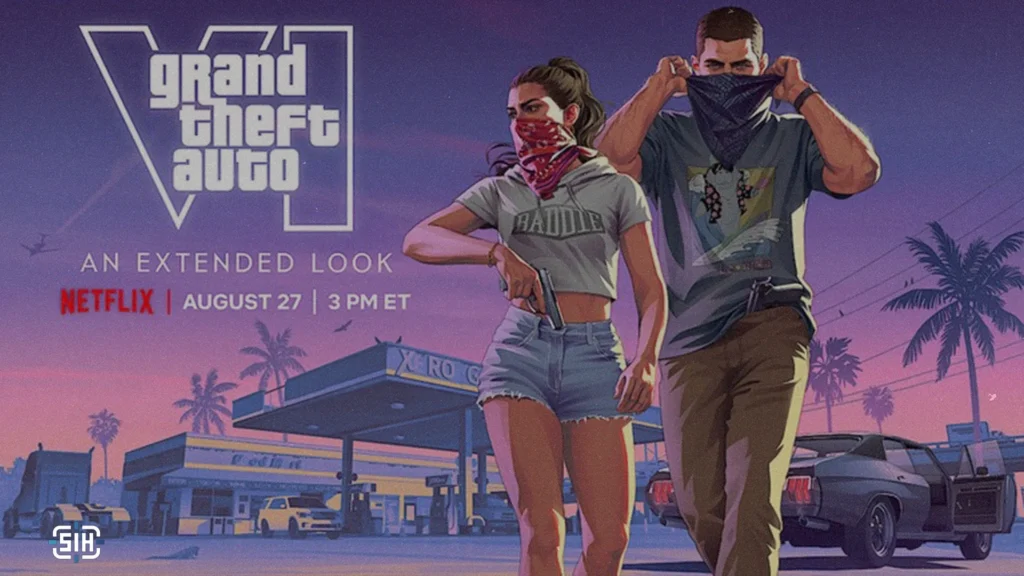
On 27 August the whole of gaming did exactly one thing: watched Jason and Lucia finally move, shoot and talk. The Extended Look pulled everyone in front of a screen at once, and by morning the internet had already taken those 26 minutes apart frame by frame, line by line, HUD icon by HUD icon.
We went through the footage, the previews from the outlets Rockstar flew out to Edinburgh, and the community reaction, then sorted the lot onto three shelves. What Rockstar showed and confirmed outright. What appeared on screen with no explanation whatsoever, leaving us to work out the logic ourselves. And what never appeared at all, but came with hints pointed enough that the community has already assembled a picture from them.
Part one: what's definitely in
Six stars and the description system
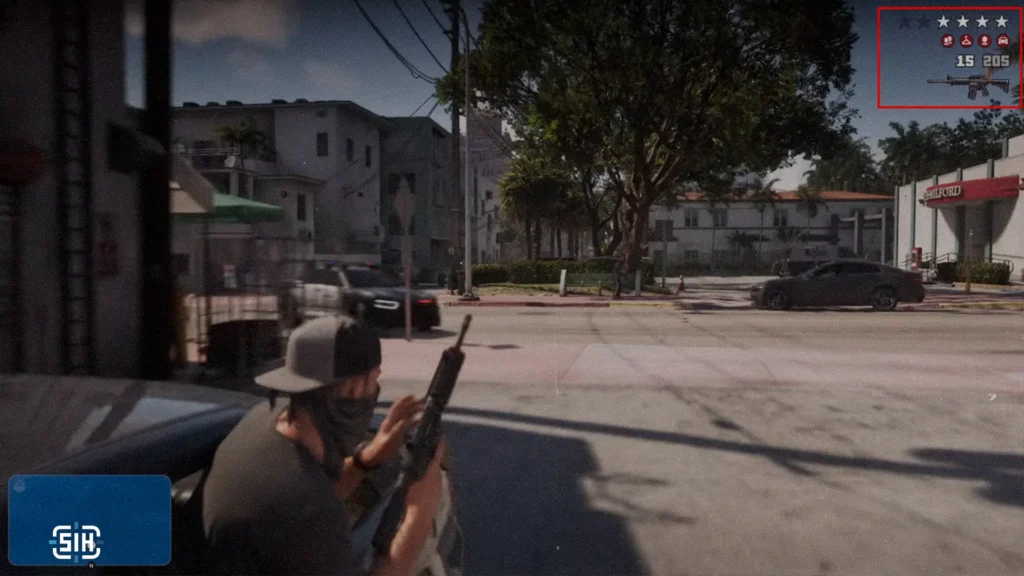
The wanted meter goes back up to six stars, the ceiling the series used before GTA 5. What sits underneath them is the interesting part.
The police know four things about you separately, and the HUD gives each one its own icon. Your face comes off the list with a change of hairstyle — a cap and sunglasses won’t cut it, and Rob Nelson said as much to IGN in plain terms. Your clothes only clear with a complete change of outfit. Your car clears when you get into a different one: during the chase sequence the pair swap vehicles, the icon drops off the screen, and a patrol car cruises straight past them.
The fourth icon is the intriguing one. The police separately register that they’re chasing a couple, and you shed that flag by splitting up — one of you goes one way, the other goes the other, and what the cops collectively know about you drops. Two details that were presented as charming little touches grow directly out of this system: the working car boot with a change of clothes in it, and the wheel for picking a hat, sunglasses or face covering. Every one of those items is a variable in your police description.
The practical upshot: for the first time in the series, a perfectly executed job becomes its own kind of content. Not “how many stars did I survive” but “how much did I take, and did they ever even know it was me”.
The colour of the stars says more than the number
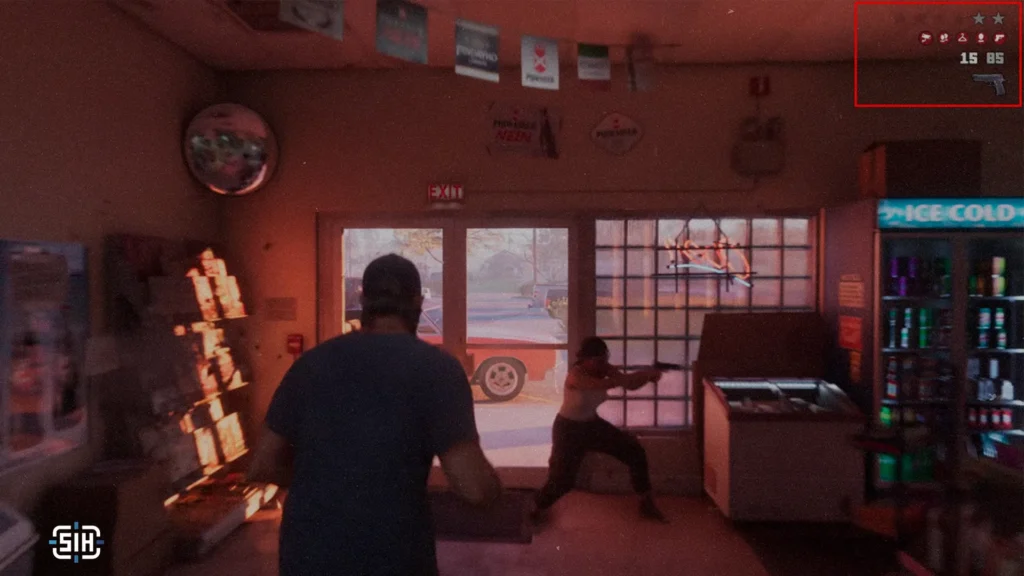
Something plenty of people missed: in the scene where Lucia walks out of the shop she’s just robbed and climbs onto the back of Jason’s bike, the stars on the meter are black with a white outline. The call has gone in and units are on their way, but nobody knows who they’re looking for yet.
There are at least three states. Outline only, and the police are coming in blind. White, and you’re in an active pursuit. Red, and you’ve broken contact but they’re still hunting — which is exactly how the meter looks in the sequence where the pair shake the patrol cars and switch vehicles. The scene of the crime stays flagged as an active search area on top of that, so units keep working the neighbourhood until it cools off, rather than evaporating the moment you duck into an alley.
The Criminal Profile
Red Dead’s honour system, minus the split into good and evil. It logs how you work and shapes both how people in Leonida talk to you and how certain story threads unfold.
The key bit: violence the mission demands doesn’t count against you. Gratuitous shooting and property damage do. Clean, quick robberies push the meter the other way and build your standing as a criminal who knows what he’s doing.
The economics of robbery
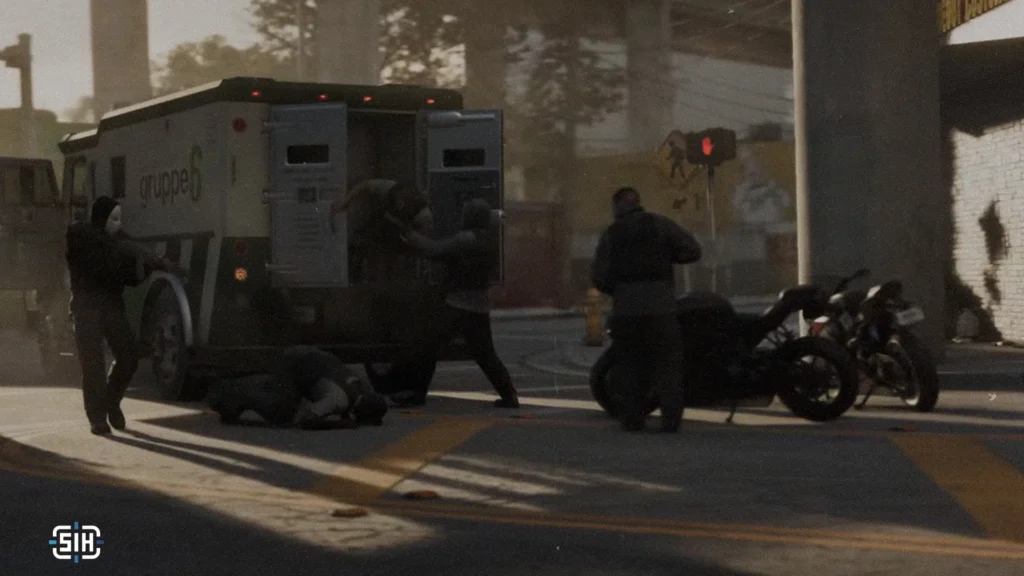
Money works as a genuine constraint for the first time in the series — in places the story flatly requires you to raise a specific sum before it lets you through.
There’s a full loop built around it. Blow the safe and you’re out fast but lose part of what’s inside; hunt for the combination and you keep the lot but burn time. Time spent inside the building converts directly into the risk of finding police outside, and they’ll happily surround a shop and simply wait for you to come out. Fences knock money off for a damaged body panel, and they’ll also tip you off about valuable cars sitting in places like police impound lots.
Boosting a car is no longer one button
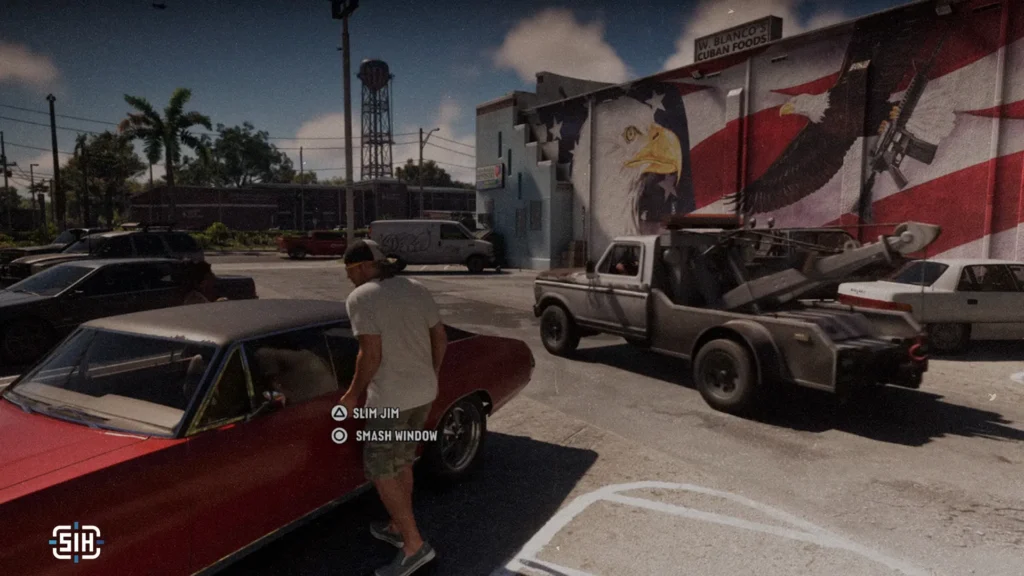
Vehicles now come in security tiers. The WAINK app scans your target in advance and reports its rough value, the cost of registering it, whether it’s locked, whether it’s alarmed and whether it’s tracked. Older stuff opens with a slim jim, modern luxury needs a key cloner, and some cars you physically cannot take until the story hands you the right kit. A few of them carry a GPS tracker that reports you to the police on its own.
Chaos costs more now
Stack all of the above together and add one more fact: a portion of Leonida’s population walks around armed and will start a fight without being provoked.
What Rockstar has done, deliberately, is put a price on every action. For thirteen years people loaded up GTA 5 to nick whatever was nearest, cause carnage for a minute and log off. Now the theft takes preparation, the heat doesn’t fade on its own, and the pedestrians bite back.
This is the exact fork Red Dead Redemption 2 got stuck on: half the audience called it the game of the decade, the other half bailed after ten hours. The difference is that Red Dead had a dying frontier to justify the slowness. GTA’s atmosphere pulls the opposite way. Our money’s on this being the argument in December, not the frame rate.
A world built to carry it
All of it rests on a number Rockstar called out specifically: over 600,000 NPC animations. GTA 5 had roughly 55,000, Red Dead Redemption 2 around 300,000. Pedestrians are no longer assembled procedurally from a parts bin — each is art-directed individually, which is where the genuine spread in height and build comes from.
Without that foundation, none of it works: not reacting to being followed, not armed civilians, not the description system.
The rest of what previews and interviews confirmed. The map, per Rockstar itself, is three times the size of Red Dead Redemption 2’s. Rob Nelson put his own playthrough, including a slice of the optional content, at roughly 80 hours. The campaign is split into chapters, the single-player game ships with zero microtransactions, and no generative AI went into making it.
Part two: what they hinted at
Here’s where it gets interesting. Rockstar put several things on screen and explained precisely none of them.
The angel after the dog isn't the Criminal Profile
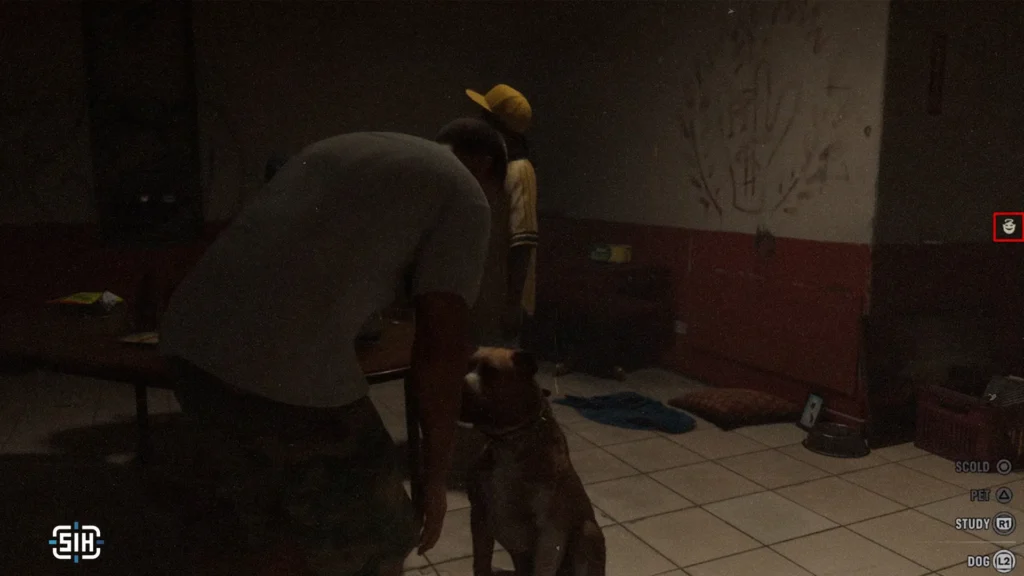
The moment did the rounds as a bit of fun, but that icon is anything but incidental. Jason chooses to pet the dog — the menu also offers the option to tell it off — and an angel pops up at the side of the screen with a notification chime.
It doesn’t square with the Criminal Profile for two reasons. First, Rockstar made a point of saying the profile doesn’t deal in good and evil. Second, petting a dog says nothing about you as a professional, there are no witnesses, and it has no bearing on the wanted level.
What it does square with is the Dazed interview, where the studio said player decisions land on Jason and Lucia’s relationship harder than the honour system ever managed in Red Dead. The angel fits there perfectly. And the iconography, by definition, implies an opposite icon that we simply weren’t shown.
Our read: there are at least two meters. One is professional standing, fed by clean work and unnecessary brutality. The other is personal, and it feeds the relationship thread. The game is keeping track of what sort of person you are when nobody’s watching, then serving it back to you through Lucia.
"The client only wants one of you"
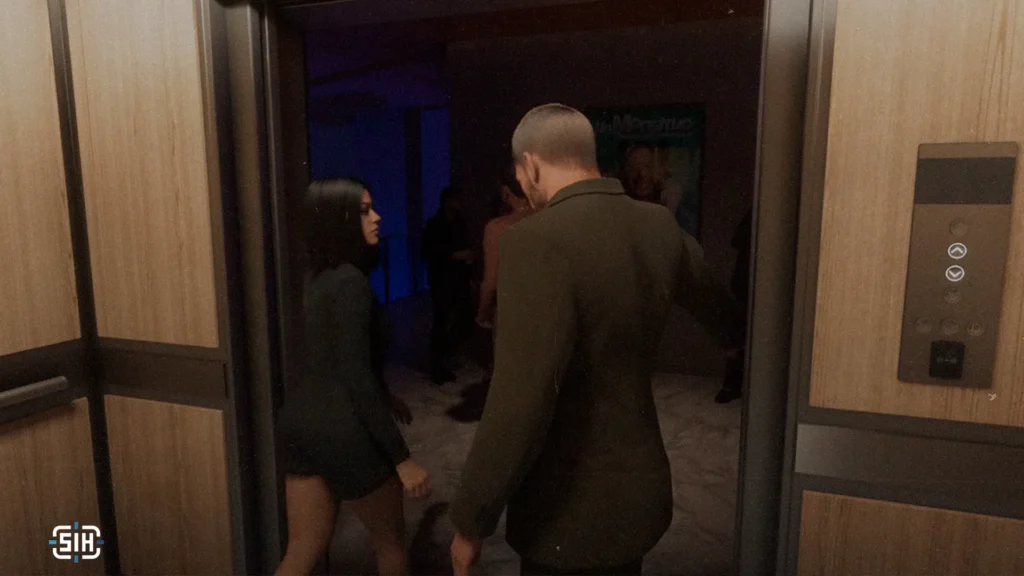
A throwaway line of dialogue: the pair are offered a job that has to happen that night, and told the client only wants one of them there. Lucia volunteers and leaves; Jason stays behind.
Rockstar doesn’t linger on it for a second, and the implication is substantial. Part of the content is written for a specific character rather than simply left to the player to assign. What we’re getting isn’t two protagonists sharing a mission list — it’s two people with different contacts in the criminal world.
A partner who actually does the work
GTA 5’s real technical problem was that the protagonists you weren’t using ceased to exist. You’d switch to Trevor and find him somewhere random in a situation the game had generated on the spot.
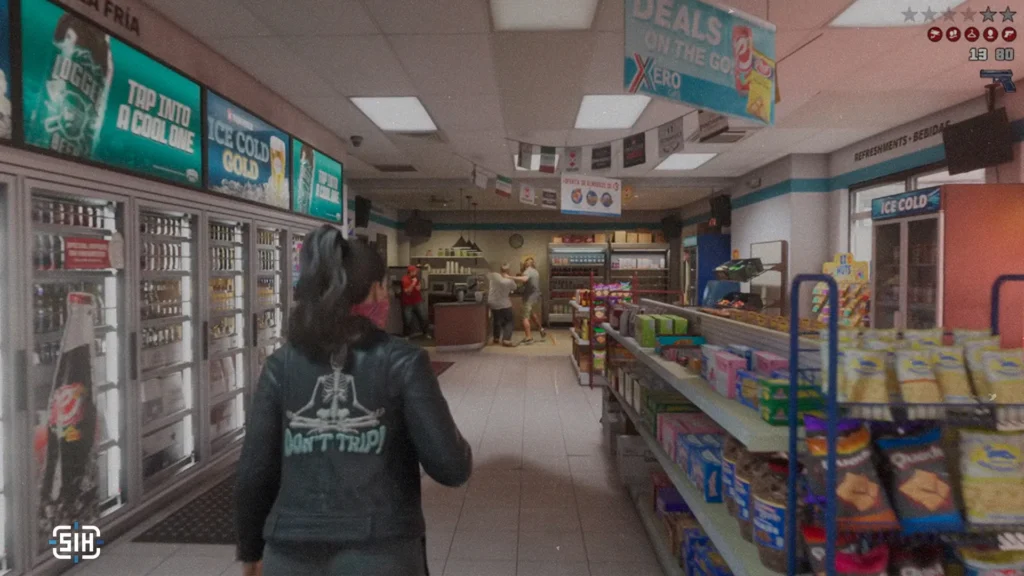
This works differently, and the shop robbery shows it best. The player is controlling Lucia as she comes through the door, while Jason is already deeper inside dealing with the cashier. Your partner has a job of his own rather than a seat in the audience.
Which leads somewhere Rockstar doesn’t spell out: if the second character can carry out tasks independently inside a mission, he has proper behaviour outside your control as well. The daily routines and the texts about mundane domestic business back that up.
A career ladder instead of a mission list
Two more lines worth hearing together. In one scene Lucia jokes about being kept in mind for further criminal opportunities. In another, after a completed job, the pair openly ask whether they’re part of the client’s crew now and are told to keep their phones on.
No reputation system is shown anywhere, and there’s no meter on screen. But the dialogue is written as though access to work accumulates: you get introduced, you deliver, you end up in somebody’s contacts, the next job arrives. For a series where missions have historically just lit up as icons on the map, that’s a noticeable shift.
Snapmatic, mentioned in passing
One of the friends casually brings up Lori’s Snapmatic. So GTA 5’s Instagram parody has made the move to Leonida and coexists with whatever newer platforms have taken over.
Then it gets interesting: according to the previews, Jason and Lucia won’t be able to post their own photos, because they’re on the run and not in the business of leaving a digital trail. Browsing other people’s posts and following accounts is fine. It’s a rare case of the story constraining an interface feature rather than the other way round.
Part three: what they didn't show
Not a single word about GTA Online
That’s no oversight. Take-Two draws the overwhelming bulk of its revenue from recurring player spending, so “where’s the online mode” was the question everyone had going in.
Line the arguments up. Nothing about the multiplayer at all. The single-player campaign is being sold as a standalone product at $80, with zero microtransactions promised outright. And yet the story mode contains a full economic loop with pricing, risk, condition-based valuations and specialist fences — overbuilt for a solo game and a perfect fit for co-op with nothing changed.
The community’s conclusion, and ours: the online mode arrives separately, with its own reveal and its own marketing run, and its economy will be built on the robbery mechanics that hundreds of thousands of people will already know inside out from the campaign.
First-person mode
Not a single frame, and per the previews it won’t be there at launch at all. That’s the one genuinely painful loss: first-person effectively reinvented GTA 5 for a large chunk of its audience.
The argument for it turning up eventually: GTA 5 didn’t launch with it either. It arrived alongside the versions for the following console generation, more than a year after release. Our money’s on a patch, or on the PC version.
The full map
Predictable enough — you don’t hand dataminers a gift. But a couple of things came through indirectly: the pause map now uses satellite imagery instead of simplified streets, and the Bayside district got a short walkthrough of its own.
Worth separating fact from guesswork here. Rockstar states in the previews that each district will have its own architecture, population and visual identity. The leap from there to Leonida being a set of self-contained districts rather than one city with suburbs, the way GTA 5 did it, is the community filling in the blanks — and there’s nothing to confirm it before release.

Alex
Alex is an author and esports observer with more than seven years of experience. He specializes in analyzing new releases in the world of computer games, gaming services, and in-game economies. Alex shares practical experience and an expert perspective on the development of gaming, helping readers understand complex mechanics and stay up to date with the latest news.

