News Steam news The VALVE Case: New York Authorities File Lawsuit. VALVE Fires Back – Can Gabe Save Cases and the Steam Economy?
The VALVE Case: New York Authorities File Lawsuit. VALVE Fires Back – Can Gabe Save Cases and the Steam Economy?

The VALVE Case: New York Authorities File Lawsuit. VALVE Fires Back – Can Gabe Save Cases and the Steam Economy?

Imagine a teenager in New York, late at night, launching Counter-Strike 2. He has a couple of dollars in his pocket — just enough for one key. He buys it, opens a case… The wheel spins like a slot machine, and a “big win” (a coveted skin) flashes on screen. His heart pounds as he hopes to land a knife worth thousands of dollars, but he’ll most likely walk away with a 30-cent skin.

According to New York Attorney General Letitia James, that’s exactly the experience a child has launching CS2 — a classic gambling experience, prohibited under the New York Constitution.

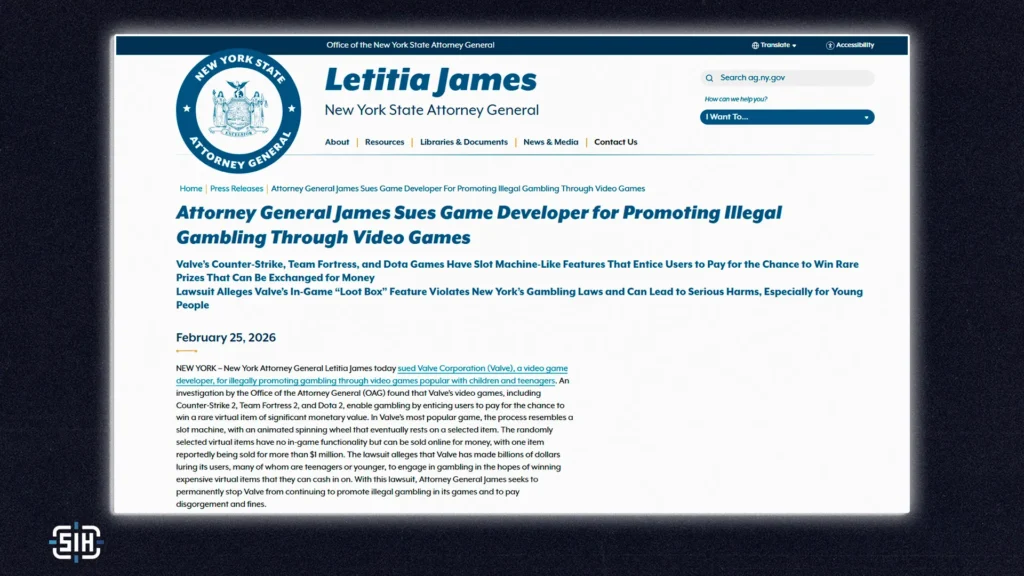
On February 25, 2026, James’s office filed a lawsuit against VALVE in Manhattan court. For the first time, a major American state directly accused Steam’s creator of running what amounts to full-scale gambling, not a harmless feature. Surprisingly, VALVE didn’t stay silent — on March 11, the company released a rare public statement: sharp, principled, and addressed directly to players. This is no longer quiet corporate back-and-forth. This is a war of positions, with billions of dollars, the Steam economy, and the future of loot boxes across the entire industry on the line.

How VALVE, According to New York, "Lures Players into a Casino"

How VALVE, According to New York, "Lures Players into a Casino"

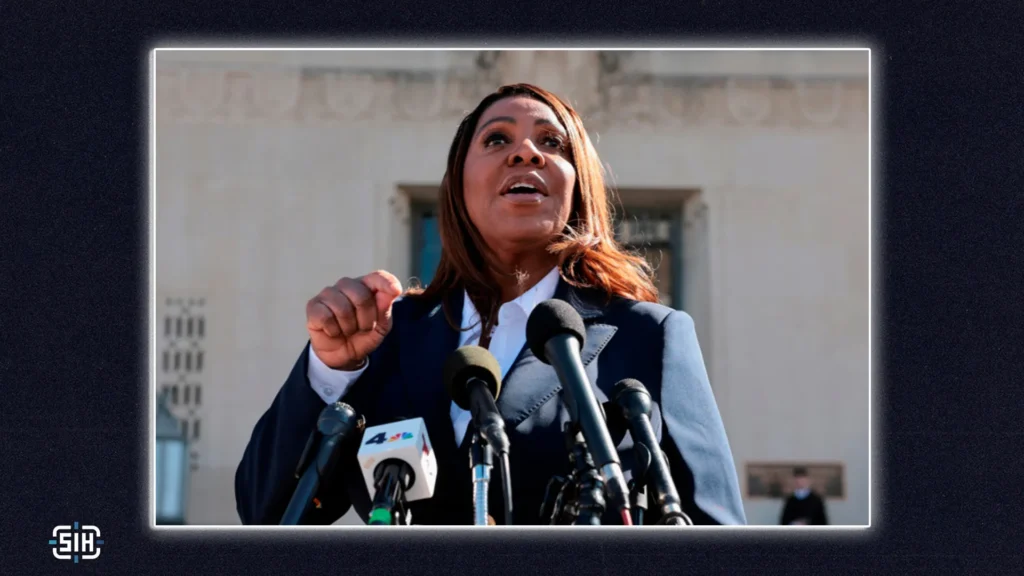
James’s press release lays it out vividly and bluntly:

"VALVE made billions by allowing children and adults to illegally gamble, offering the hope of winning valuable virtual prizes."
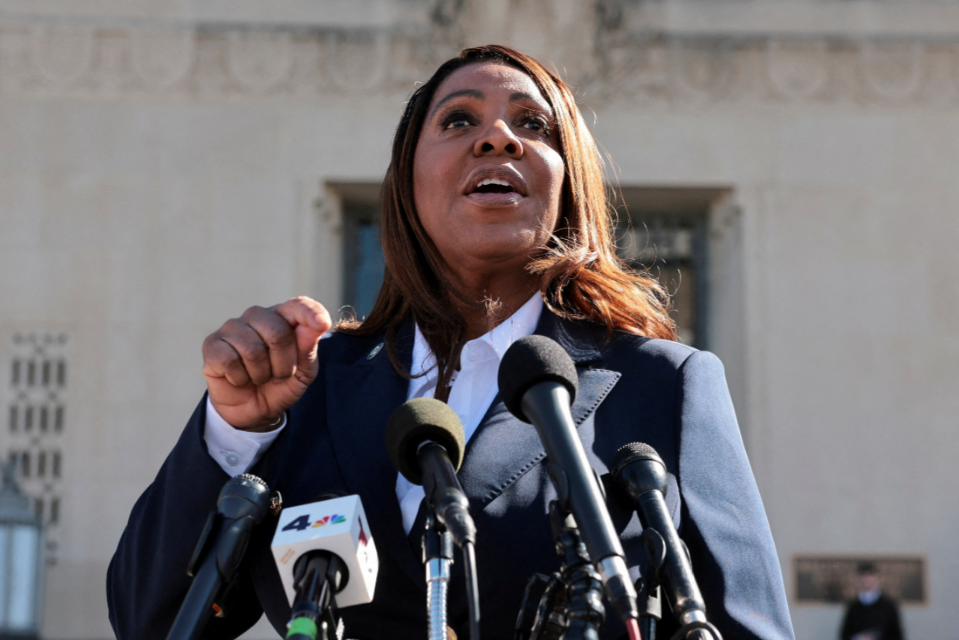
Letitia James
Letitia James
New York Attorney General
The central argument is that the case-opening mechanic in CS2 (and similarly in TF2 and Dota 2) mirrors a slot machine: the animation, the emotional anticipation of a potential win, and rare items that can be sold for real money. The lawsuit also cited the fact that some CS2 skins have sold for millions of dollars.

VALVE charges for keys (around $2.49), takes a 15% cut on the Steam Market, and — according to the lawsuit — even helps third-party marketplaces operate. All of this, the suit argues, is “the quintessence of gambling”: you pay for a chance, the outcome depends entirely on luck, and the prize has real monetary value.

Special emphasis was placed on children. James cited research claiming that kids who start with loot boxes are four times more likely to develop gambling addiction. “This is harmful, it is illegal, and we will stop it,” she declared. The lawsuit demands:

  • A permanent ban on the case-opening mechanic in New York
  • Refunds to players
  • Confiscation of “illegal profits”
  • Triple damages

Additionally, on March 9–10, a class action lawsuit was filed in Washington by Hagens Berman — this time on behalf of all American consumers.

VALVE's Response: "We're Not a Casino. And We Won't Back Down."

VALVE's Response: "We're Not a Casino. And We Won't Back Down."

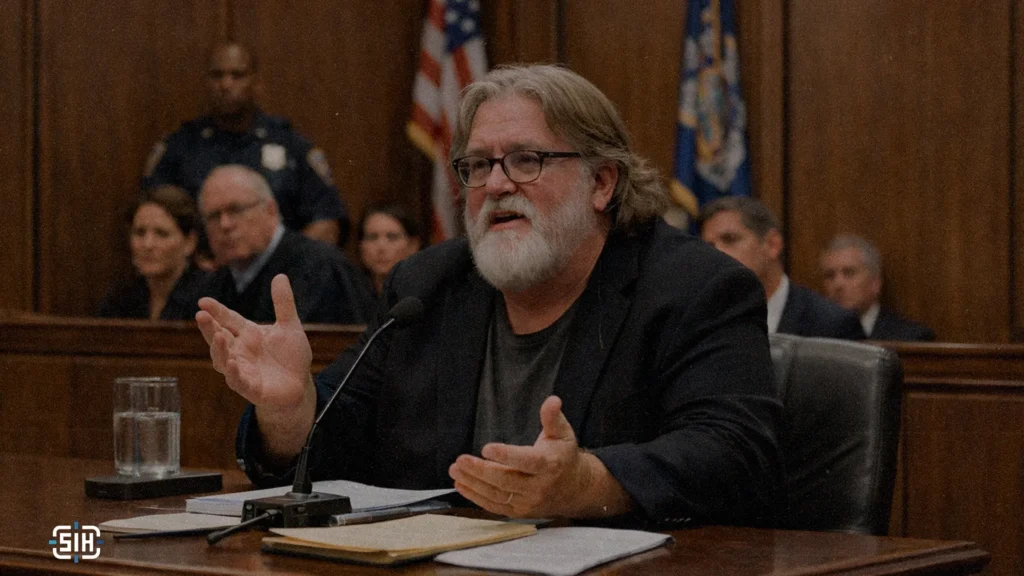
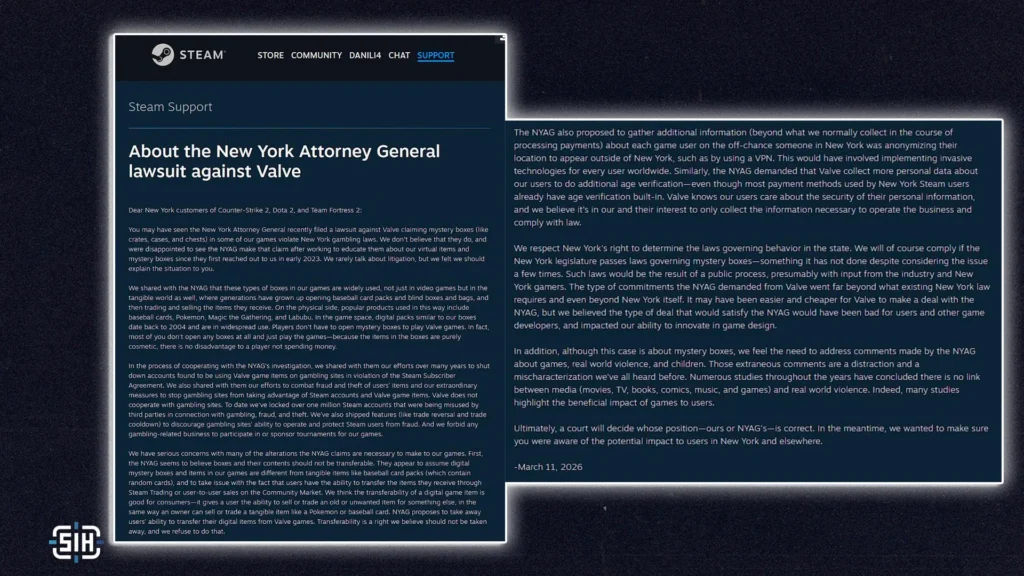
VALVE almost never comments on lawsuits publicly, but this time was different. On March 11, a letter addressed “to our dear New York players of CS2, Dota 2, and TF2” appeared on Steam Support. The tone was a mix of disappointment and steely resolve.

The company noted that they have been communicating with James’s office since early 2023 and have repeatedly explained their position on virtual items. Here’s what they say now:

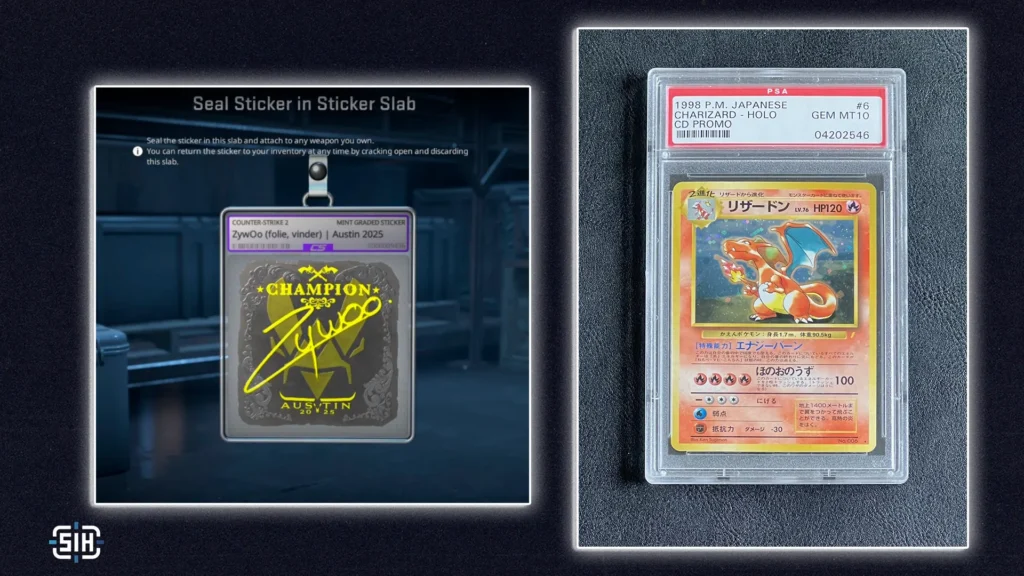
“We shared with the NYAG that blind boxes have been used not only in games, but in the real world for generations. Baseball cards, Pokémon, Magic: The Gathering, Labubu — people have always opened blind packs, then traded and sold them. Similar mechanics have existed in games since 2004.”

VALVE emphasizes that the items are purely cosmetic, that most players never open cases yet enjoy the game just fine, and that they have been fighting actual gambling for years:

  • Banned over one million accounts linked to betting sites, fraud, and theft
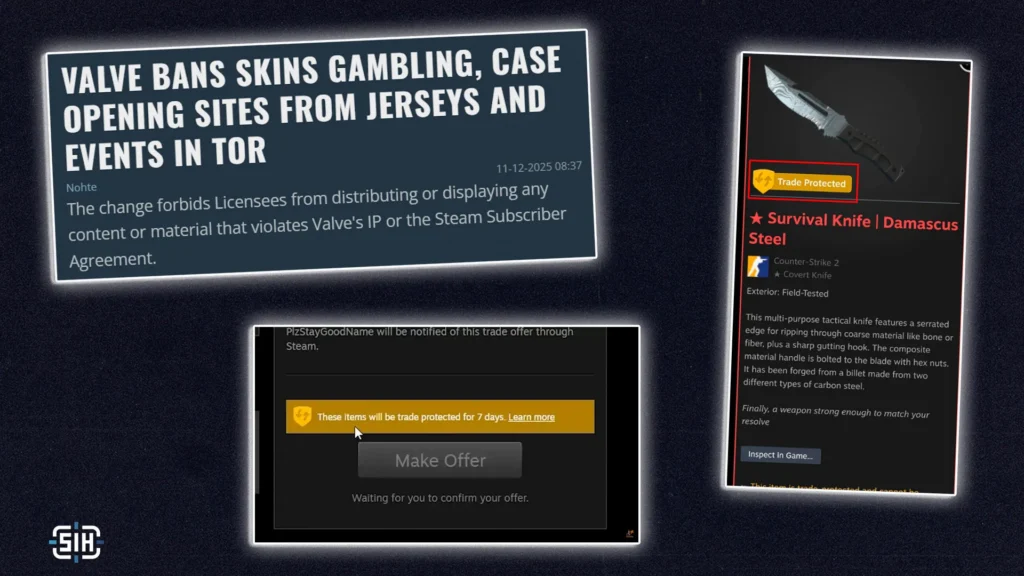
  • Introduced trade cancellation options and trade holds
  • Prohibit gambling sites from sponsoring tournaments
Trade block

But the sharpest part of the letter is their flat-out refusal on two of the AG’s key demands:

  • Item transfer restrictions. “The NYAG wants cases and their contents to be non-transferable. We believe that the ability to sell or trade an old item is a user’s right — just like physical Pokémon cards. We refuse to do this.”
  • Additional data collection. The AG reportedly demanded comprehensive age verification and technologies to detect VPN usage globally. “This is an invasion of the privacy of all users. We only collect what is necessary.”

VALVE states plainly: “It would have been easier to settle, but such a compromise would have harmed users and developers.” They also pushed back on the framing around “harm to children,” calling it a clever distraction from the core issue and pure populism, noting that research does not support a link between loot boxes and gambling addiction later in life.

The letter closes with a classic line: “Let the court decide. We will comply if the New York government passes a law — which it has not yet done.”

Community Reaction: Players Applaud, Lawyers Predict a Long Battle

Community Reaction: Players Applaud, Lawyers Predict a Long Battle

The response went viral on social media. Players wrote “Finally, VALVE didn’t cave,” rallying around takes like “It’s just like opening a pack of cards as a kid!” Memes featuring Labubu and Pokémon comparisons spread instantly, and major outlets noted the rare occasion of VALVE stepping out of the shadows to fight back.

Gaming law experts have already begun weighing in, noting this could set an important precedent. In the past, other jurisdictions have cracked down on loot boxes:

  • Belgium and the Netherlands (2018) declared them illegal gambling and forced EA to remove packs from FIFA
  • China required odds disclosure and purchase limits
  • Germany and France pushed VALVE to change case-opening mechanics via an XRAY feature (you see what you’d win before deciding whether to buy a key)

The parallel class action in Washington only adds to the pressure.

Forecast: How Does This End?

Forecast: How Does This End?

A full ban on loot boxes across America — let alone the world — seems unlikely. VALVE has strong arguments: the trading card analogy, years of fighting real gambling, various alternative item-acquisition mechanics, and the core point that skins are purely cosmetic. Courts are unlikely to accept a demand to kill all trades, as that would gut the entire Steam economy and goes well beyond the question of gambling.

Possible outcomes:

  • Compromise: A geoblock on keys and case openings in New York only, plus stronger warnings and age checks
  • Partial VALVE win: The court rules the mechanic legal but requires odds disclosure (as in China)
  • Worst-case scenario for VALVE: If the court agrees that “real value + chance + stake = gambling,” the entire system would need to change globally, triggering a chain reaction across other states and countries

VALVE has clearly chosen the “we will not retreat” path — which is quite surprising, since the company has historically complied with any ruling that came its way. It feels like they genuinely believe in their arguments, and so do we. At minimum, VALVE has no direct cash-out mechanism and their “prizes” are truly just in-game cosmetics. That said, it’s been clear for some time that the developers are increasingly focused on alternative mechanics beyond cases, to avoid inflaming the situation further.

The trend is unmistakable: governments are scrutinizing virtual economies ever more closely, and those economies have long since grown into multi-billion-dollar industries. This isn’t just a lawsuit against one company. It’s a test of where the line falls between “fun collectible mechanic” and “gambling for children.” For now, VALVE is holding firm. All that’s left is to watch the first hearing — which isn’t far off — and root for VALVE.

Author:

Alex is an author and esports observer with more than seven years of experience. He specializes in analyzing new releases in the world of computer games, gaming services, and in-game economies. Alex shares practical experience and an expert perspective on the development of gaming, helping readers understand complex mechanics and stay up to date with the latest news.