Everything You Need to Know About Cache: The Story of a Map That Refused to Die
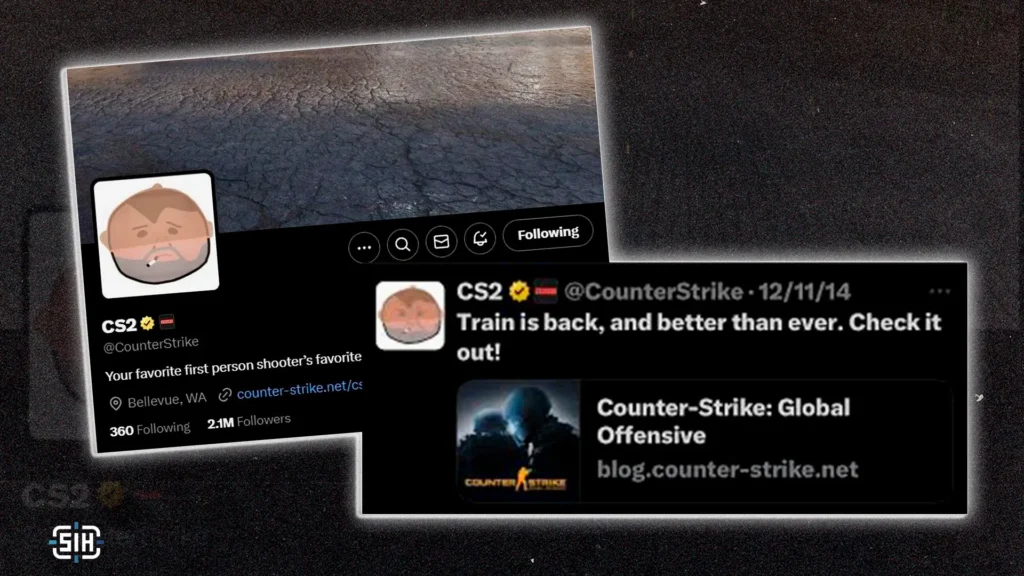
On April 23, 2026, the official Counter-Strike account on X changed its profile banner. Nothing special — a grey concrete surface, a bit of grass in the top right corner. But that was enough to send the community into a frenzy within a couple of hours.
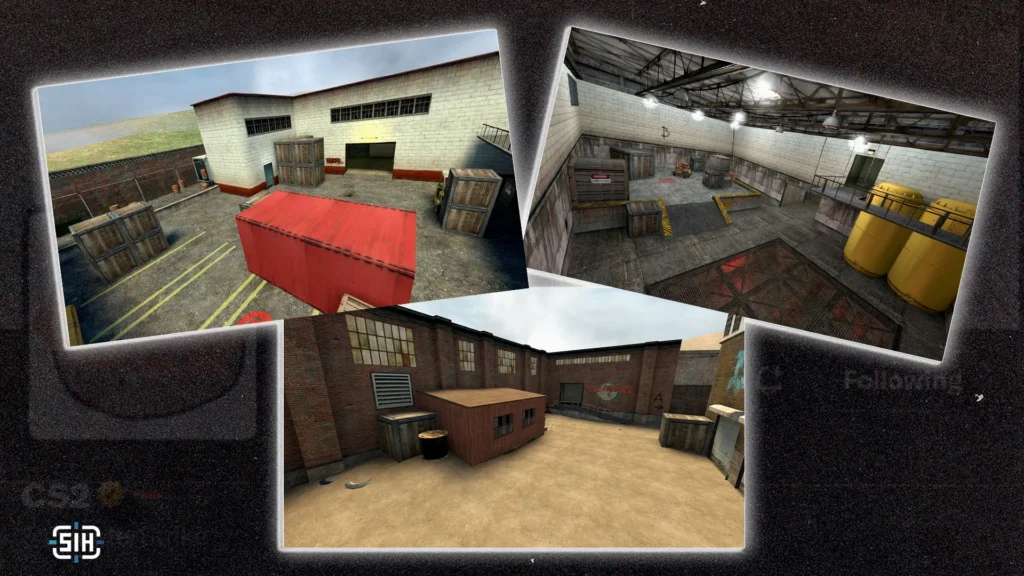
The thing is, Valve had already pulled this trick before. On November 5, 2024, they quietly swapped the banner in the same way — and just nine days later, on November 14, Train returned to the game. Fans quickly compared the new banner to FMPONE’s Workshop version of Cache, and the match was nearly perfect — it was T-spawn with updated textures and lighting.
The hints kept piling up. On April 22, FACEIT added Cache as the eighth map in their pool. April 26, 2026 marks exactly forty years since the Chernobyl nuclear disaster — and Cache was inspired by that very location. Since one of the most legendary maps in CS history is finally making its return, now seems like the perfect time to tell its full story — from abandoned ESEA servers in 2010 to a decade-long conflict between its creator and the developers.
"It's Like Releasing a New York Map on September 11"
Not everyone was thrilled about the timing. Gabe Follower — one of the most respected Russian-speaking dataminers — publicly spoke out against it:
When followers pushed back, arguing that CS already involves killing people and blowing up buildings, Polетаev responded bluntly: releasing Cache on April 26 is comparable to “releasing a September 11 New York map with the ruins of the Twin Towers.” The issue, he argued, isn’t in-game violence — it’s the deliberate timing of a release tied to a real tragedy whose consequences are still felt by people across Eastern Europe.
Where Did Cache Even Come From?
The original author is Salvatore “Volcano” Garozzo — a two-time World Cyber Games champion with Team 3D who moved into mapmaking after his pro career. Here’s a fun fact: he now works as a lead game designer on Valorant at Riot Games, CS’s direct competitor.
The first working version of Cache appeared on ESEA servers in April 2010. The full release for CS: Source came in May 2011, and in December 2012, Volcano ported it to the newly launched CS:GO. The turning point came in May 2013, when Shawn “FMPONE” Snelling took over the map. With support from Volcano and Lenz “penE” Monath, he rebuilt Cache from the ground up — with improved visuals, optimisation, and geometry fine-tuned for competitive play.
In June 2014, Valve added Cache to the Active Duty pool. This was a historic moment: Cache became the first and only community-made map to enter the official competitive rotation before Valve had purchased it outright.
Why Cache Has Such a Vibe
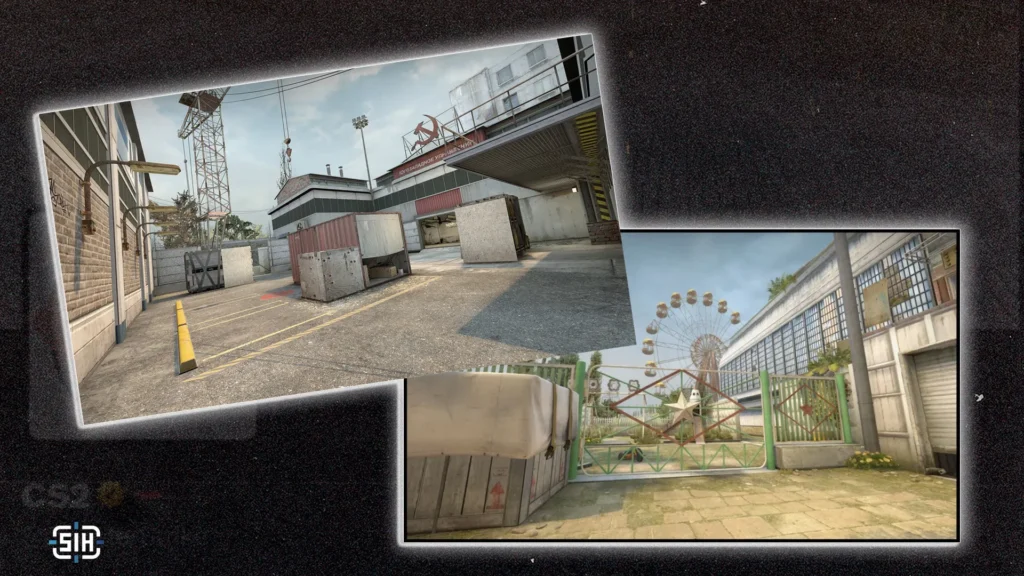
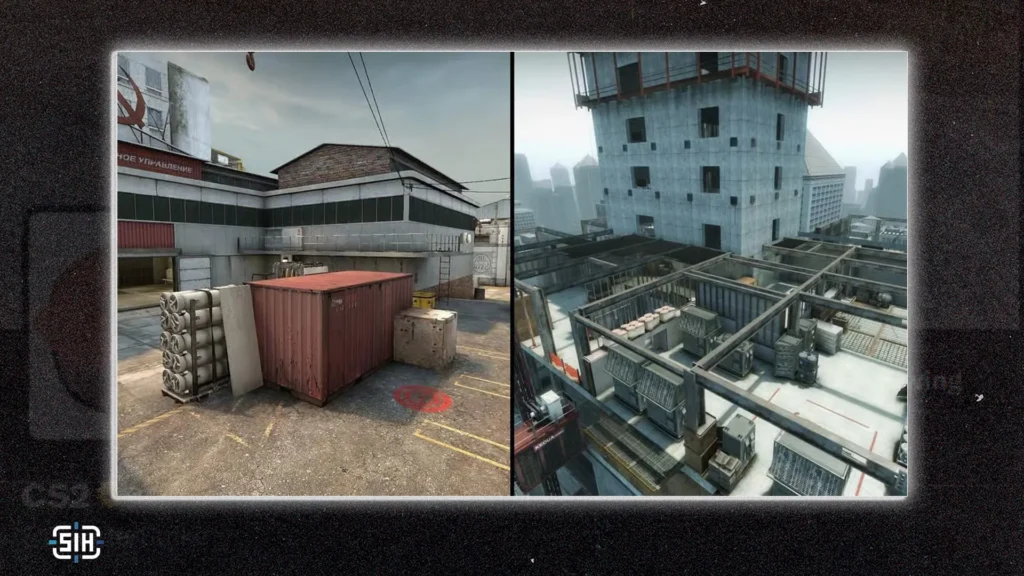
FMPONE and Volcano anchored the map to a specific real-world location — an industrial zone near the Chernobyl Nuclear Power Plant, somewhere around Pripyat. Hence the rusty containers, peeling plaster, Soviet architecture, Cyrillic inscriptions, and grass pushing through cracked concrete. Fans even found easter eggs like a Ferris wheel in the background — a nod to the famous attraction in Pripyat that was never opened due to the disaster.
And yet Cache was never a gloomy map — the sun always shone on it. That contrast of “radiation without overdoing it” is what made the atmosphere so unique. Gameplay-wise, the map rewarded duels at every angle, rushes worked without complex utility setups, but defence still required coordination — a perfect balance for both casual matchmaking and Majors.
The Moments That Made Cache a Legend
Hundreds of iconic plays were made on Cache, but two stand apart.
MLG Columbus 2016, semifinal — Team Liquid vs Luminosity.
Hiko finds himself in a 1v4 retake on A-site and wins the round so decisively that the American crowd erupts. Liquid goes on to reach the Grand Final — something no North American team had managed before.
ESL One Cologne 2016, semifinal — Liquid vs fnatic.
s1mple is in Heaven with an AWP, jumps down, hits a no-scope on dennis mid-air, lands, then fires a second no-scope across the room to take out KRiMZ and win the round. Caster James Bardolph delivers one of the most iconic lines in CS:GO history: “This is not FPL, this is a Major!” For that highlight, Valve painted graffiti of a falling angel holding an AWP onto the B-site. s1mple later got the graffiti tattooed on his left shoulder. In the CS2 version of the map, the graffiti is gone.
2019: The Day Cache Ceased to Exist
On March 28, 2019, Valve replaced Cache with Vertigo in the competitive map pool. The community reacted predictably — it’s still considered one of the most controversial decisions in all of CS:GO history. A comment that quickly became a meme summed it up: “When you think Cache is a bad map, but they replace it with Vertigo.” Vertigo remained the most hated map in the pool all the way until 2025, when it was finally removed in favour of the returning Train. Cache, meanwhile, vanished from competitive CS for six long years.
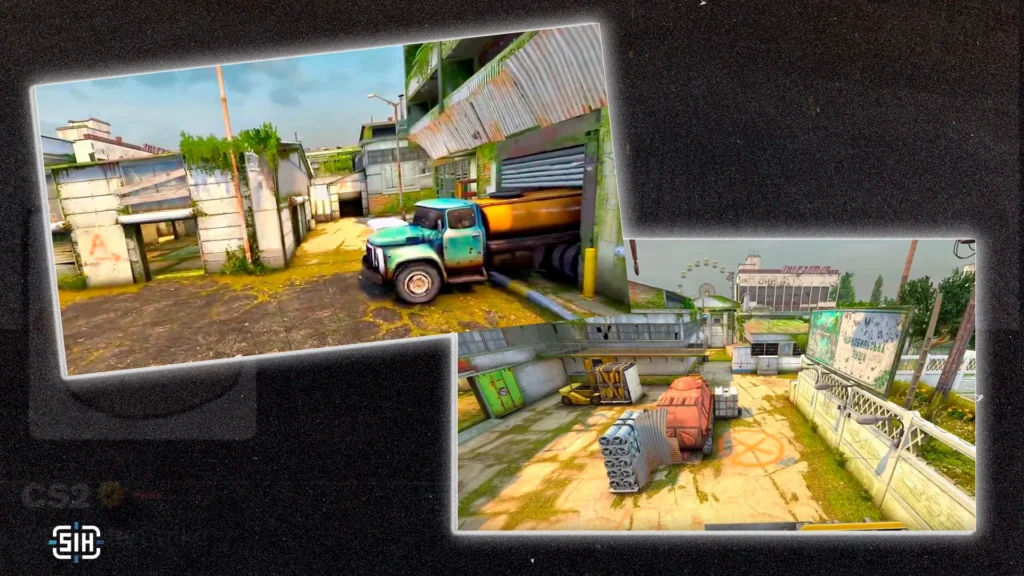
In September 2019, FMPONE unveiled a visual rework at ESL One New York – lush greenery, moss, overgrown walls. The problem was immediately obvious: the new colour palette destroyed visibility when combined with the newly released agent skins, as player models blended right into the background. The pro scene collectively said no, and the green Cache never made it into the competitive pool.
The Conflict Between FMPONE and Valve
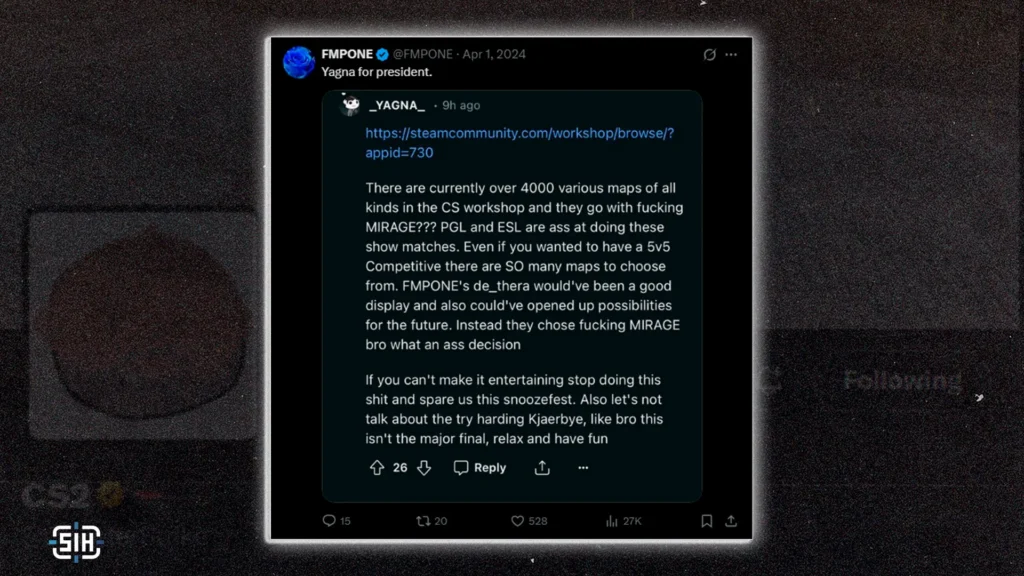
FMPONE refused to sell the rights to Cache for years. Valve had approached him with an offer as early as 2013–2015, but at the time, he and Volcano decided to stay as owners of the map. The key issue: FMPONE fundamentally wanted to retain the right to make changes — he had been developing the map for years and didn’t want to hand it over to a corporation that could rework everything however it pleased. For years, he regularly criticised Valve publicly on X.
Valve, meanwhile, operates by a different philosophy: they want full control over every map in the official pool, to be able to quickly fix bugs and make balance adjustments. That’s exactly why Anubis and Tuscan were purchased from their creators (reportedly for around $150,000 per map) before entering the Active Duty rotation. The irony is that FMPONE’s refusal to sell was precisely the main reason Cache never returned to the pool after 2019.
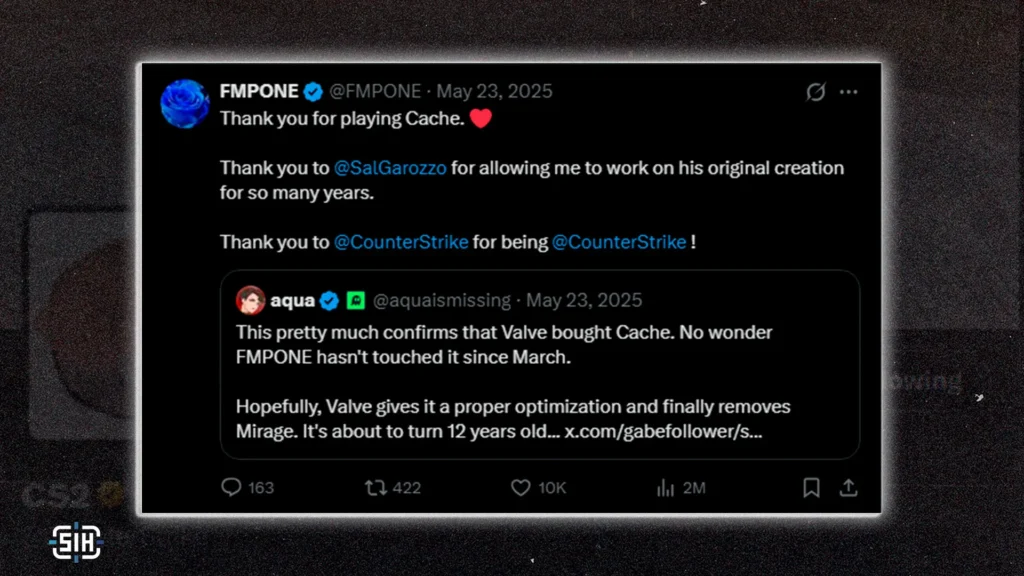
Things changed in March 2025, when FMPONE released his CS2 version of Cache on the Steam Workshop. Valve reached out to him on the very first day after the release. In May 2025, FMPONE published his final message on the subject:
“Thank you for playing Cache. Thank you to Sal Garozzo for allowing me to work on his original creation for so many years. Thank you to Counter-Strike for being Counter-Strike!”
The exact figure was never disclosed, but experts estimated the deal was worth more than the standard $150,000. Valve also acquired the rights to s1mple’s graffiti artwork.
When FACEIT launched Cache on their servers on April 20, 2026, FMPONE responded with visible bitterness:
That’s the emotional heart of this whole story. The man who spent half his life building this map can no longer finish it.
What's Next
If Valve sticks to the same pattern they established in 2024, Cache will arrive in CS2 sometime in the window between April 26 and the first days of May. The likely candidate for removal is either the ageing Mirage (in the pool for twelve years without a serious visual update), the problematic Anubis, or the unpopular Overpass.
For FMPONE, this is a strange ending: Cache is finally returning to where he spent seventeen years trying to bring it — just without him at the wheel. For Volcano at Riot, it’s an awkward situation, watching his original creation become a flagship content addition for Valorant’s direct competitor. And for everyone else — it’s the return of one of the most atmospheric maps in the history of the genre. The celebration is almost here.
Author: Alex
Alex is an author and esports observer with more than seven years of experience. He specializes in analyzing new releases in the world of computer games, gaming services, and in-game economies. Alex shares practical experience and an expert perspective on the development of gaming, helping readers understand complex mechanics and stay up to date with the latest news.