VALVE Just Blew Up the Major Sticker System. Everything You Need to Know About the Major Shop and Souvenir-O-Matic
On May 22, 2026, VALVE shipped an update for IEM Cologne Major 2026 — and without exaggerating, it’s the biggest shake-up to the Major item ecosystem in years. Capsules are dead. Tokens run the show now, and you craft your own souvenir. Here’s a full breakdown of what changed, why it happened, and what it means for traders, collectors, and everyday players.
Context: Why Now?
While everyone was busy waiting for a new Armory Pass update, VALVE quietly dropped the IEM Cologne merch — and in doing so, dismantled a system that had been running on autopilot for years. No leaks. No warning. Classic VALVE.
So why Cologne? IEM Cologne is Counter-Strike’s cathedral: four Majors hosted, a 20,000-seat LANXESS Arena, and a reputation that makes it one of the most anticipated tournaments on the calendar. But Germany also happens to be one of the countries pushing hardest on loot box regulation. German authorities already forced VALVE to implement the X-Ray scanner for case openings — you see what’s inside before deciding whether to buy the key.
Is the death of capsules tied to the Major’s location? Almost certainly it’s a mix of factors: regulatory pressure from multiple governments, the venue itself, and VALVE’s own long-term pivot away from anything that looks like gambling. The X-Ray scanner, the Armory Pass, Terminals, and now tokens — these aren’t isolated decisions. They’re a single, deliberate direction. And Cologne being the tipping point feels anything but coincidental.
Major Shop — The End of the Capsule Era
How It Used to Work
The formula was simple and it ran for years. VALVE released sticker capsules — team logos and player autographs — priced at around $0.99 each. You bought one, cracked it open, and got a random sticker. Want a specific Holo ZywOo? Pray to the RNG gods. No luck? Buy another. That’s exactly what fueled “Major hype season”: capsule opening streams, the rush of getting lucky, fear of missing out, and — let’s be honest — straight-up gambling energy.
How It Works Now
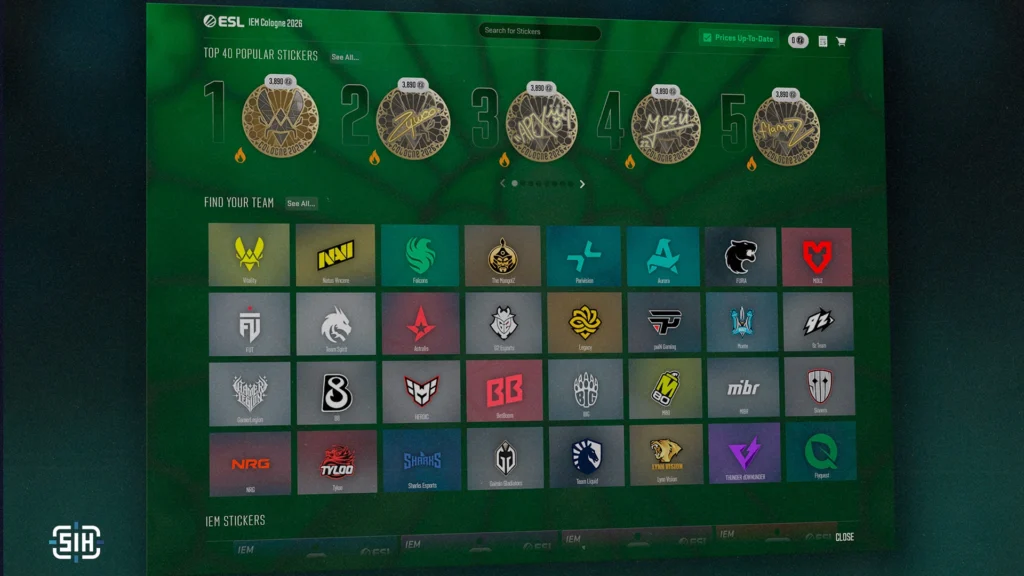
Capsules are gone entirely. In their place: the Major Shop, powered by a new in-game currency called tokens.
The new flow looks like this:
- Open the Major Shop directly in-game.
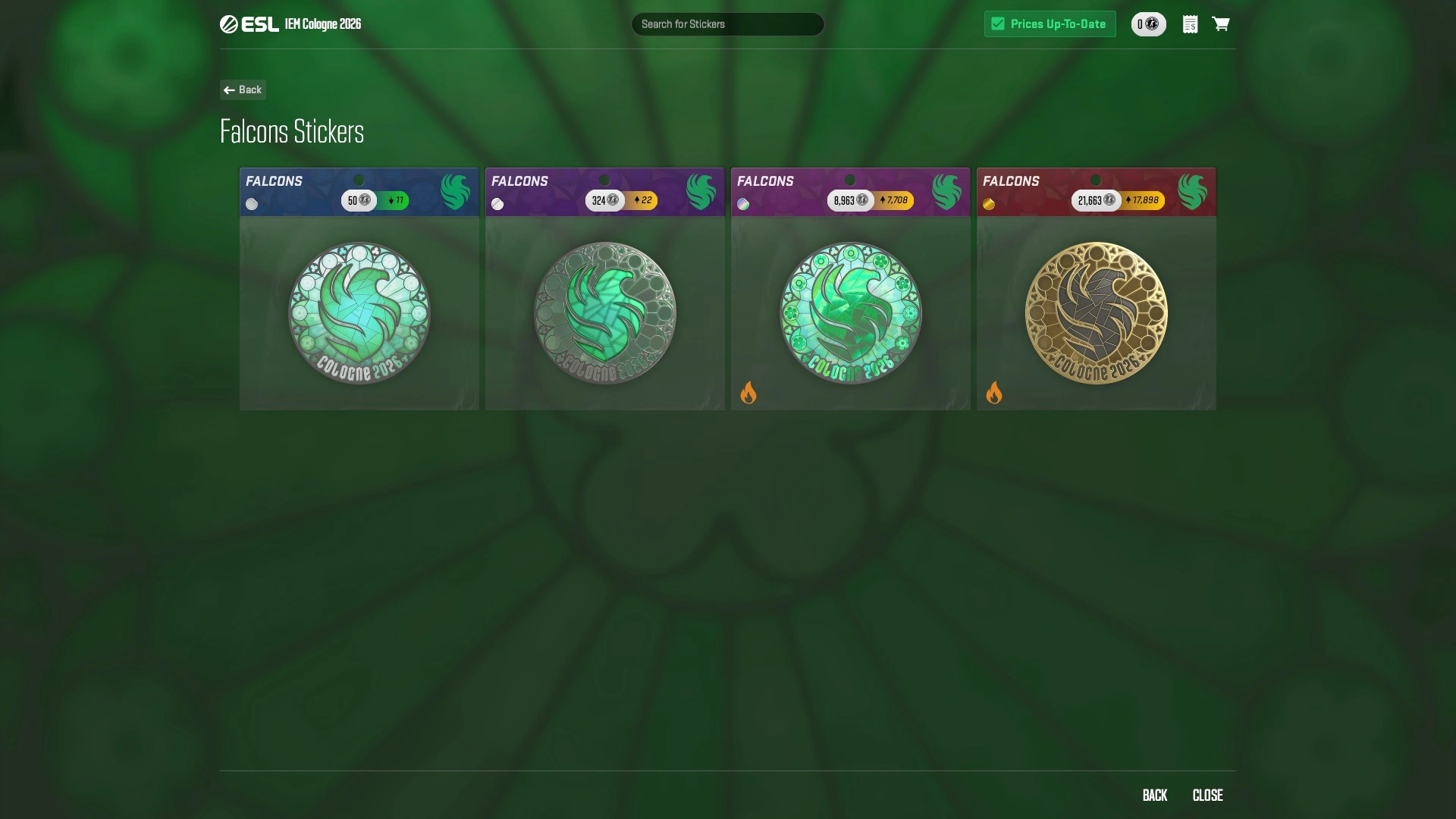
- Browse every sticker individually: Standard, Holo, Foil, Gold — any finish, any player, any team.
- Pick what you want, pay in tokens.
That’s it. Zero randomness.
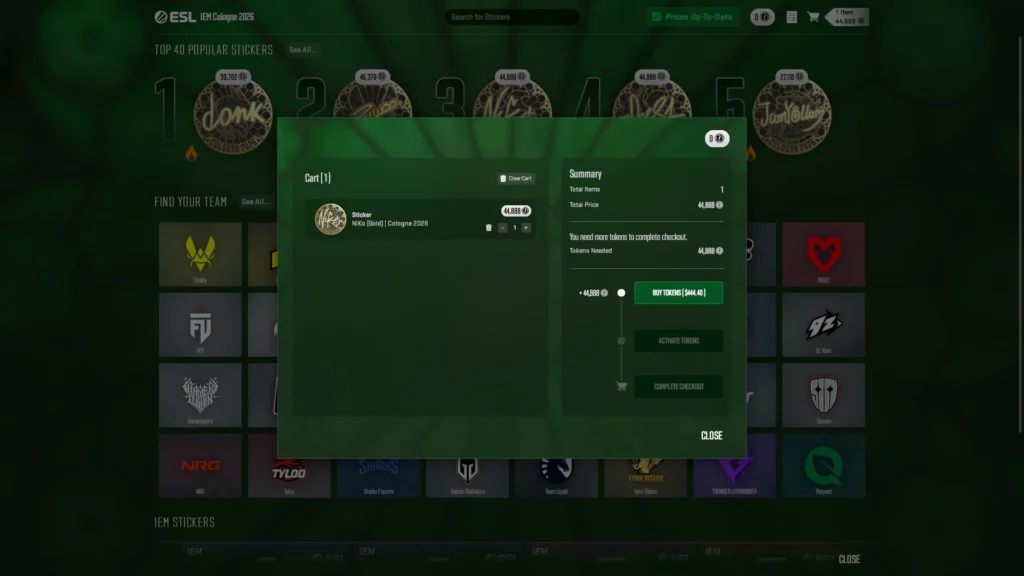
Tokens are purchased through your Steam Wallet at a rate of 100 tokens = $0.99. One important catch: you can’t buy tokens in bulk to stockpile. They’re only purchased at checkout when your balance runs short.
Dynamic Pricing
This is the mechanic that turns the Major Shop into something genuinely market-like — conceptually similar to the dealer system inside Terminals. Sticker prices aren’t fixed. They shift in real time based on demand:
- Top player stickers (donk, ZywOo, m0NESY) and high-profile teams (Vitality, Falcons, NAVI) get more expensive as demand climbs.
- Lower-demand stickers drop in price.
- After large sales volumes, prices recalibrate relative to one another.
Buyer protection: if a sticker you purchased drops by more than 25 tokens within 24 hours of your buy, the difference is automatically refunded in tokens within a week. A small gesture, but a welcome one for early buyers.
Why Did VALVE Do This?
Officially, the stated reason is regional accessibility — moving to direct purchases so players everywhere can actually get the items they want.
The less official but equally obvious reason: Germany and several other European countries have been tightening legislation around loot boxes as a form of gambling. German players were already worried about potential access restrictions before any announcement was made. IEM Cologne — the “German Major” — became the natural moment to flip the switch. Tokens with direct purchases are legally clean: no randomness, no gambling mechanics to regulate.
Killing refund abuse is another factor — a rare one, but real. The old loop was: buy capsule → open → see result → file a refund claiming an “unwanted purchase.” Tokens close that loophole. They’re non-refundable once used, but flexible by design — you only spend on exactly what you chose.
SIH Hot Take: This is an unambiguous F for capsule investment, but legacy capsules could genuinely moon off the back of this. As for sticker investments — we wouldn’t write them off just yet. Watch how the community responds over the course of this Major. It’s easy to imagine a scenario where regular players simply can’t afford the expensive stickers, which means total print runs could end up significantly smaller than at previous events. And that might not just apply to the pricey ones. Back in the day, $10 got you 10 capsule openings and 10 stickers. Now that same $10 buys you 2–3 stickers you actually want. Player and team autographs with smaller fanbases could become genuinely rare — only “investors” will be picking those up on principle. THE REAL QUESTION: WILL THERE BE SALES?!
Souvenir-O-Matic — Build Your Own Souvenir
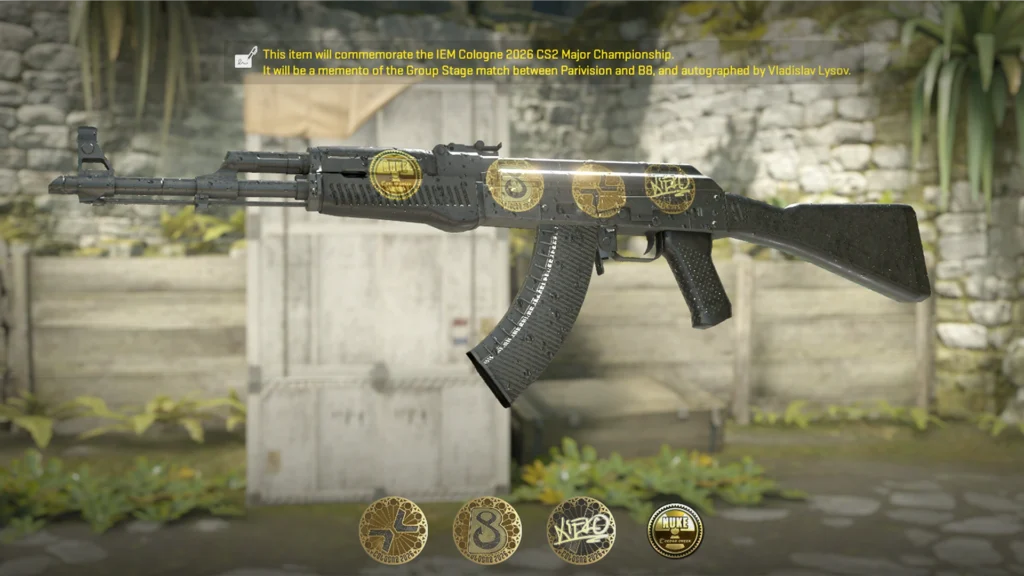
This is arguably the boldest feature in the entire update.
The Old System
Souvenir containers were purchased with real money (via souvenir coins), drops were tied to specific matches and maps, and stickers featured team logos and map branding — not individual player autographs. You had zero control over what dropped. Every souvenir was pure luck.
The New System: Souvenir-O-Matic
It’s now a fully player-controlled crafting system:
- Pick any weapon from your inventory — regular or already Souvenir-quality.
- Select a completed match and a specific player from that match.
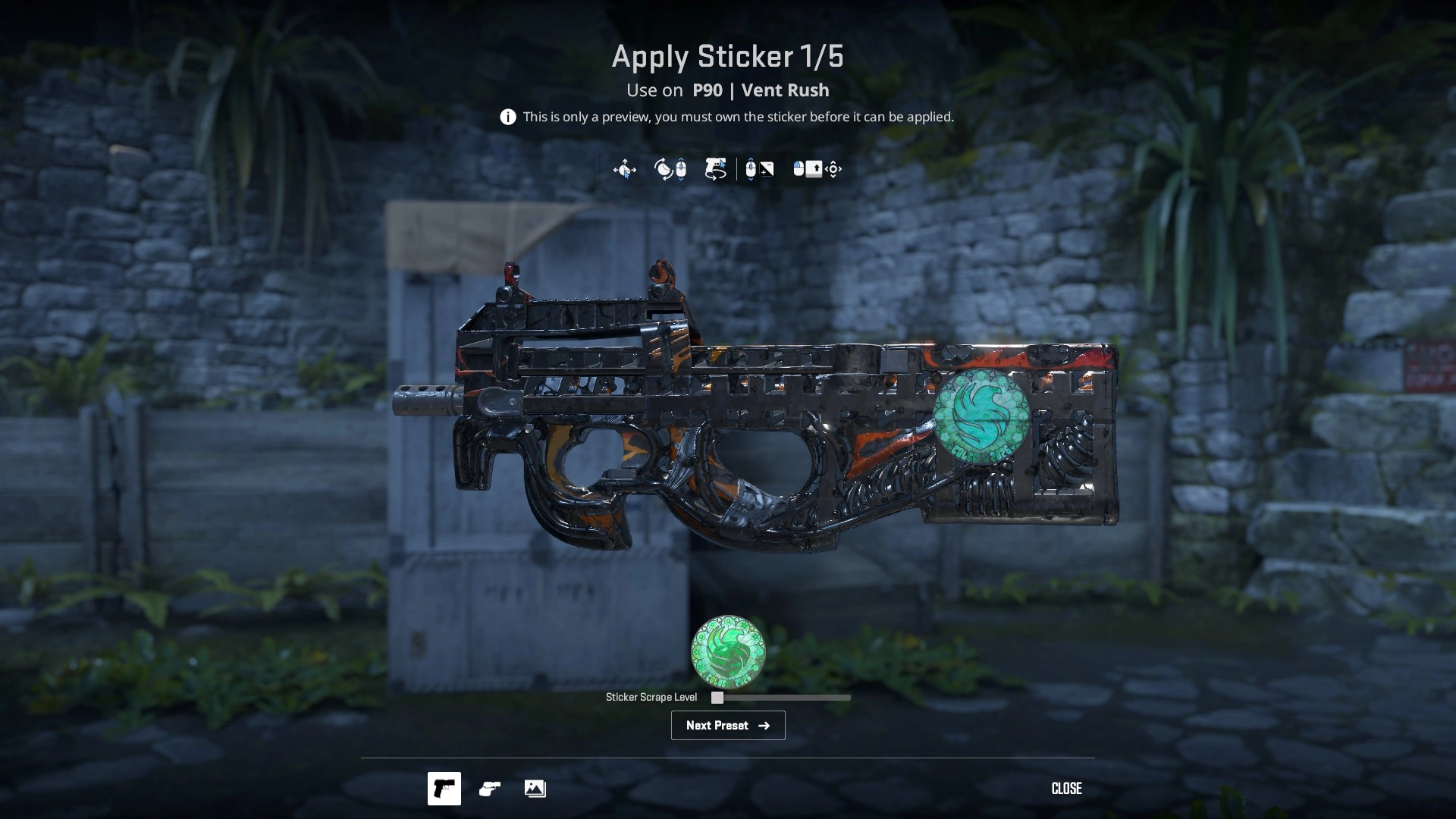
- Receive a Souvenir version of the weapon, complete with gold stickers: team logos, the player’s autograph, and the map sticker.
You get a full preview before committing. Any existing stickers on the weapon are removed in the process.
One more thing: Souvenir items can now be used in Trade Up Contracts alongside regular items. That opens up entirely new upgrade paths. Note, though, that the output of such a contract will always be a regular item — you can’t craft your way to a souvenir through a trade-up.
The Upside:
- Any weapon can become a souvenir with any team combination and any player autograph. The rare souvenir market will never be the same.
- Player autographs are back on souvenir items — a massive W for fans.
- Full customization for yourself, something that was completely out of reach in the old system.
The Downside:
- Diluted rarity. An AWP Dragon Lore Souvenir used to be rare precisely because you couldn’t just “craft” one. Now anyone with a Dragon Lore and enough tokens can get a Souvenir version. The market could get flooded.
- Owners of “natural drop” souvenirs with genuine history may take a hit. The truly iconic pieces probably won’t tank, but the exclusivity factor has undeniably taken a step back.
SIH Hot Take: This one’s genuinely interesting. If we’re reading the mechanic correctly, legacy souvenir items will no longer enter the game through drops — which means they should go up in value. And now they’re actually useful: plug them into a trade-up contract instead of letting them sit dead in your inventory. That should trigger a wave of souvenir skins disappearing from the market and prices climbing as a result. It gives us the same feeling as when knife crafting launched — a mechanic that breathed new life into cheap items and gave them purpose again.
Viewer Pass, Pick'Em, and the Challenge Coin
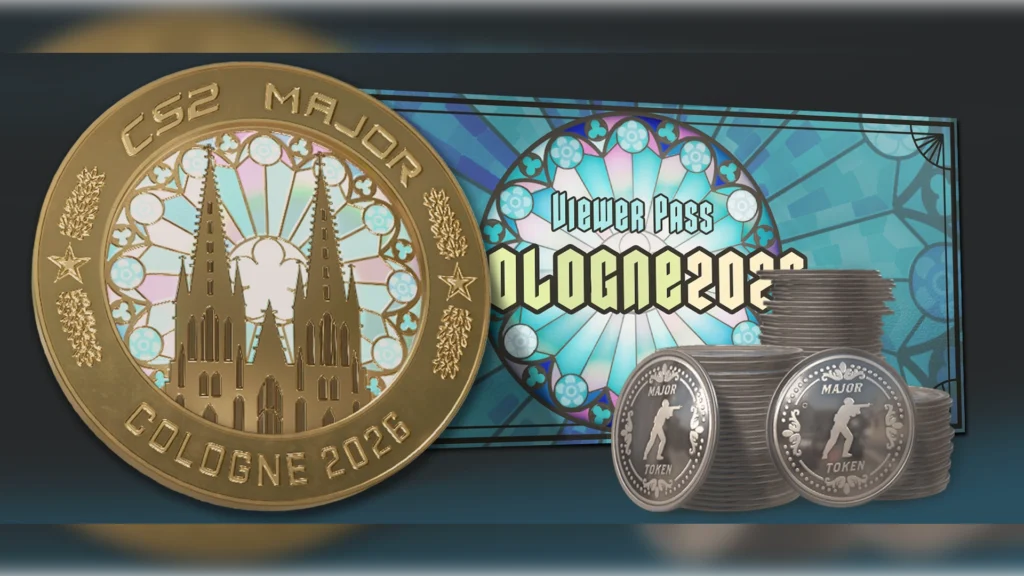
This part of the system keeps its familiar structure, adapted for the new token economy:
- Standard Viewer Pass — ~$9.99 (in line with previous Majors).
- Pass + bonus tokens (900 tokens) — ~$17.99.
- The Pass unlocks Pick’Em, the Challenge Coin upgrade track (Bronze → Silver → Gold → Diamond), and earns 300 tokens for each successful coin upgrade based on prediction accuracy.
Pick’Em Challenge remains the incentive to actually watch matches and make sharp predictions. Everything that used to reward extra souvenir drops now converts into currency you can spend anywhere in the Major Shop.
The New Royalty Structure
VALVE kept the core principle: 50% of all revenue (Pass + Major Shop) goes to royalties. But the distribution model has been redesigned:
- 5% to the tournament organizer (ESL for IEM Cologne 2026).
- The remainder split among teams and players across two phases:
- Pre-Grand Final: distributed proportionally based on each team’s global VRS ranking at the start of the event.
- Post-Grand Final: recalculated based on final tournament placement.
Final shares: the champion takes roughly 2.85%, teams at the bottom of the bracket get around 0.72%. Half of each team’s share goes to the organization; the other half is split equally among the players.
Worth noting: even teams that exit in 25th–32nd place receive a cut of sticker royalties — even without prize money from the main pool.
SIH Take: The two-phase model gives teams a double incentive. Before the Major, your VRS ranking matters. After — it’s about actual results, where the money follows performance, not just participation. It’s an improvement over the old system, where payouts were tied to capsule groupings rather than outcomes. You could argue it’s genuinely fairer: everything now depends on how teams perform, not whether they happened to share a capsule with a team that has a large fanbase in China.
Sticker Design: The Stained Glass Aesthetic
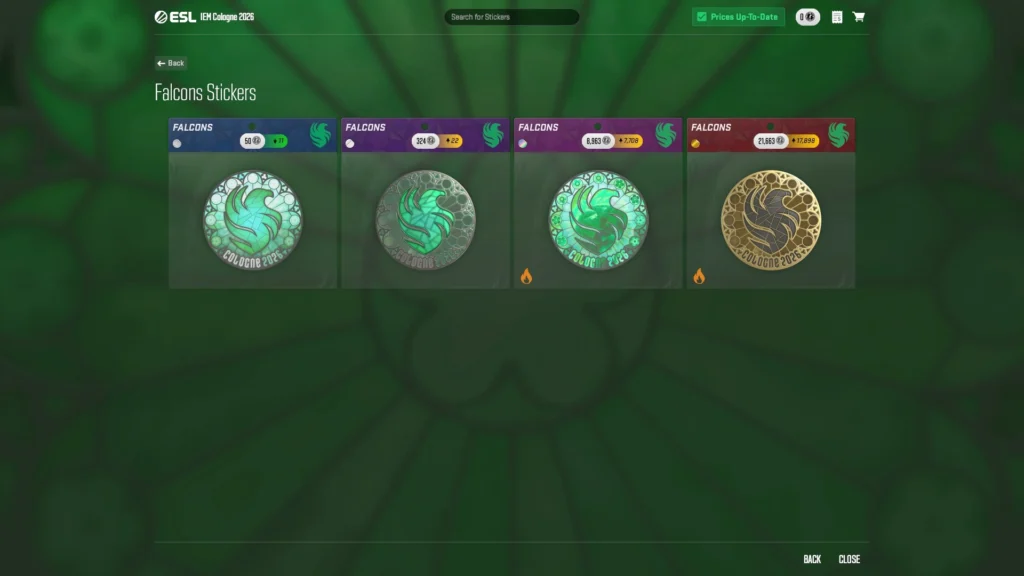
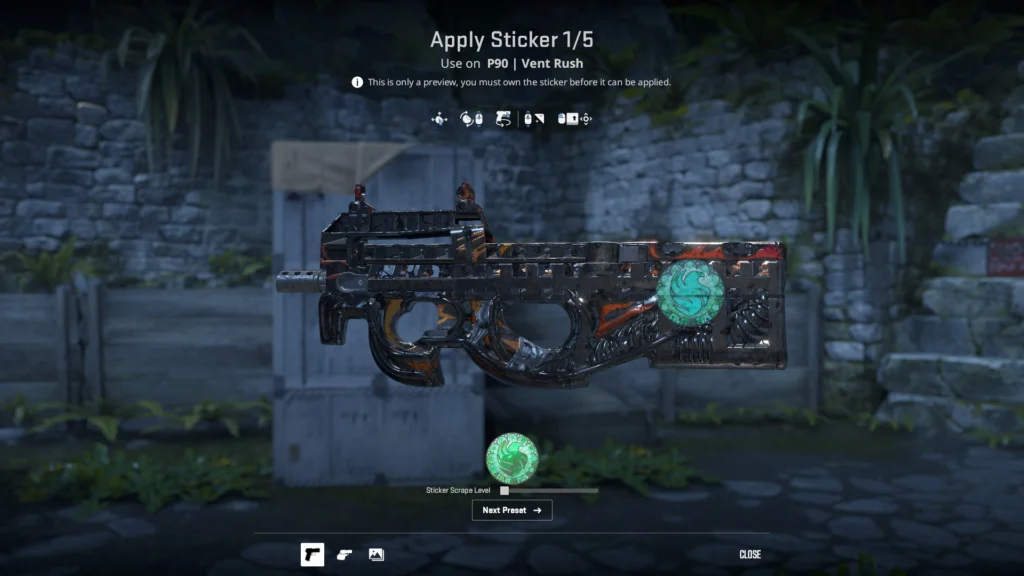
The visual direction deserves its own moment. The designers landed on a concept that’s a perfect nod to the host city: Cologne 2026 stickers are inspired by the stained glass windows of Cologne Cathedral. Vivid, “glassy,” with strong light-refracting effects.
- Foil finishes are back — a notable return after the embroidered style of the last Major (which may have been a one-time thing). The community has responded warmly across the board.
- Sticker backgrounds look like full stained glass miniatures. The classic large, circular design is back for ESL branding. The stickers also scrape beautifully clean, leaving no residue if you need a blank look.
- Near-unanimous praise for the new design direction — and for a CS community, that kind of consensus almost never happens.
Community Reaction: A Split Down the Middle
The response broke exactly how you’d expect.
The positives:
- Sticker designs are getting almost universal love.
- The ability to craft souvenirs onto high-value skins is a mechanic nobody even thought to ask for.
- Souvenir items finally have practical utility through trade-up contracts — and that hasn’t hurt the value of the big-ticket souvenir “jackpots” that already exist.
The criticism:
- “They killed the gambling mechanic” — part of the community genuinely valued the thrill of cracking open capsules. Hunting for that one expensive sticker that pays for everything else. That rush is gone.
- VALVE keeps tightening its grip on the market, and now they’ve reached stickers. Plenty of traders are making their usual dramatic “I’m done” speeches.
Bottom Line: What's the Point of All This?
This isn’t a cosmetic tweak. VALVE is solving several real problems at once:
- Legal compliance. Dropping capsules as loot boxes eliminates regulatory risk in Germany and other countries cracking down on gambling mechanics. For a Major hosted in Germany, this is non-negotiable.
- Audience expansion. Some players never wanted to roll the dice — they’d just go buy their sticker off the Steam Market instead. Now they’ll buy it in-game. That’s direct revenue for VALVE and royalties for teams.
- Better UX. Direct purchases, craft previews, price drop protection — all of it lowers the barrier to entry and removes the frustration of bad luck.
- A new economy. Dynamic pricing turns the Major Shop into a mini exchange. It’s more complex, but it reflects real demand more honestly — and potentially rewards people who know how to read the market.
It feels like VALVE is playing Robin Hood again — squeezing investors a little and opening things up for regular players. Any sticker can now be bought in unlimited quantities, so cornering the market and running pump schemes becomes a lot harder. But that’s only the surface read. There’s a real scenario where investors simply don’t funnel money into VALVE during the event and instead wait it out — then sweep everything available off the Steam Market once it’s all over.
There are too many ways this plays out to call it now. If you think the ending is obvious, don’t reach for the remote — this thriller is just getting started. One thing is already clear: IEM Cologne 2026 will go down in history not just as a tournament, but as the inflection point for the entire skin industry. Stay tuned — there’s a lot more to come.

Alex
Alex is an author and esports observer with more than seven years of experience. He specializes in analyzing new releases in the world of computer games, gaming services, and in-game economies. Alex shares practical experience and an expert perspective on the development of gaming, helping readers understand complex mechanics and stay up to date with the latest news.