The Major No Longer Bankrolls the Scene: Breaking Down HLTV’s Report on the Sticker Economy Collapse
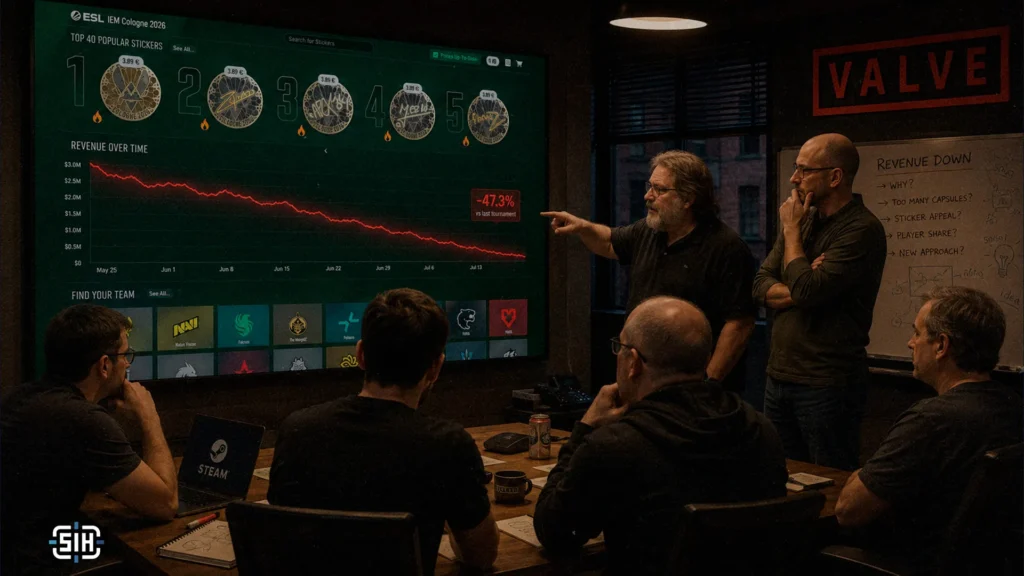
HLTV has dropped a major investigation into what the Major economy has become since Valve buried the sticker capsule and moved IEM Cologne stickers over to direct, token-based sales. The findings aren’t pretty: team revenue has cratered, contracts drawn up around the old model are stuck in limbo, and some organizations are seriously asking whether there’s any point in treading water in this ecosystem at all. One team knocked out in the first stage put it in plain terms — a disaster for the scene.
We already broke down the mechanics of the change in a separate piece on “the end of the capsule era,” so we won’t rehash how the Major Shop, tokens, and Souvenir-O-Matic actually work. Today’s conversation is about something else: was this predictable, will Valve keep the new system alive, and what does all of it mean for the market — and for anyone sitting on a stash of Cologne stickers?
Was this predictable? Yes — and the warning signs were flashing early
Let’s start with an honest admission: the sales flop wasn’t a bolt from the blue. Everything you needed to see it coming was sitting in plain sight back in May, when the stickers first dropped.
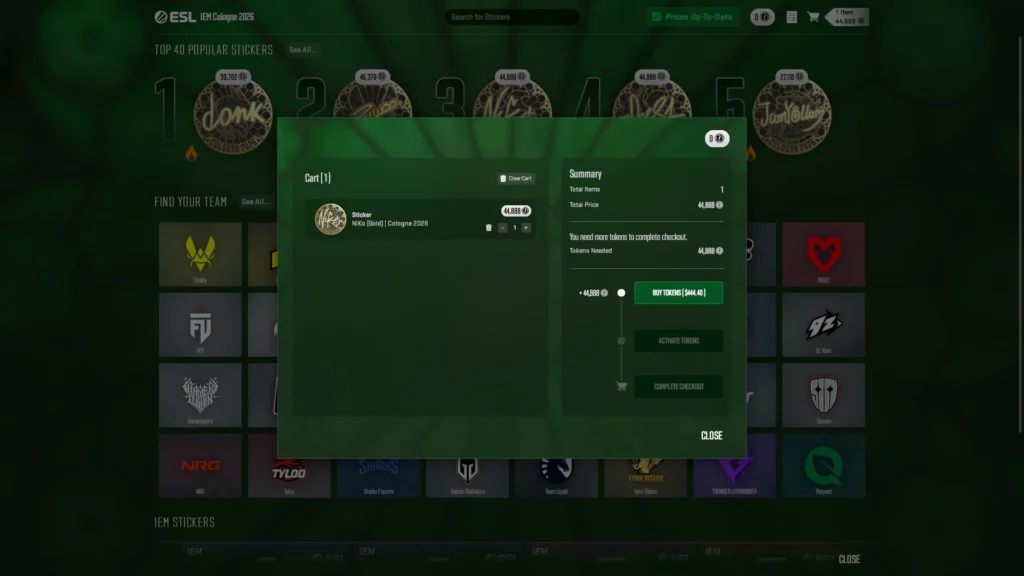
Before, a player could toss a couple of dollars at a capsule and get their little hit of dopamine from the unboxing — even if it spat out junk. It was a mass-market, almost impulsive purchase: cheap, a bit of a gamble, within everyone’s reach. The new model killed that impulse. Now you’re not spinning a cheap random roll — you’re paying a specific, often hefty sum for a specific item. Dynamic pricing sent the top autographs straight into the stratosphere: by Gabe Follower’s math, a full set of Cologne’s priciest stickers would run you tens of thousands of dollars. Naturally, at that kind of entry point, a huge chunk of ordinary players simply stopped putting money into the game.
Then comes the domino effect. Fewer buyers → lower global trade volume for Major items → less money trickling down to the teams. In other words, the math of the collapse was baked into the system’s design from day one. Aurora owner Valerii “Lerich” Kharitonov was the first to sound the alarm, branding this the weakest Major for sticker sales by a landslide back in early June. At the time it read like the gripe of one irritated executive. Now HLTV’s investigation has shown it wasn’t emotion — it was a diagnosis.
So no, you can only call the collapse unexpected in one sense: its scale. That sales would sag was obvious. That they’d sag this badly — nobody saw that coming, Valve included.
What happens to the new model? Three scenarios
The big question on everyone’s mind right now — from tier-2 managers to collectors — is whether this is here to stay or whether Valve walks it back. We see three realistic scenarios.
Scenario 1: leave everything as is. High odds. The product looks whole and thought-through — not a half-baked experiment cobbled together on the fly, but a finished architecture: the shop, tokens, price-drop protection, Souvenir-O-Matic. Valve invested in this infrastructure for real, and it’s not going to bin it after a single misfire. Cosmetic tweaks are far more likely — some things get cheaper, some pricier, maybe a little more transparency under pressure from the critics. But the foundation almost certainly stays.
Scenario 2: go back to capsules. Noticeably lower odds. We’ve pointed out more than once that Valve is methodically steering its entire economy away from randomness. The company is under pressure from lawsuits and accusations of hidden gambling, with cases flat-out labeled as illegal games of chance. In that climate, reviving a “pay money, get a random item” mechanic means painting a target on your own back.
And yet there’s a big “but” here that the critics somehow keep forgetting. Regulators’ complaints were always aimed first and foremost at cases, not at sticker capsules. Those are different things, both in perception and in substance. For a decade, Major stickers were associated not with gambling but with backing your favorite team: you bought a capsule to slap the logo of the squad you root for onto your gun. On top of that, a meaningful slice of the revenue went to the teams and players themselves — so it wasn’t pure “monetized gambling” but financial support for the pro scene. On that front, Valve could feel a lot calmer than it does about cases. So the door back to capsules is technically ajar — but walking through it after such a public pivot toward “anti-gambling” would be an awkward look.
Scenario 3: a hybrid. The most interesting option. Valve could merge the two systems: part of the content sold directly in the shop at a fixed (if floating) price, and part offered through something capsule- or terminal-like, where the item comes cheaper but carries an element of randomness or deferred value. Incidentally, the community under HLTV’s report is actively pushing the idea of sticker terminals as a compromise: a sealed terminal costs pennies, you can sit on it as an investment, and it brings back exactly the cheap entry point the new system killed. A hybrid would solve the core problem — inaccessibility for the average player — without forcing Valve to fully roll back the reform.
Valve physically can't ignore this
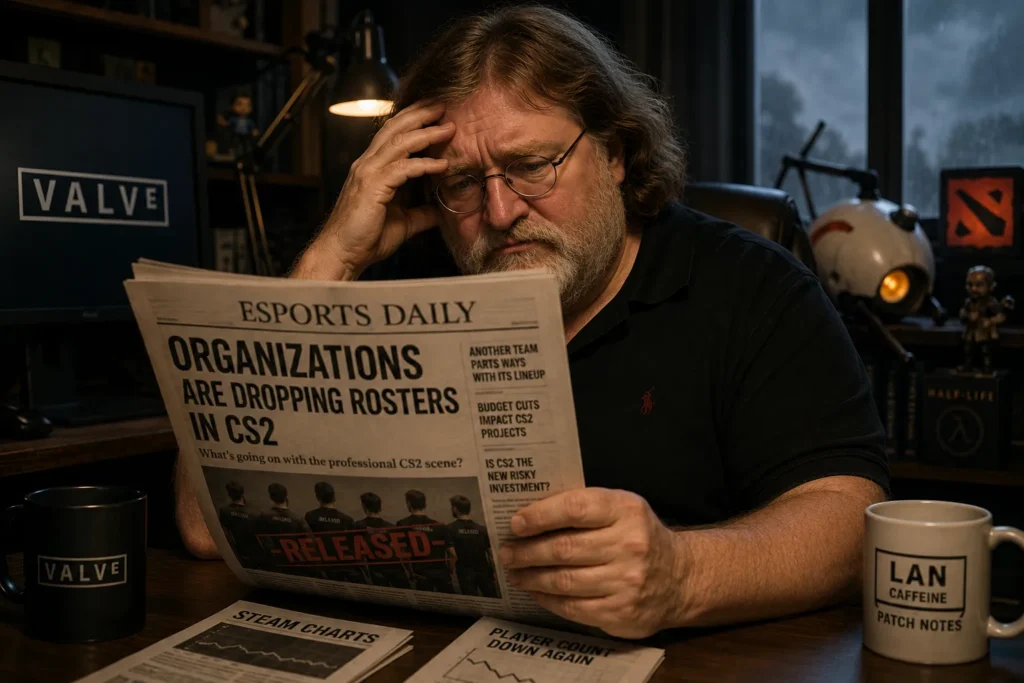
And now the main point — and here we’re less forgiving. Valve has to step in, because what’s at stake isn’t the revenue of a single tournament but the motivation of the entire ecosystem.
The whole tier-2 and tier-3 scene lived for years on a single thought: break through to a Major. It was both a financial goal and a prestige achievement — the thing teams spent a year grinding LANs for, burning money on flights and hotels, going into the red, all on the bet that making the big event would pay for it. HLTV lays out some telling arithmetic: one organization pegged its qualifier-travel spending in the first quarter of 2026 alone at $25,000–35,000. These people played by the rules Valve itself laid down when it opened up the ecosystem. And then the rules changed at the exact moment they finally reached the finish line.
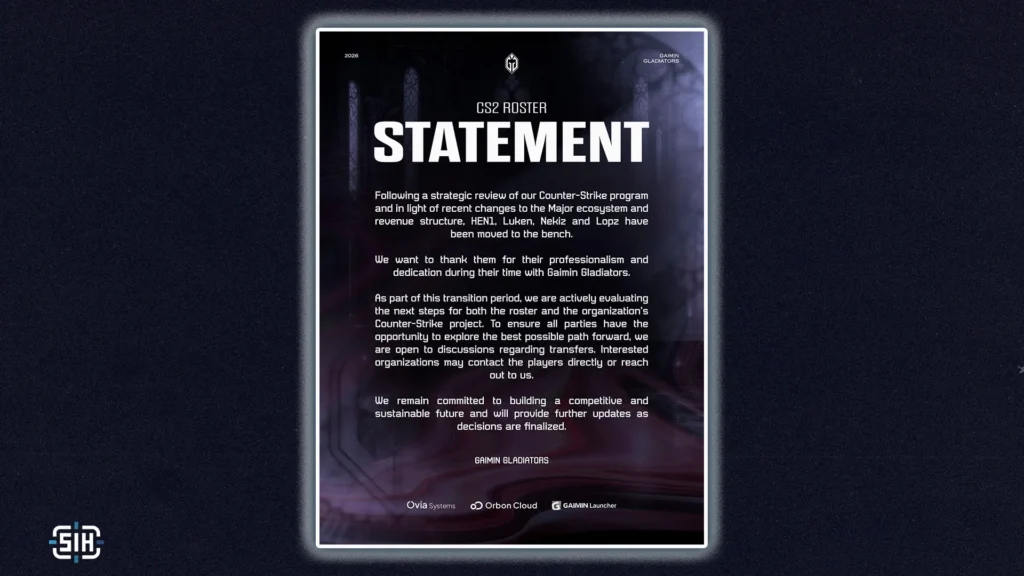
Why exist for a whole year, why burn budget on bootcamps and flights, if the only reward waiting at the other end is just one more tournament with no financial payoff? This isn’t a hypothetical threat. On June 22, Gaimin Gladiators — an IEM Cologne Major participant — shut down its CS division, citing outright the changes to the Major ecosystem and revenue structure. And the general read across the scene is that if nothing changes, they won’t be the last.
Which brings up a parallel that’s genuinely unsettling — Dota 2. Remember the era of The International, with prize pools in the tens of millions crowdfunded through the Battle Pass? Back then every team on the planet dreamed of reaching TI, and the tournament was the engine of the entire discipline. The moment Valve wound down the Battle Pass and the prize money shrank several times over, the scene started to fade: sponsors thinned out, motivation dissolved, and Dota lost much of that wild hype. Nobody wants Valve’s best title walking the same road.
One crucial point in CS’s favor — there’s a safety net here that Dota never had. In Dota, you could just sign up for an open qualifier and snatch a shot at big money right there and then. In CS it doesn’t work that way: the VRS system requires you to play tournaments and stay active all year long. That’s exactly what keeps the lower tiers on their toes. And that’s precisely why the sticker flop is so dangerous: if a year of grinding no longer converts into Major money, VRS motivation breaks at its most vulnerable point. The incentive to stay active year-round vanishes for dozens of teams at once. Valve simply has no right to look away from this — otherwise it’ll be kicking the load-bearing pillar out from under its own scene.
One more catch — the new royalty formula, tied to VRS seeding and final placement. Rewarding the best sounds logical, but in practice, with record-low overall sales, it’s the teams at the bottom who take the biggest hit. As sources told HLTV, being the worst team at a Major with the lowest payroll used to be a great spot to be in — now it’s far less appealing. The gap between the elite and everyone else will only widen.
What the pros and the community think: a near-united front
To keep the picture from looking one-sided, it’s worth handing the mic to the people on this side of the screen. And here, it has to be said, the scene and the community are surprisingly unanimous.
From the content creators, the reaction was harsh. Fl0m called the system a flat-out money grab and tore into the inflated dynamic prices. Arrow dropped a video whose title said it all — that Valve had broken Major sticker culture — framing Cologne as the moment a fan tradition turned into a luxury catalog.
From the organizations, the tone is even more anxious. SINNERS co-founder Moritz “Askadar” Straube said he grasped the scale of the mess within the very first minutes of the stickers going live. For the Czech org it stings especially: they’d fought their way to a Major for over six years, became the last team to grab a Cologne slot — and instead of the long-awaited financial breath of fresh air, they got a bucket of ice-cold water. Contracts and bonuses had been built around the old model, on the assumption that Cologne would at least match the Budapest payouts, if not become one of the most lucrative Majors ever. Reality turned out to be far harsher.
Should you invest in IEM Cologne stickers? It's looking that way
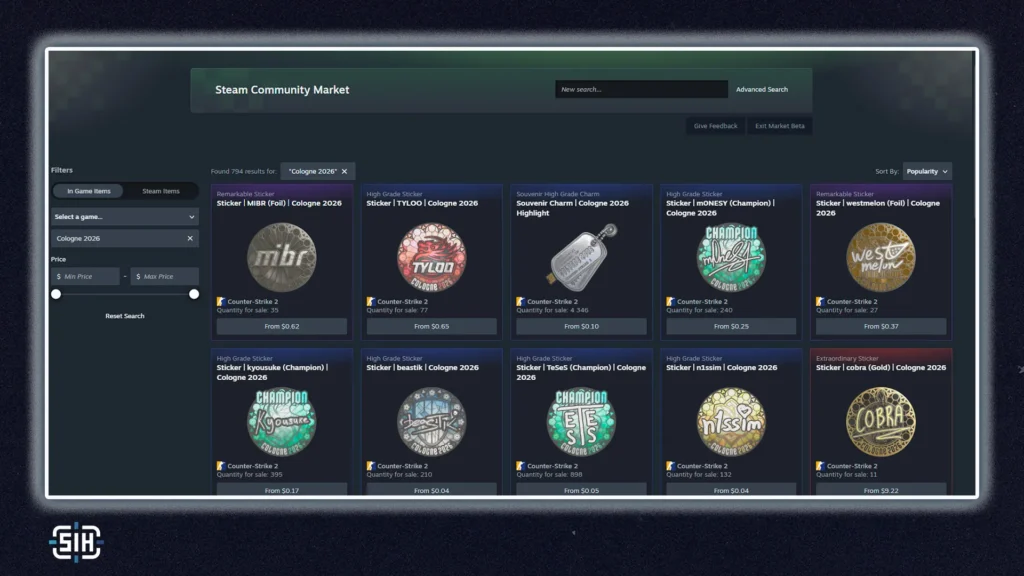
Here’s where the sales flop flips into good news — for anyone holding Cologne items. Everything points to these stickers turning scarce and climbing noticeably in value over the long haul.
The logic is simple and stacks up from a few factors. The print run is objectively small: the high barrier to entry and the absence of the usual cheap capsules scared off the mass buyer, which means physically few stickers were actually bought. There were no discounts in the classic sense, and there probably won’t be — Valve hasn’t announced any sale mechanism, and “getting cheaper” happens organically through demand. On top of that, supply keeps shrinking naturally: every sticker applied to a gun never comes back to the market. Scarcity is being locked in right now.
Add Cologne’s signature “cathedral,” stained-glass visual identity from ESL — which makes the set instantly recognizable — and you’ve got a collection with real character. The newcomer teams are worth singling out, too: their stickers are a rarity on the market, and demand for scarce tags only grows over time.
Up next is the Singapore Major. And the big storyline of the season is no longer purely a sporting one — will Valve manage to fix the economy in time? Because for a lot of organizations, the end of 2026 is going to be the reference point when they map out their plans for the seasons ahead.

Alex
Alex is an author and esports observer with more than seven years of experience. He specializes in analyzing new releases in the world of computer games, gaming services, and in-game economies. Alex shares practical experience and an expert perspective on the development of gaming, helping readers understand complex mechanics and stay up to date with the latest news.

