Call to Arms-ory: Top 10 New Fairy Tales Skins from the Steam Workshop That Deserve a Place in CS2
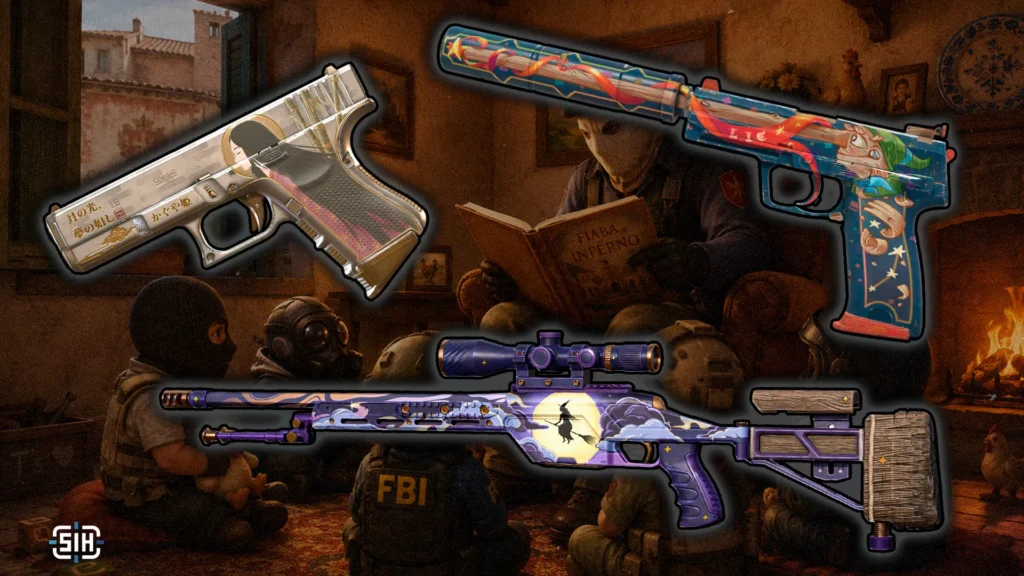
When Valve announced the three categories for the second Call to Arms-ory, Fairy Tales looked like the safe bet. Everyone knows the stories, the reference material is endless, and nobody has to invent anything from scratch. The first wave of submissions bore that out: we went through it a month ago, and almost everything leaned on the obvious, a race to see who could draw Red Riding Hood and the wolf first.
A month on, the theme has grown up. The easy ideas are taken, so artists have pushed further. Submissions are now turning up where the story isn’t just painted on the body but built into how the skin works. On one of them, the pattern decides which character you end up with, so the hunt isn’t for the right float or the right seed, it’s for your favourite.
We went back to the Workshop and rebuilt the list from scratch. Here are ten new pieces with a real idea behind the artwork.
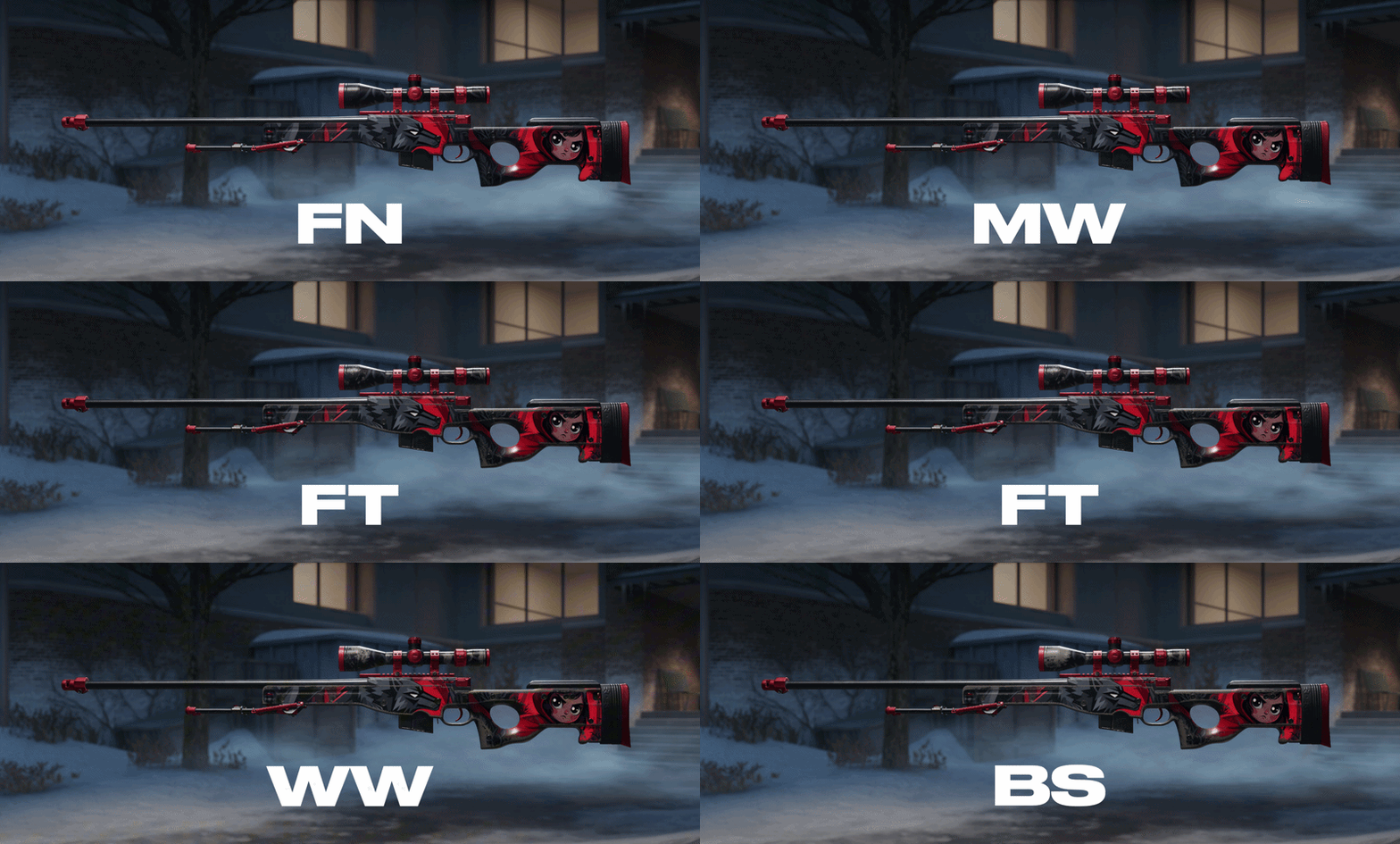
AWP | Red Hood
- by TRUGLE
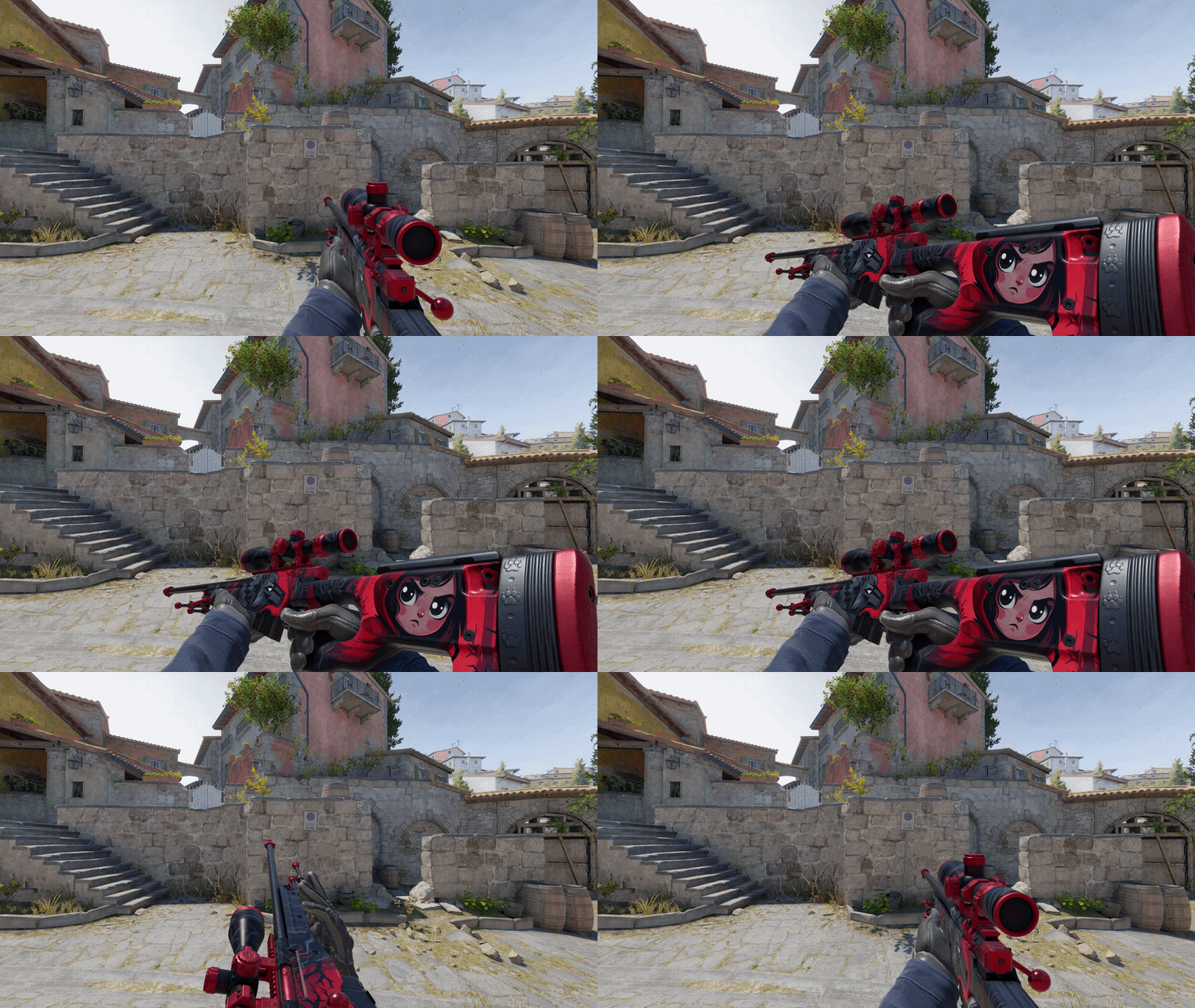
Red Riding Hood on a sniper rifle is a statement in itself, but the interesting part is how the artist has turned the story around. The girl sits on the stock, right behind the scope, and the wolf’s head is pushed forward towards the barrel. That isn’t an illustration of the tale, it’s a specific moment inside it: she’s looking down the scope and the wolf is already in her line of fire. No prizes for guessing who the hunter is here.
Her face settles the question. No fear in it, just a furrowed brow and the irritation of someone thoroughly sick of this particular story. The palette runs on two colours, the heavy red of the cloak and the black silhouettes of bare trees across the body, with the forest reading like a painted stage backdrop. One detail for anyone who likes to look closely in inspect: paw prints on the butt plate, the wolf’s only trace on the part of the rifle where he doesn’t appear at all.
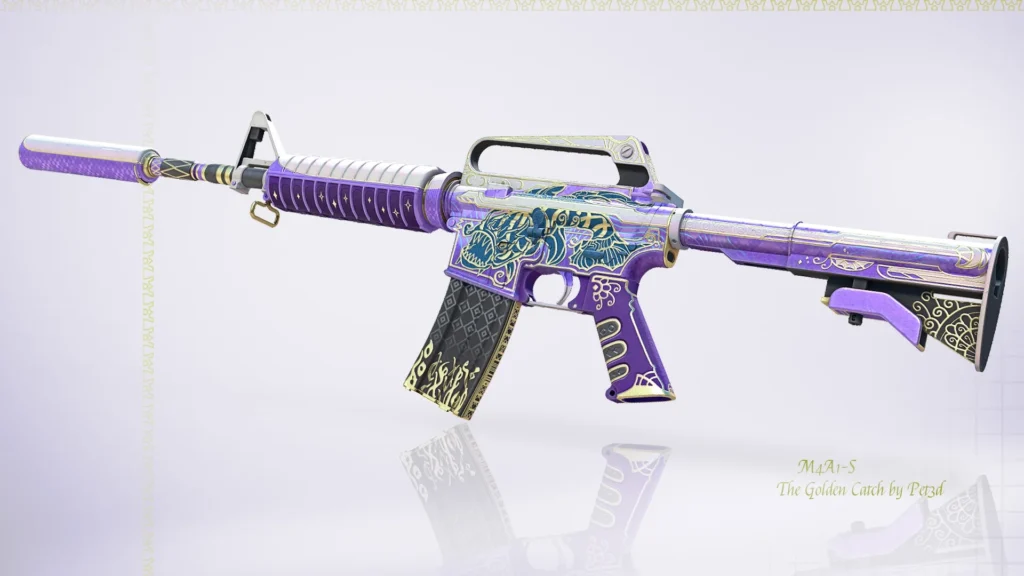
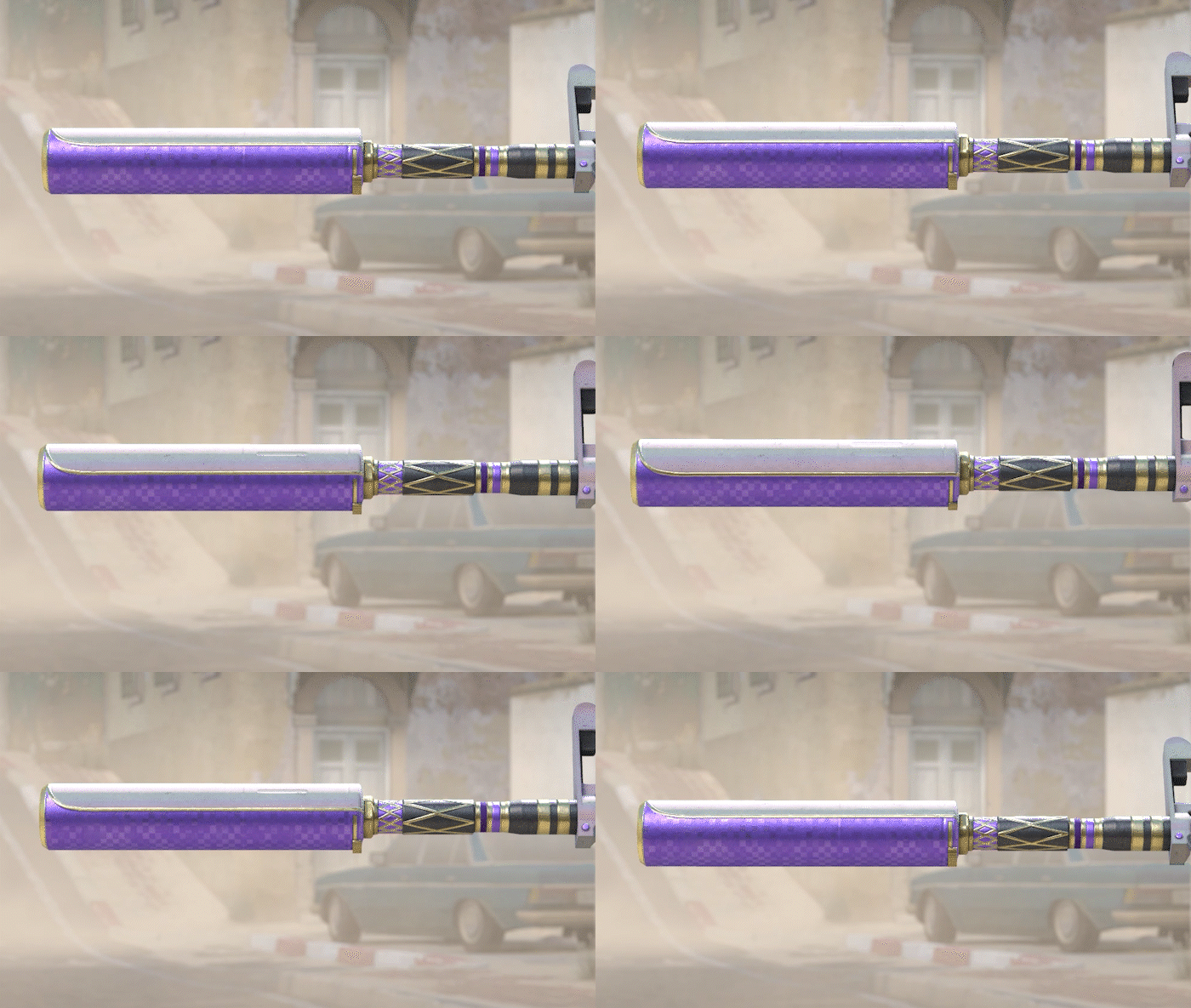
M4A1-S | The Golden Catch
- by 🌸🔥Pet3d🔥🌸
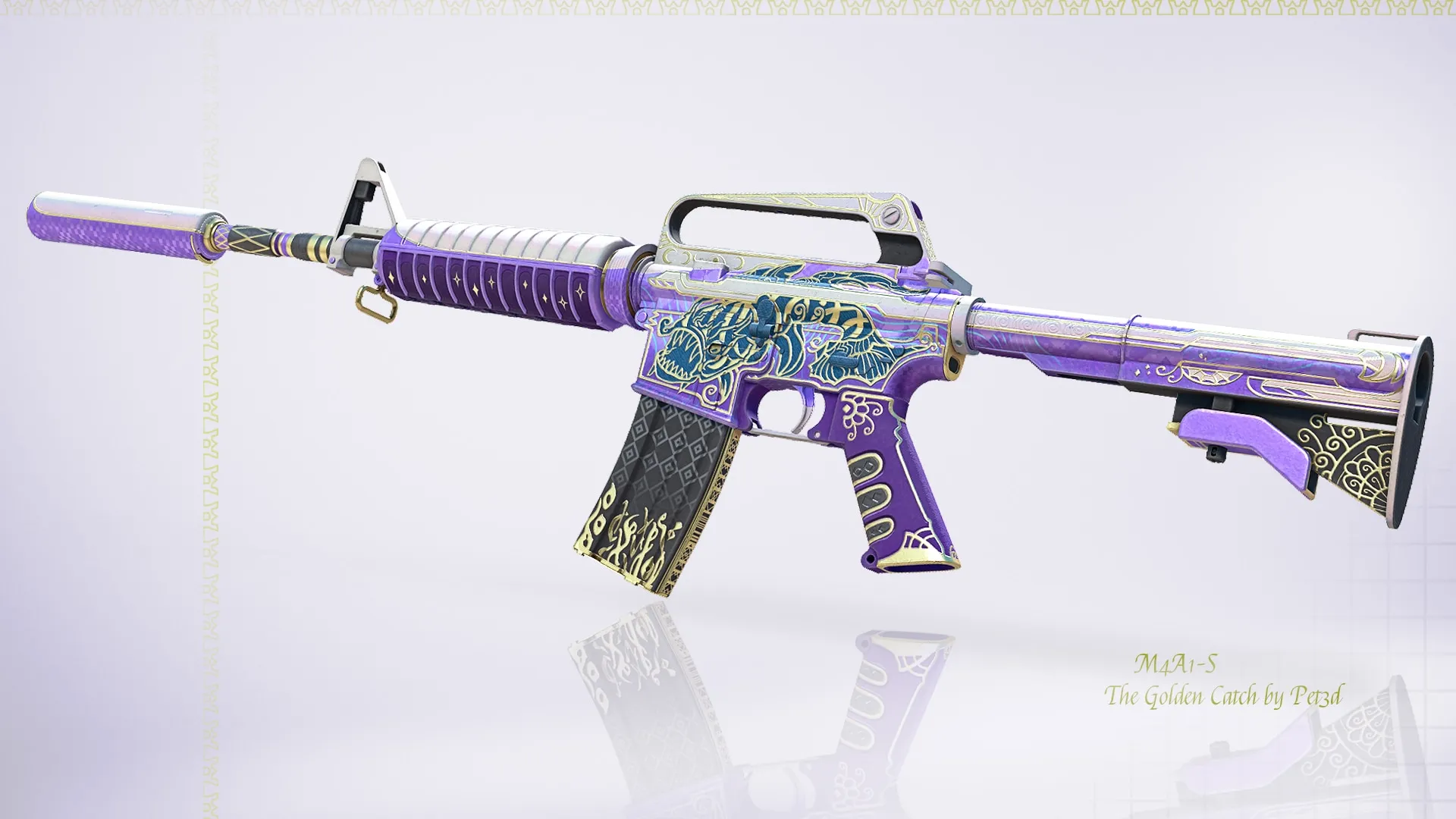
The source is The Fisherman and His Wife, collected by the Brothers Grimm in 1812 and later reworked by Pushkin into the Russian verse tale that half of Eastern Europe grew up on. The plot is the same either way: the wife keeps asking the enchanted fish for more until she’s left with nothing at all. The artist’s own line for the piece is “a golden catch, a bottomless greed”, and the design is built entirely around the second half of that.
The approach is smarter than it first looks. Instead of painting the fisherman and the sea, the artist paints the outcome. The skin looks indecently expensive, exactly the way that palace would have looked, the one the wife wished for one wish before it all came apart. The fish itself dissolves into the turquoise and gold ornament on the receiver, treated as a pattern woven into fine cloth rather than as a character. The moral survives the translation; you just have to spot it yourself.
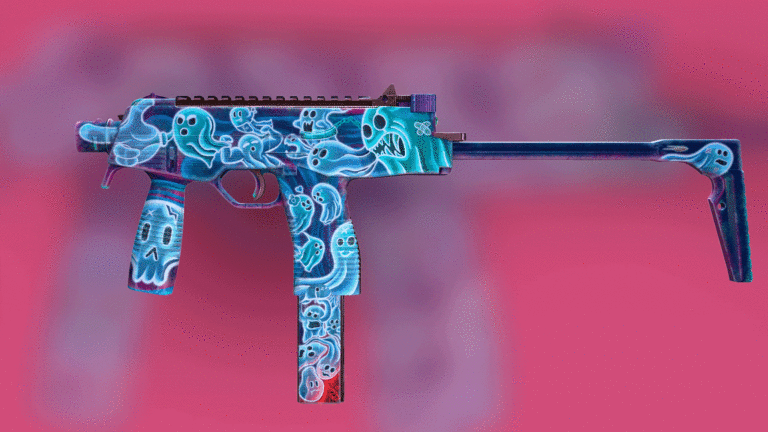
MP9 | Ghosts Rebellion
- by WetQa🌿
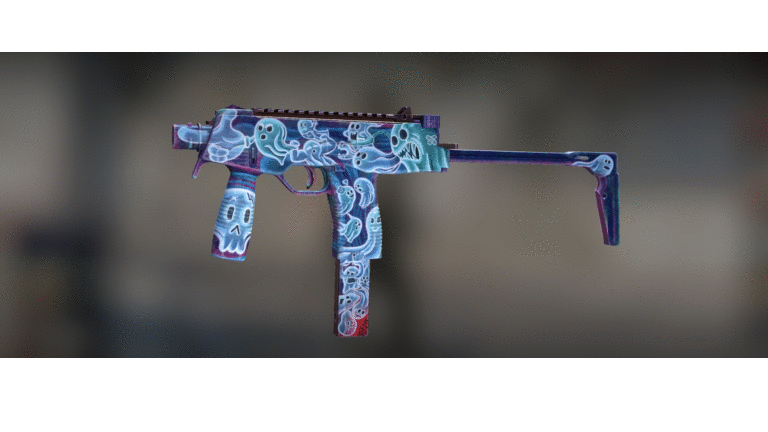
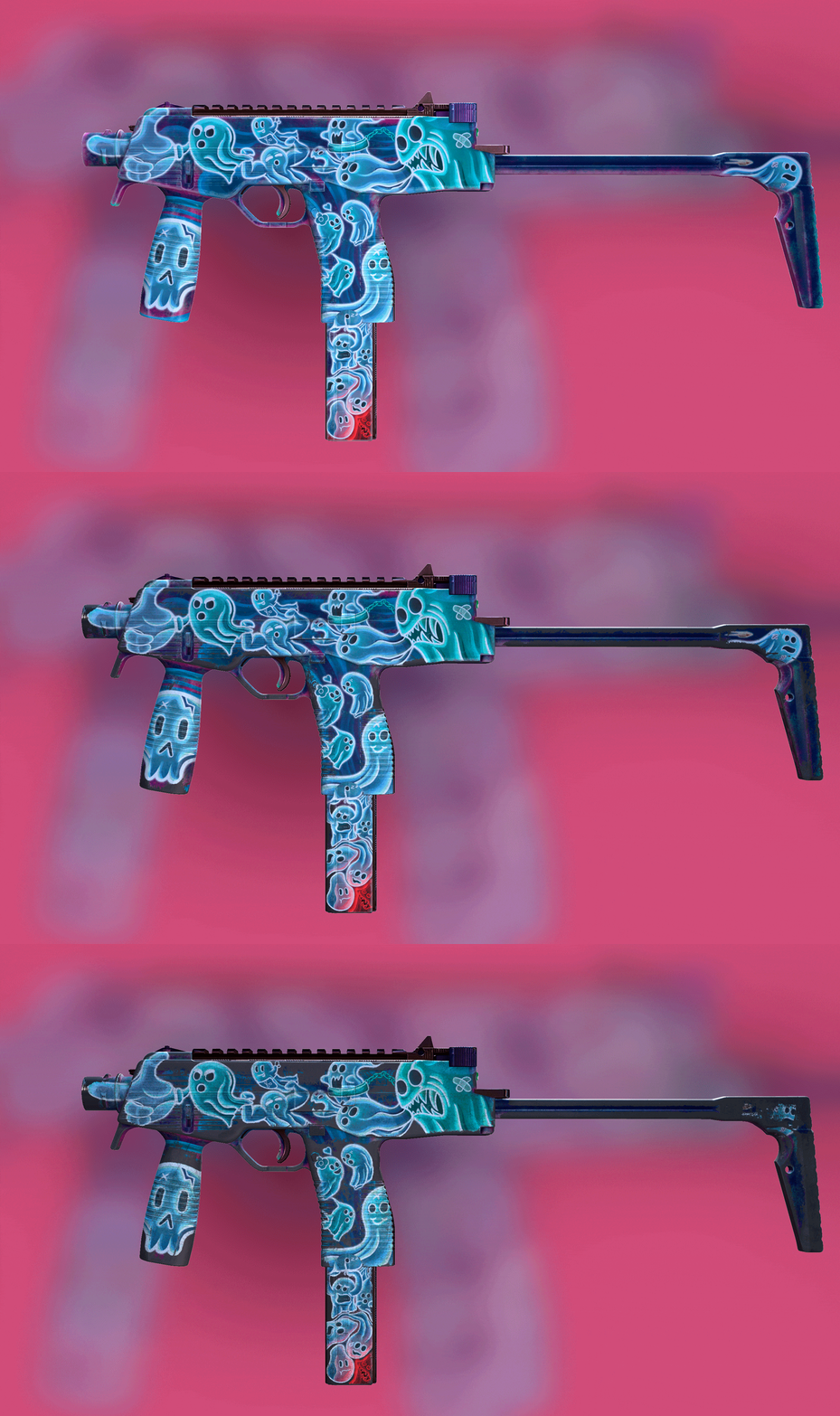
There’s no single ghost here, there’s a crowd of them. Mint-blue spirits have swarmed the whole gun, muzzle to stock, and each one has its own expression: one blinking in confusion, another with a plaster taped across its face, a third opening a mouth full of teeth across half the receiver.
The name tells you the idea. This isn’t a weapon with a ghost painted on it, it’s a weapon the ghosts have taken over, climbing over the body and shoving each other aside rather than politely decorating it. The cartoon graffiti treatment with its heavy outlines fits perfectly: the result isn’t frightening, it’s fun, the sort of ghost story kids tell each other at camp with a torch under the chin.
Glock-18 | Kaguya
- by we3ms
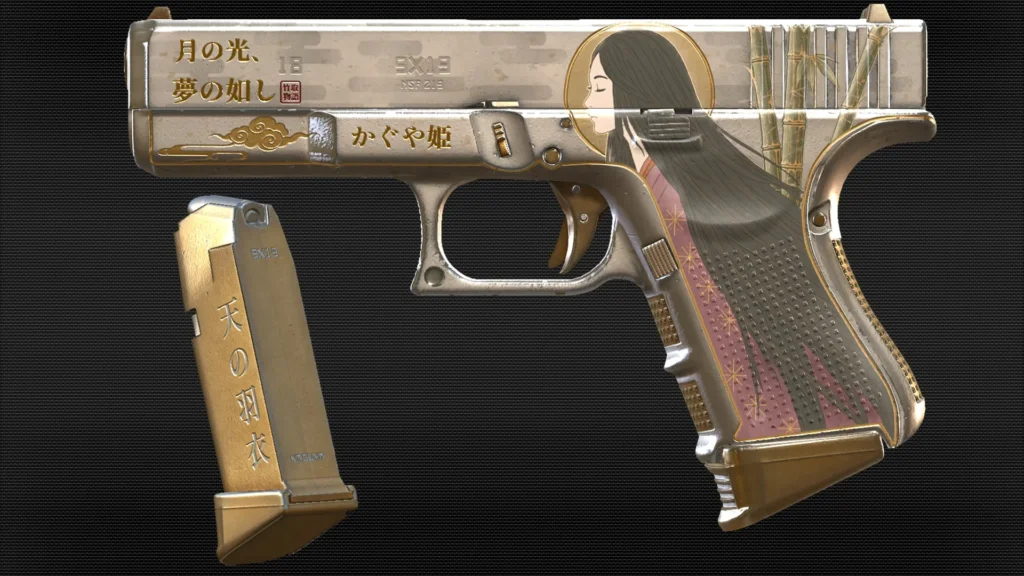
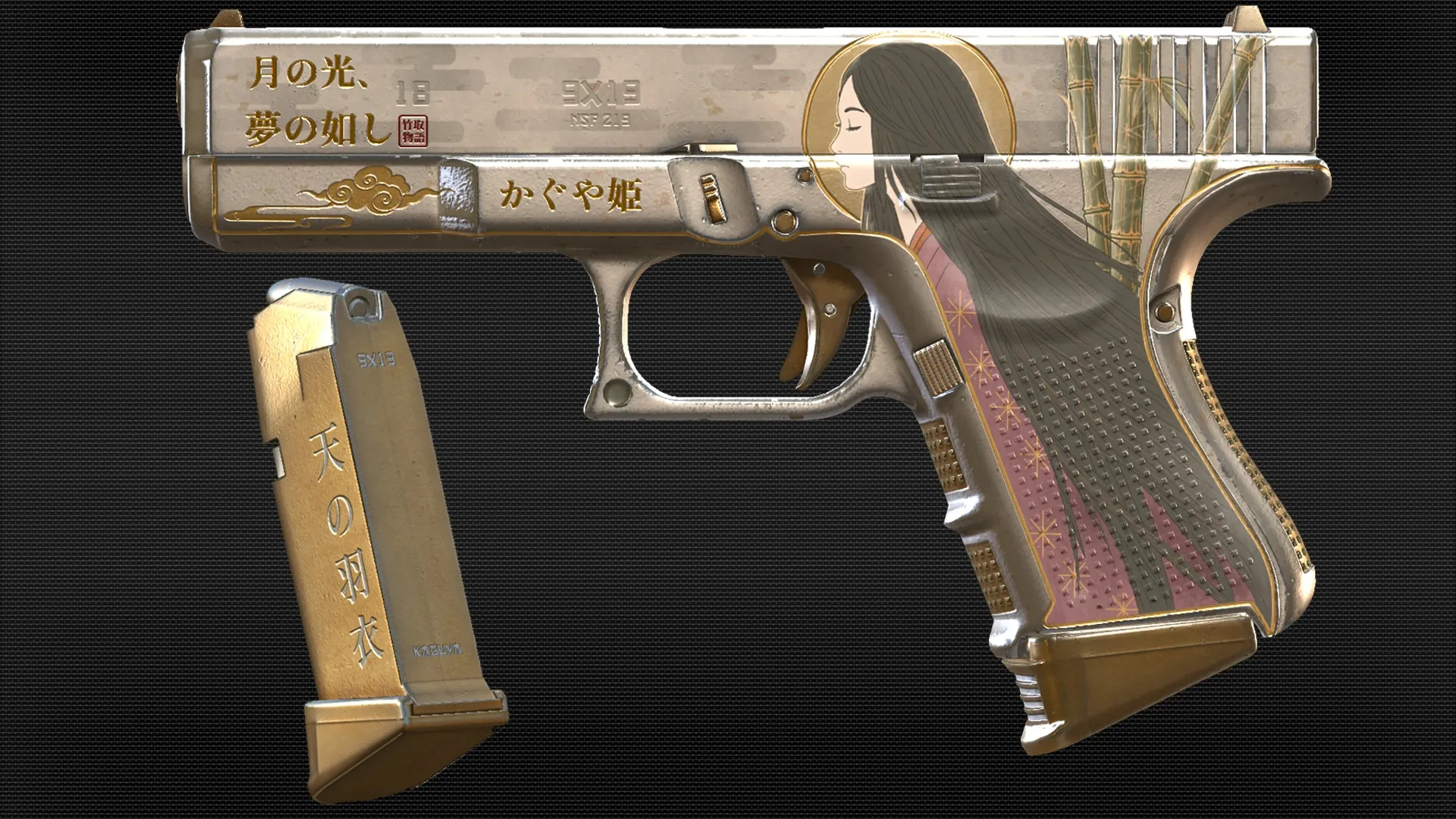
The Tale of the Bamboo Cutter is a tenth-century Japanese story and one of the earliest surviving prose narratives anywhere. An old man finds a glowing child inside a stalk of bamboo, she grows into an impossible beauty, turns down every suitor and the Emperor himself, and in the end returns to the Moon she came from.
The artist has built the whole finish around that ending. The wear progression deserves special mention: as the float climbs, Kaguya disappears from the slide altogether and only her shadow remains. The slide carries a line about moonlight being like a dream, a stamp with the story’s title beside it, and on the magazine sits 天の羽衣, the celestial robe of feathers. In the tale, that’s the garment that wipes away everything earthly the moment she puts it on. There’s a quiet joke in where it ended up: the magazine is the one part you drop and swap without a second thought.
SSG 08 | Fairy Witch
- by SayChains
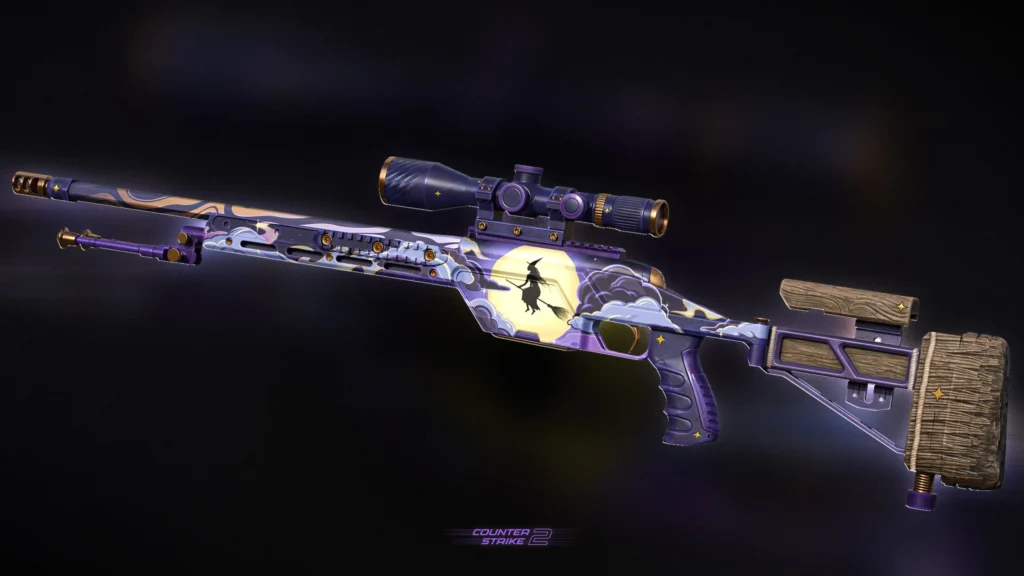
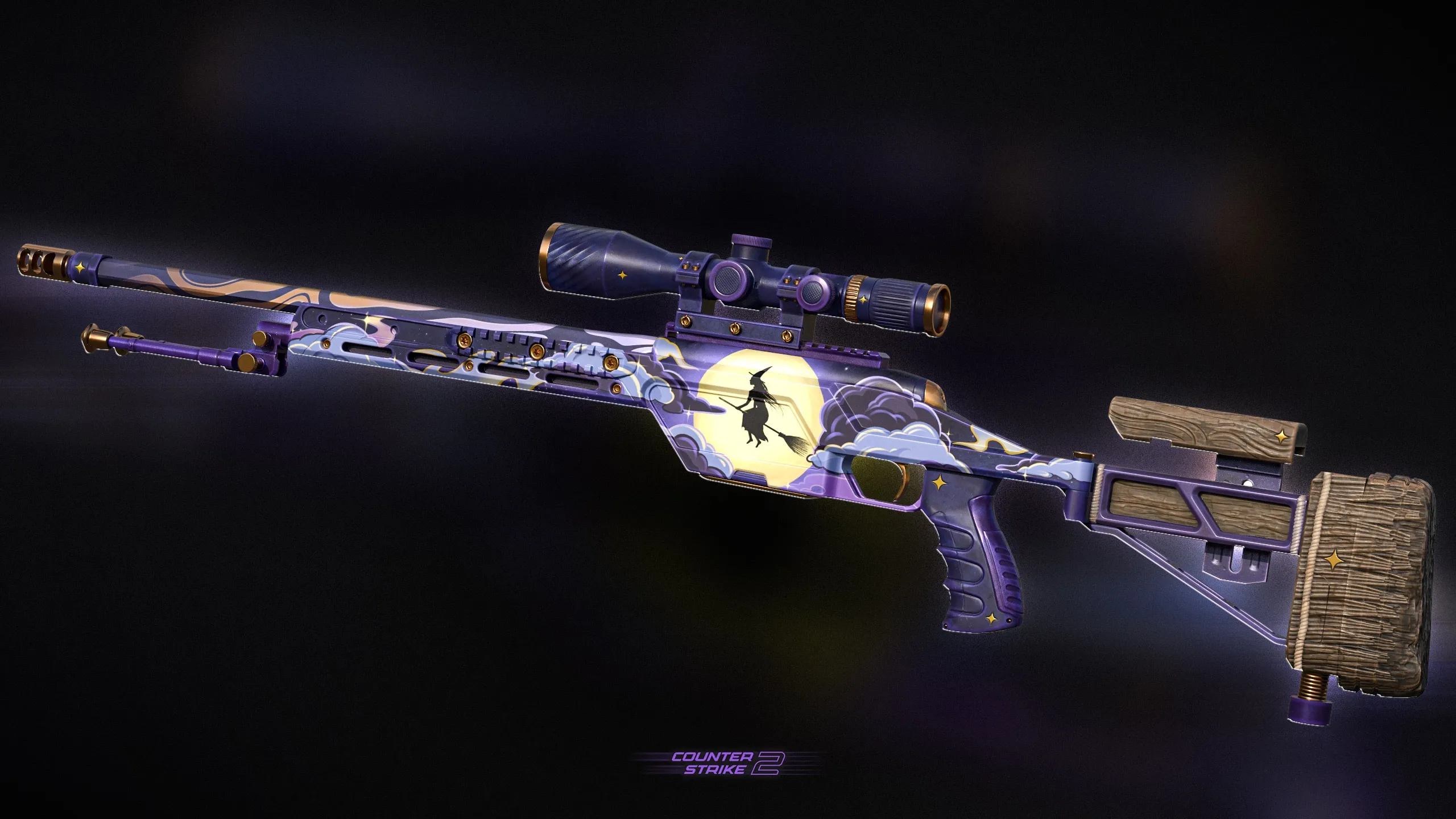
The only piece in this list where the idea rests on the shape of the weapon rather than the artwork. The artist has turned the SSG 08 stock into a bundle of twigs bound to a wooden handle, and the rifle reads as a witch’s broom end to end. After that, all that’s left is to draw the flight: a black silhouette on a broomstick crossing a full moon on the receiver, lilac night clouds around it, a trail of golden pollen running along the barrel.
The artist describes the piece as primordial magic woven from moonlight and the roots of old trees, where every shot is a spell slipping off the fingertips. Grandiose, but the design earns it. The palette holds to muted purple and gold with none of the neon usually passed off as “magical”, and the holographic haze around the silhouette adds just enough glow to keep the scene from looking like a sticker slapped on the body.
MP7 | Folklore Frenzy
- by makar
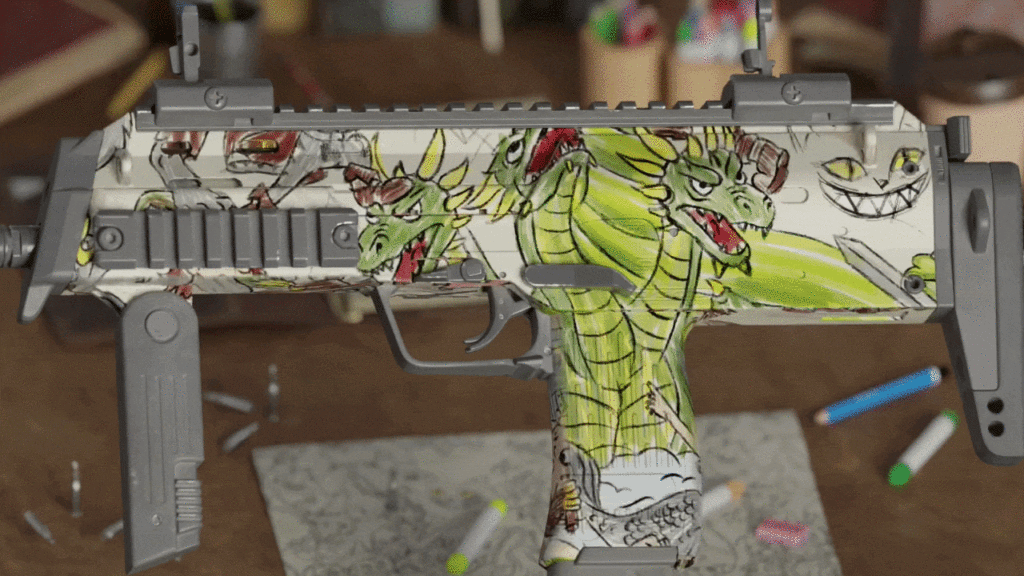
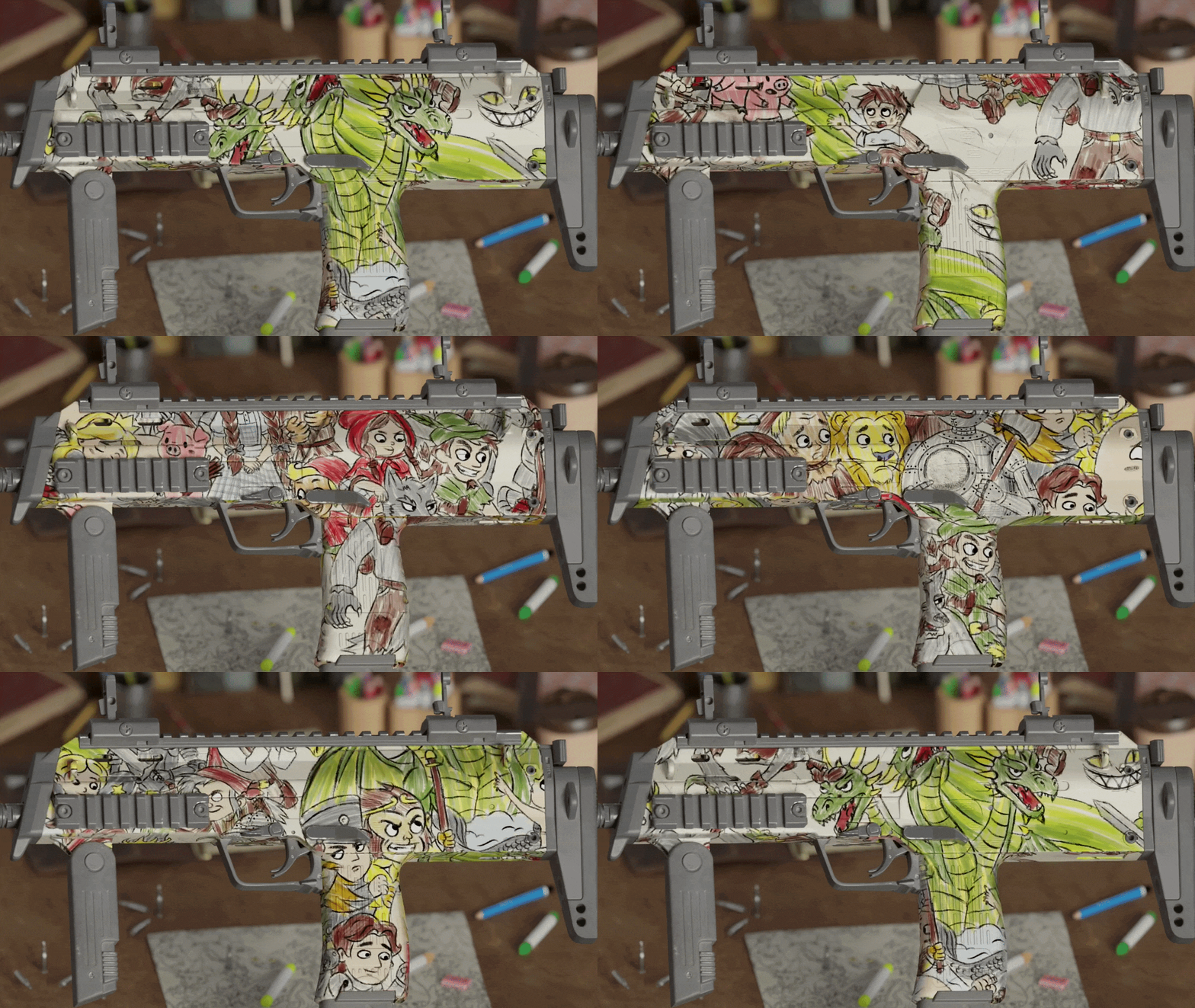
Folklore as drawn by a child. Wobbly black marker outlines, colour going over the lines, streaks from a pen that’s drying out, and a three-headed dragon, a grinning cat and assorted other creatures that look like they were scribbled in the back of an exercise book during a dull lesson. The preview finishes the job: the gun lies on a desk among scattered markers and a rubber.
The clever part is the mechanic. The artist says up front that there are no specific rare patterns on this skin, then explains why that doesn’t matter. There are plenty of characters, the pattern decides which one lands on the visible side, and everyone has a different favourite. Rarity stops being absolute and becomes personal: the value of a given copy is set by its owner, not by a pattern chart. For a fairy tale theme that’s the perfect move, because nobody picked their favourite story as a child by consulting a ranking either.
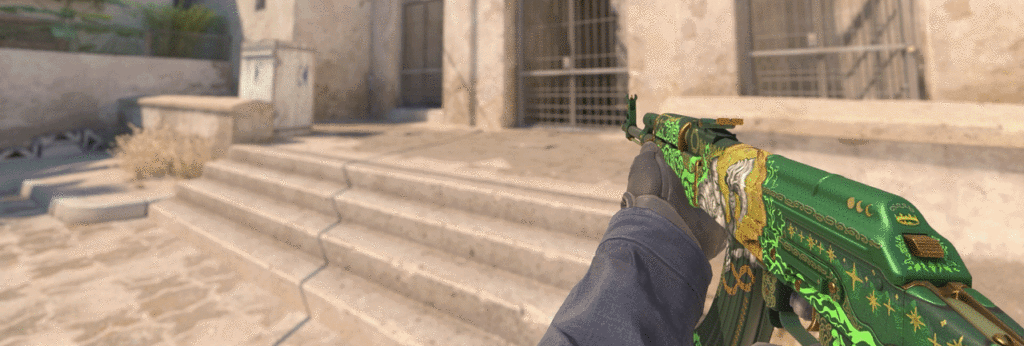
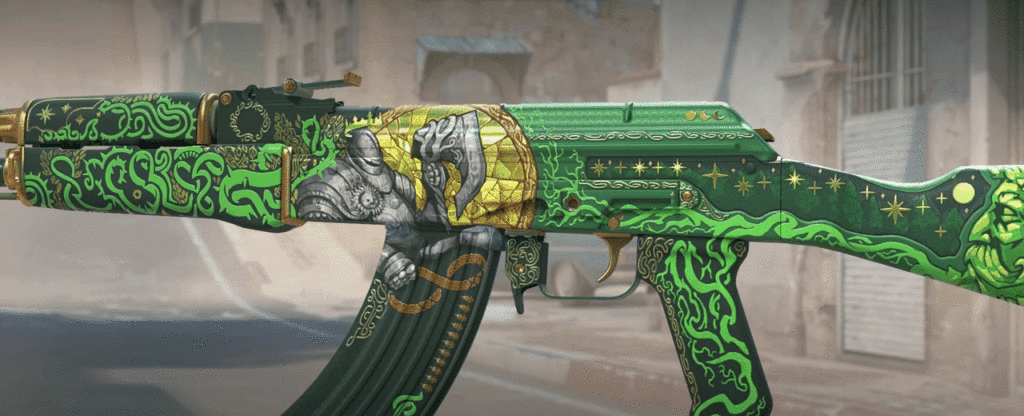
AK-47 | Green Knight
- by Lehmann
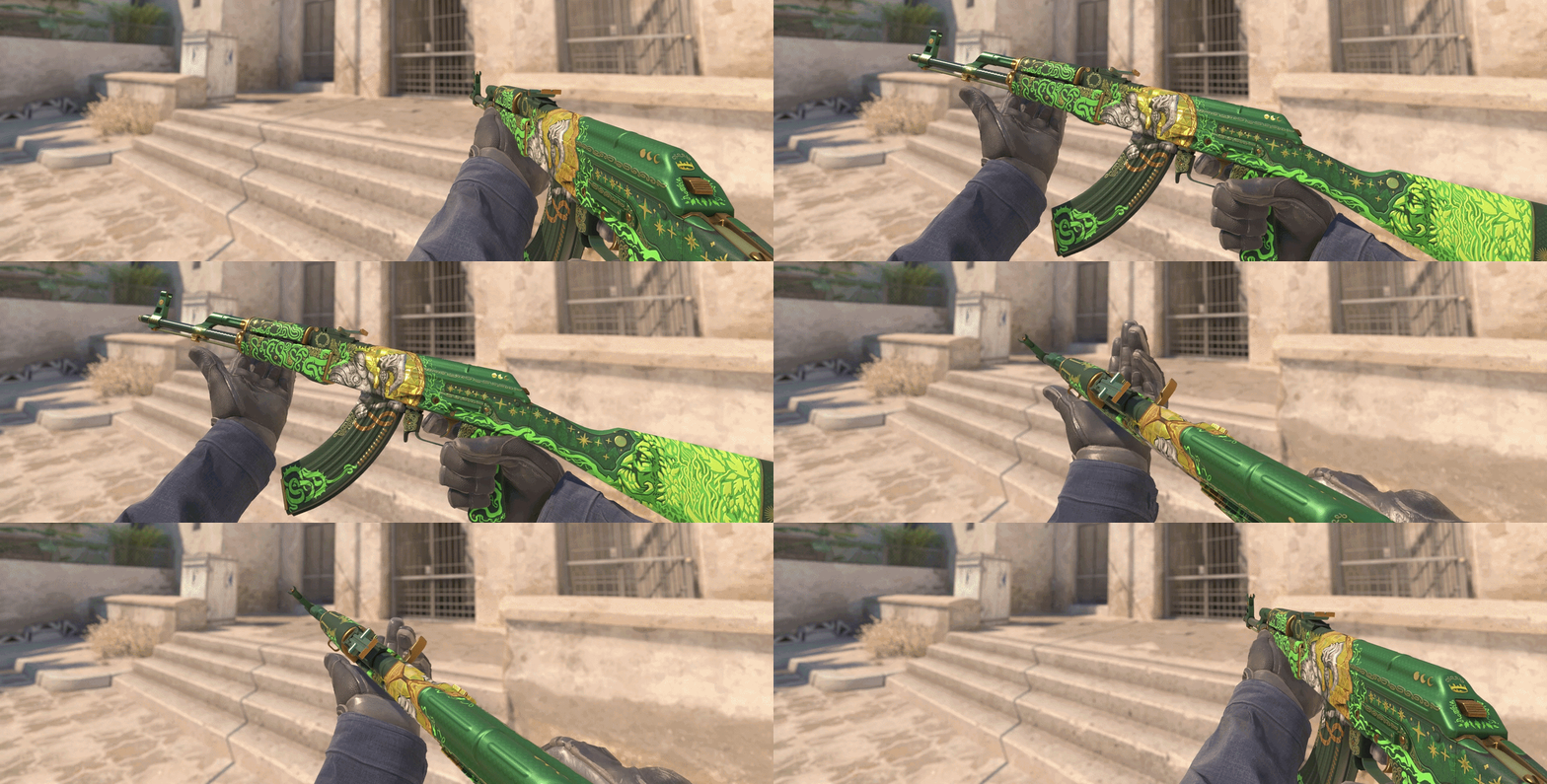
A nod to Sir Gawain and the Green Knight, the fourteenth-century English poem. A knight who is green from head to foot rides into the Christmas feast at Camelot carrying an enormous axe and proposes a game: anyone may strike him with it, provided they take a return blow a year later. Gawain takes his head off, the knight calmly picks it up off the floor, names the meeting place and rides out.
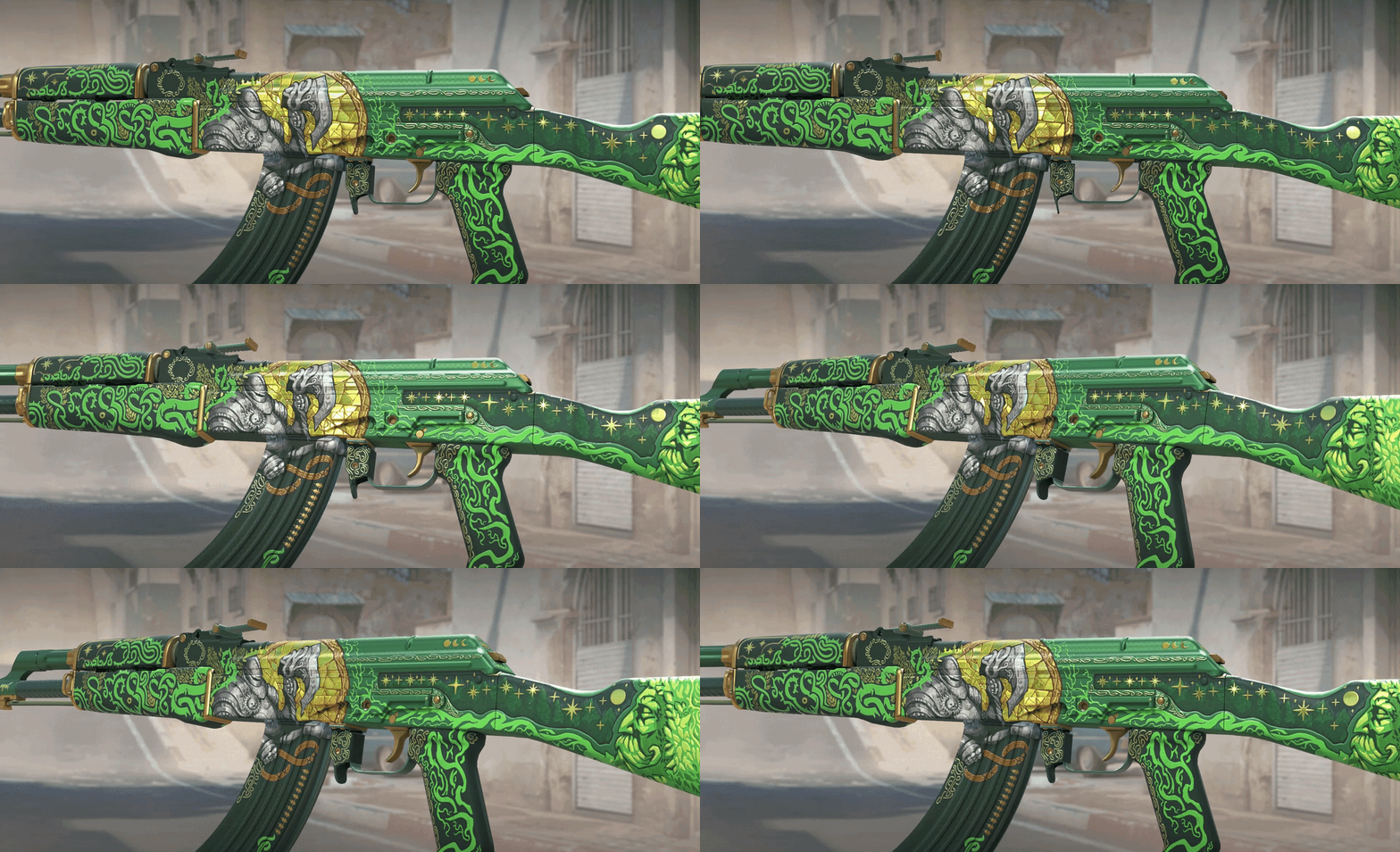
Every part of this was drawn by hand, and you can see it in the density of the ornament. Green foliate scrollwork covers the body with no dead space left anywhere, and a figure in silver armour with an axe stands inside a gold stained-glass rosette on the receiver. On the stock sits the Green Man familiar from English stone carving, direct ancestor of the knight in the poem. The green isn’t a convenient palette for the theme either, it’s the colour of the otherworld, and running the whole skin on it was the only right call.
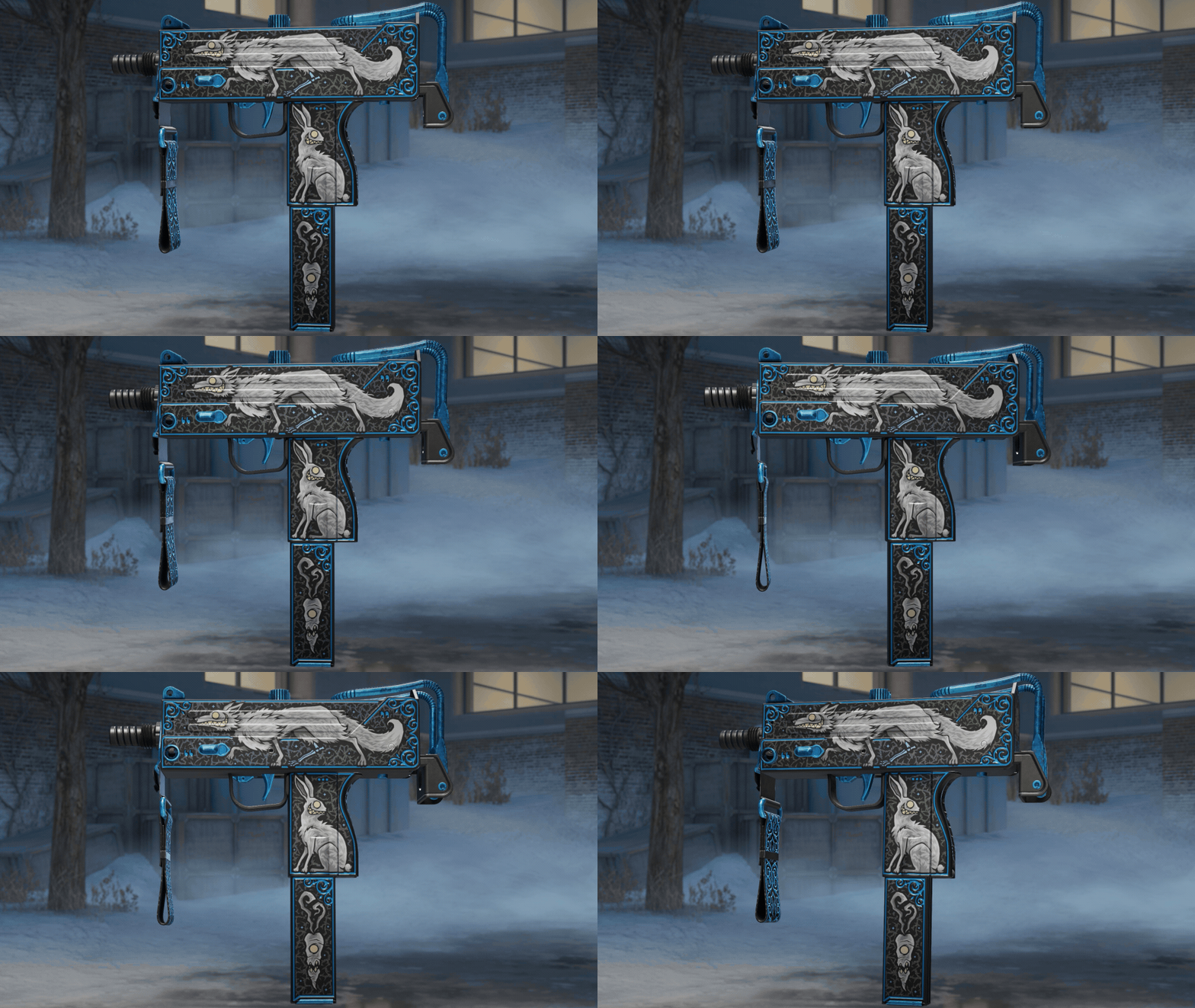
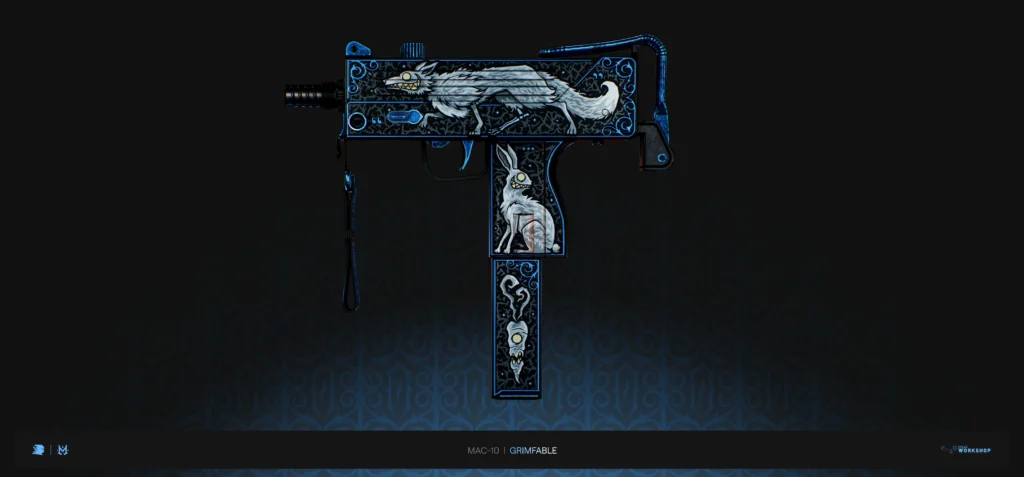
MAC-10 | Grimfable
- by kioShimyo 👾
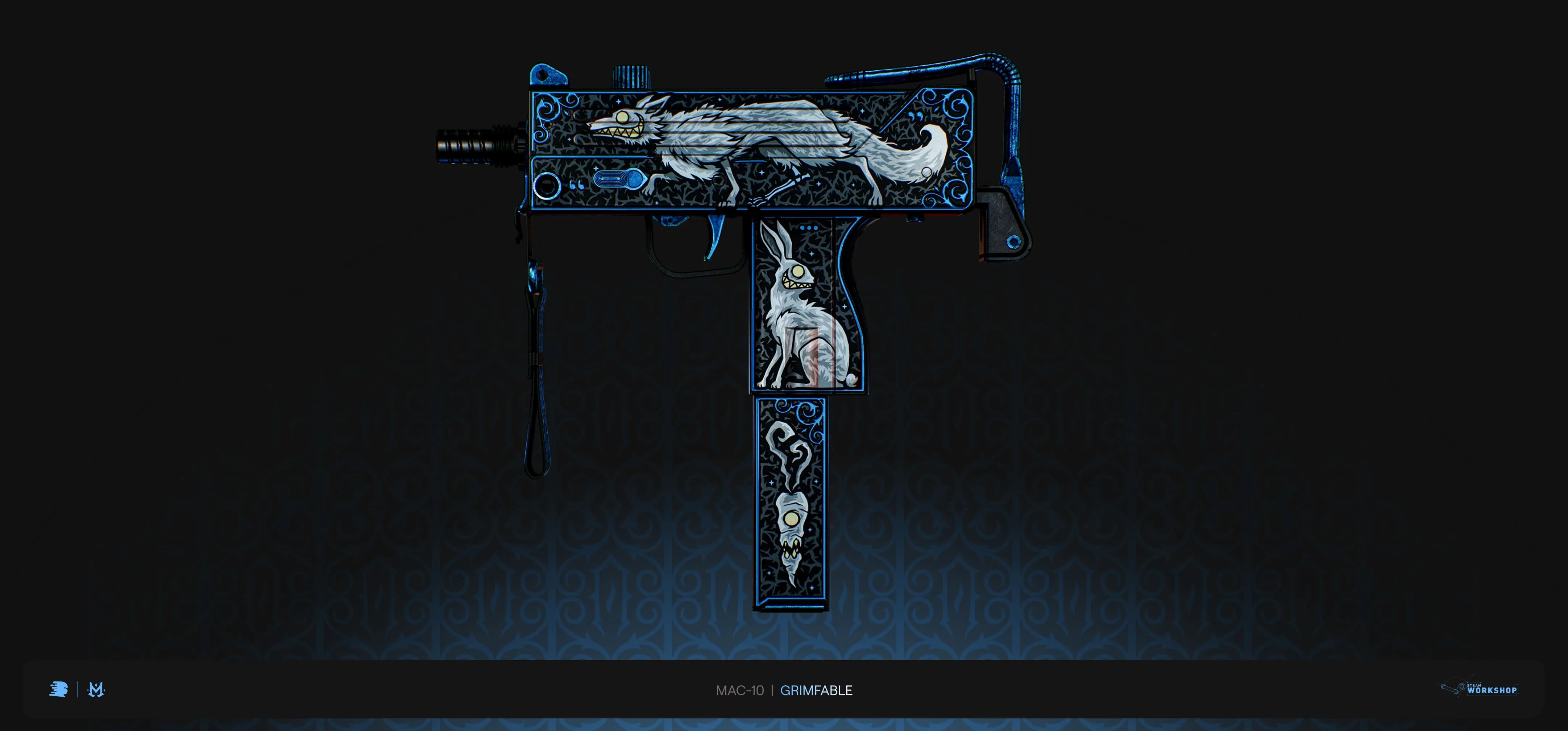
The name folds together Grimm and fable, and you can hear the grimness in it before you’ve even looked at the artwork. The artist works in an engraving style: gaunt white animals on a deep blue ground, each one boxed inside its own ornamental frame, as though the pages of a mediaeval bestiary had been laid out across the gun.
The idea is to give the tales back the form they had before anyone rewrote them for children. The wolf on the receiver is mangy and its grin is nothing like a cartoon, the hare on the grip has eyes that are far too human and a wound in its side, and a bird’s skull sits in a curl of smoke on the magazine. These aren’t sweet little characters, they’re participants in a story that ends badly for one of them. The blue panelling holds the composition together and stops it falling apart into three separate drawings.
USP-S | Storyteller
- by ZINK
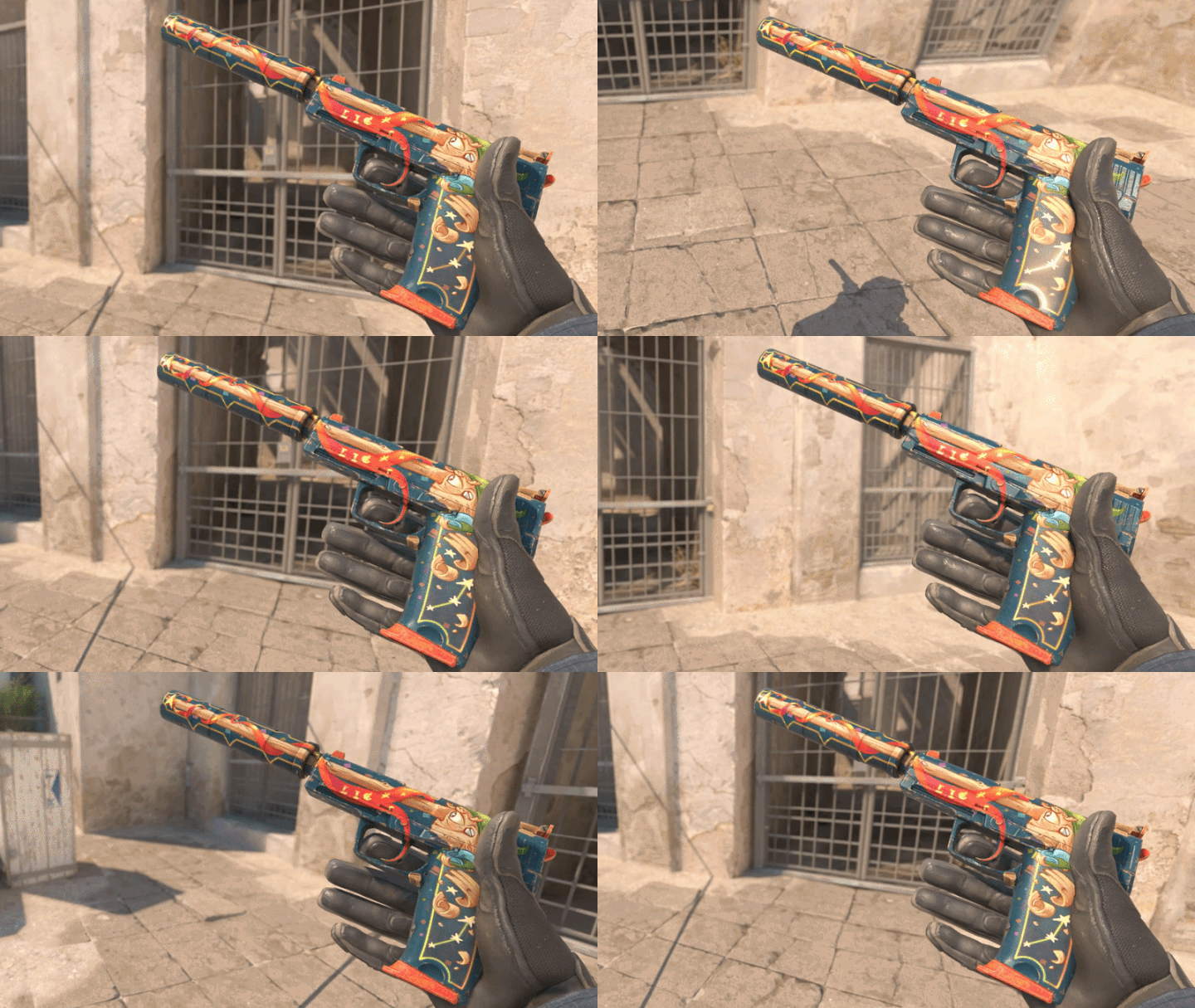
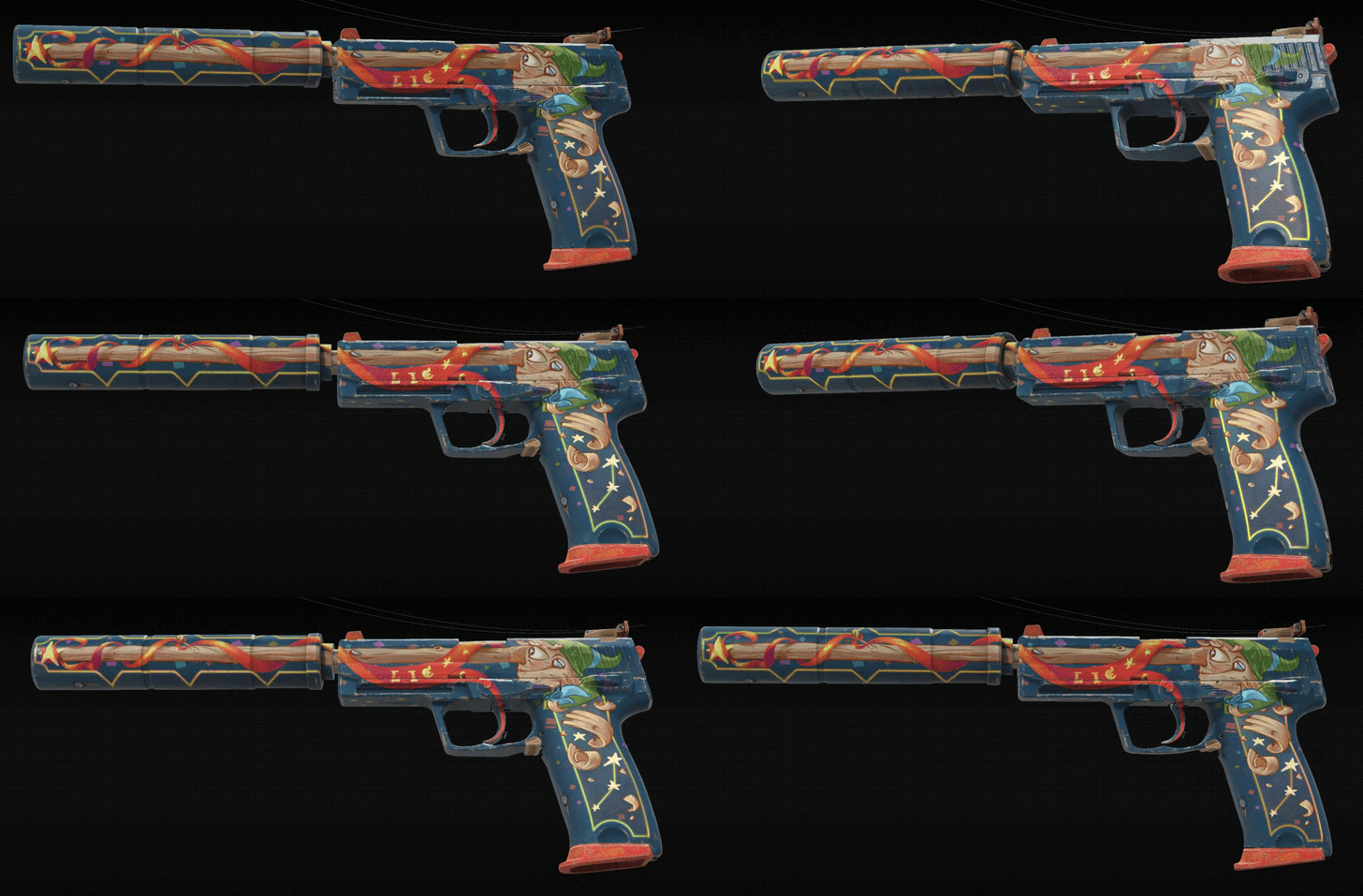
Pinocchio, though not the episode everyone reaches for. The artist starts from the puppet theatre chapter and spreads a poster for a night performance across the body: confetti in coloured squares scattering over deep blue paint, stars and a crescent moon along the grip. The festivities start after dark here, which is when travelling theatres always played.
The best decision is the suppressor. It’s wooden, wrapped in a spiralling red ribbon, and on a USP-S it’s the longest part of the gun. The nose that grew is delivered without a single caption, purely through the shape of the weapon. There are captions all the same: LIE scratched in red down the side, and the boy in the green cap looking away with the guiltiest face imaginable.
P250 | Poison
- by Mark0v
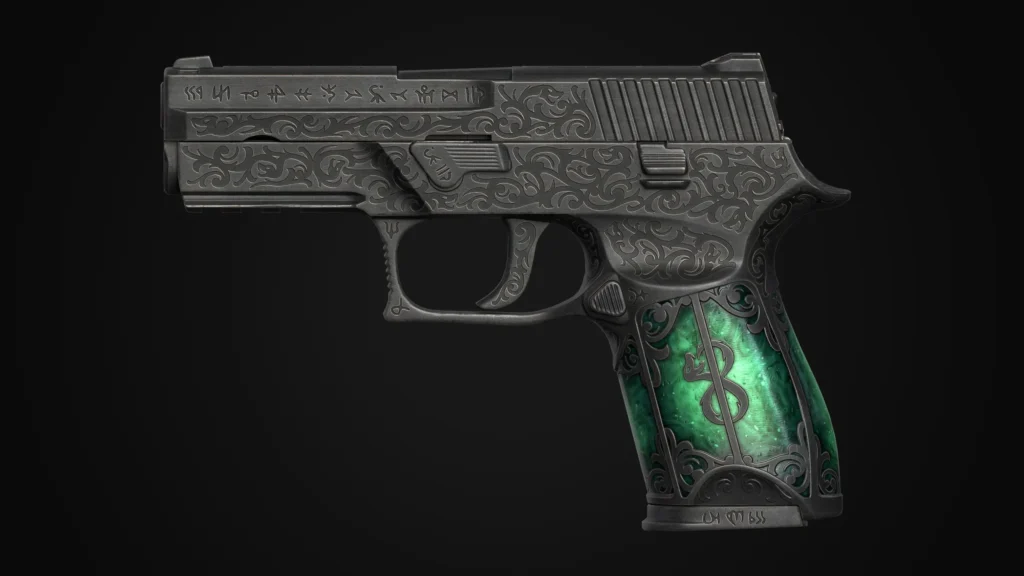
We’ll close with a piece that has no villain in it at all. The artist took the poison, the one prop no tale with a witch or a stepmother can do without, and made that the subject.
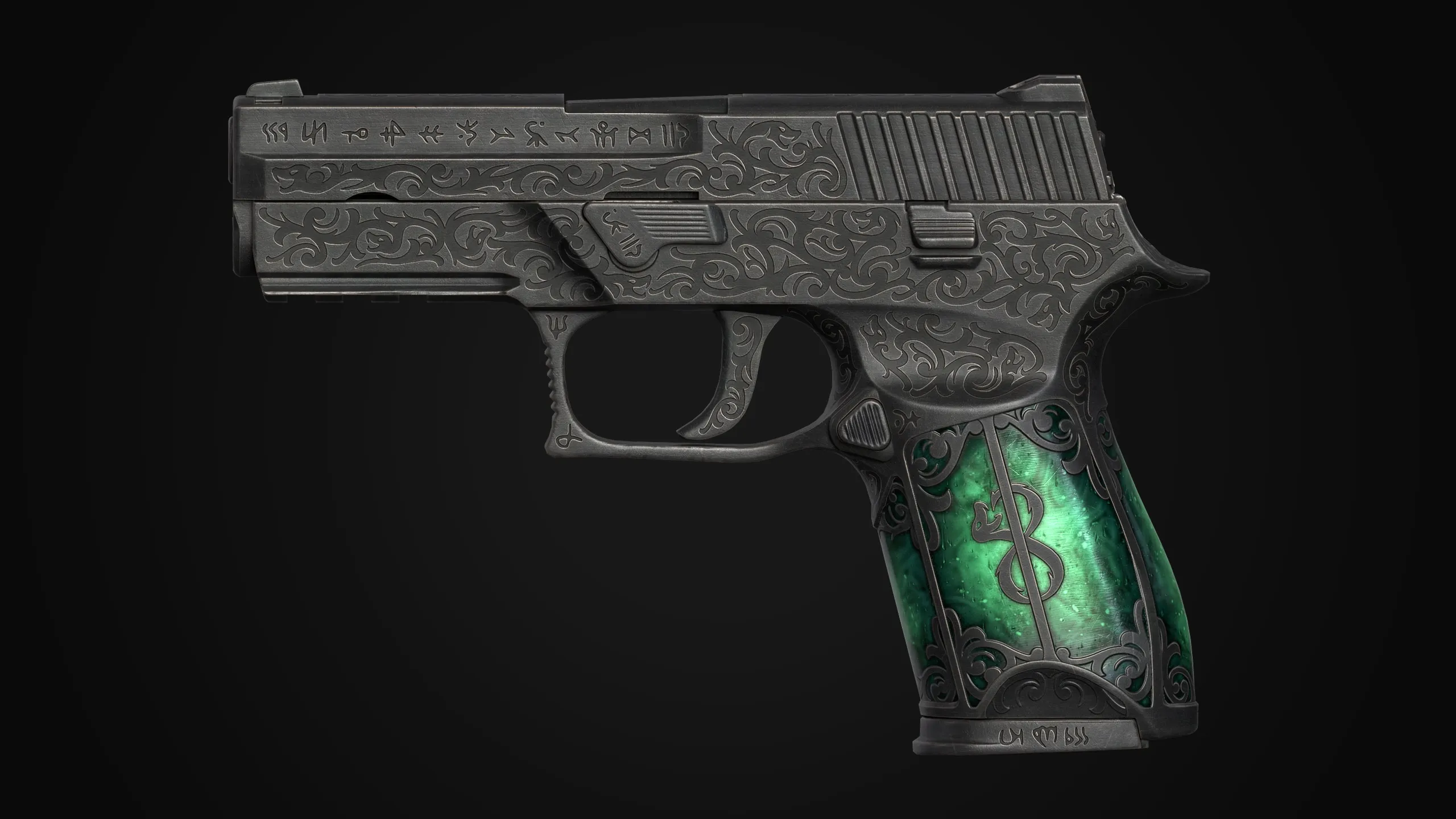
The execution is austere. The body sits somewhere between stone and blackened metal, covered in unbroken carved foliage with snake heads pushing out of it here and there. Runes are cut into the slide, because this sort of thing is always brewed by a witch in the woods rather than mixed by a chemist. The whole gun runs on a single colour. The grip carries an inlay of green malachite behind an iron lattice, and inside it you can make out the silhouette of a bottle.
Alex
Alex is an author and esports observer with more than seven years of experience. He specializes in analyzing new releases in the world of computer games, gaming services, and in-game economies. Alex shares practical experience and an expert perspective on the development of gaming, helping readers understand complex mechanics and stay up to date with the latest news.