Can AI Pick Your CS2 Skin Investments? We Gave $100 to Five Chatbots
Nobody is embarrassed to ask a chatbot for money advice anymore. AI picks hotels, writes resumes, runs budgets, and for newer traders it has quietly taken over the role of the more experienced friend you ask what to buy right now. The thinking is always the same: the model has read the entire internet, so it has to know more about the skin market than we do.
Right now is a particularly good time to put that to the test. The skin market is not a forgiving place for predictions at the moment. Prices have been pulled in every direction at once for months — updates, collection rotations, a sudden rush on one specific item, and an endless supply of rumors about what comes next. Half of those factors can’t be modeled at all, and working out what will be worth more by early 2027 is hard even for people who have been in this market for years.
So we ran an experiment and handed $100 in virtual money to each of the five most popular chatbots. Each one builds its own investment portfolio, we see who does it best, and we find out whether any of them is worth listening to.
The rules
Every model got the same prompt. We asked it to act as a CS2 skin investor with exactly one hundred virtual dollars and to buy five items, one from each category:
- Any skin in the game
- Any skin from the Armory Pass
- A case, souvenir package, terminal or sticker capsule – one of them
- Any sticker
- One other item: a charm, agent, patch, pin, music kit or graffiti
How the money got split was up to the model: ninety dollars on a single item, or an even spread across all five. The only hard requirement was five items, each of which had to be worth more in three or four months — 2027, in other words. Plus a short argument for every pick, because we were less interested in the list than in the reasoning behind it.
One detail worth flagging: all five ran on free tiers. No paid subscriptions, no special treatment — everyone started from the same place, under the same conditions almost every player actually uses these things in.
And a disclaimer to keep in mind for the rest of the piece: almost all of them struggled with prices. The models confidently quoted numbers that had nothing to do with real listings, and several answers had to go back for another pass. Where a model corrected itself, we let it count.
ChatGPT
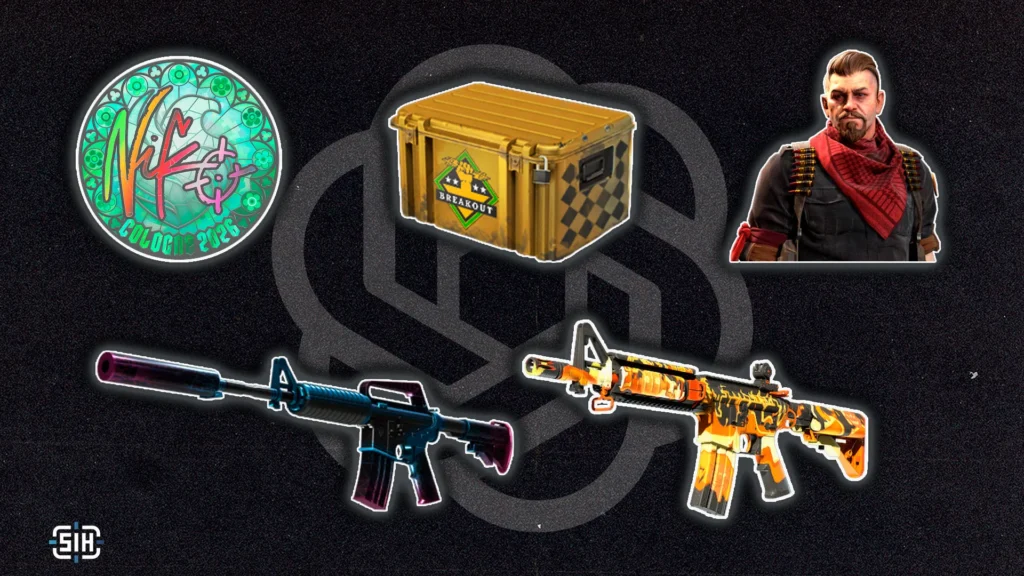
- M4A1-S | Decimator (Minimal Wear) – $24.22
- M4A4 | Hellish (Field-Tested) – $19.21
- Operation Breakout Weapon Case – $11.17
- Sticker | NiKo (Holo) | Cologne 2026 – $24.61
- The Elite Mr. Muhlik | Elite Crew – $13.00
Total: $92.21
The only one that had anything to say about how to buy: ChatGPT suggested placing buy orders instead of taking current listings, so you don’t overpay. Small thing, but that is how someone who has actually bought on the market thinks.
The portfolio is built around a single idea — shrinking supply. Decimator gets taken as a recognizable skin from an old collection where new copies aren’t arriving as quickly anymore. Hellish because the Train 2025 Collection has already left the Armory, so the pass no longer produces those skins. Operation Breakout Weapon Case as an old container with the Butterfly Knife in its rare pool, which sustains demand on its own. The Mr. Muhlik agent follows the same principle: agents no longer come onto the market, and Muhlik is still a fairly cheap way into the category.
The sticker deserves its own mention. NiKo (Holo) from Cologne 2026 is the only pick in the entire experiment where a model leaned on a specific event with a date attached: the Major Shop closing on September 29, plus NiKo’s win at the Major itself, which by ChatGPT’s logic should push collector demand for his autograph up.
Nothing exotic anywhere in it, and that’s a compliment. The answer came back immediately, with no clarifications or do-overs, and the prices were close to right. There is something sound here.
Gemini
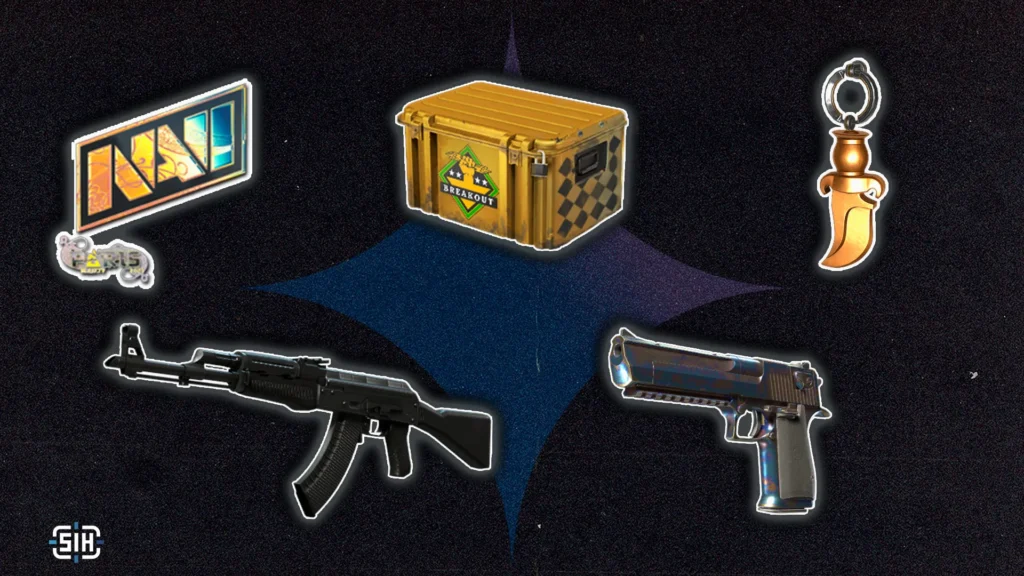
- AK-47 | Slate (StatTrak™, Factory New) – $55
- Desert Eagle | Heat Treated (Field-Tested) – $1.77
- Operation Breakout Weapon Case – $11
- Sticker | Natus Vincere (Holo) | Paris 2023 – $3
- Charm | Baby Karat T – $20
Total: $90.77
Gemini was the hardest to work with. It opened by offering the M4A1-S | Printstream, insisting it cost $40 and fit the budget comfortably. It regrouped after we pushed back, but it never did make peace with prices: by its own math the set came to $125 and blew past the limit, while our own check put it at around $90. The misses run in both directions — it overvalued the sticker and the charm several times over, and undervalued the case. It also closed out the final category with an item that doesn’t exist: there is no Charm | Baby Karambit in CS2, so we put the real Baby Karat T in the list above. We decided against another round and took the answer as it was.
The picks themselves aren’t dull, though. Slate as the most popular crafting base, StatTrak in Factory New for liquidity. Heat Treated as a bet on rare blue patterns dragging the base price of the whole skin up with them. Baby Karat T described as the flagship of the Missing Link collection and a premium accessory that will hold that status for a long time.
The reasoning holds up right until you start checking the numbers. It feels like the model knows exactly how traders talk but has no idea what anything actually costs.
DeepSeek
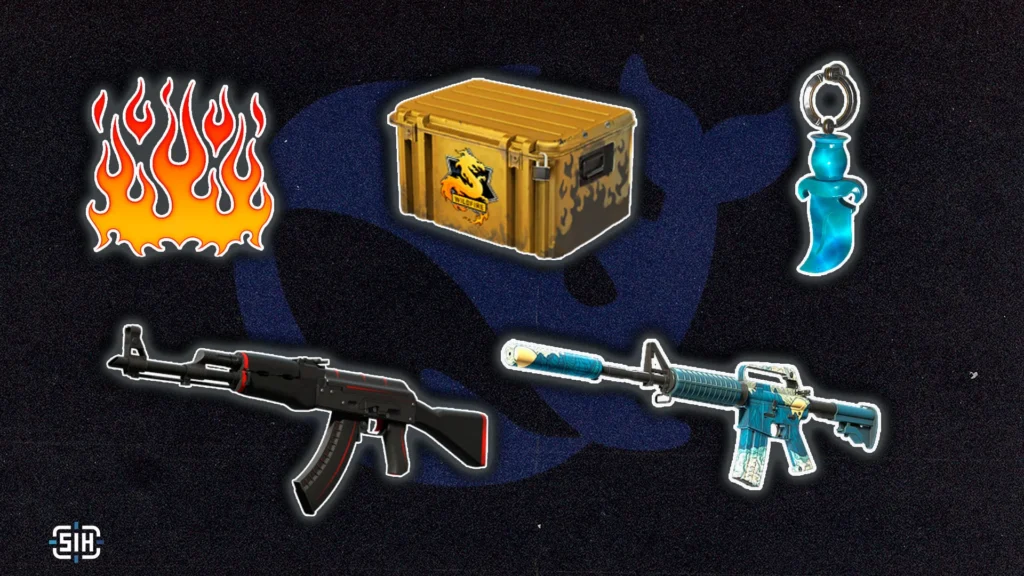
- AK-47 | Redline (Field-Tested) – $35.51
- M4A1-S | Solitude (Field-Tested) – $1.89
- Operation Wildfire Case – $3.83
- Sticker | High Heat – $0.54
- Charm | Semi-Precious – $14.41
Total: $56.18
The cheapest set of the experiment: just over $42 by DeepSeek’s own math, just over $56 once we checked the prices ourselves. The model didn’t go anywhere near the top of the budget, which is unusual in itself.
Inside it is the most straightforward strategy of the five: buy cheap where supply has stopped replenishing. Redline as the backbone of the market — a maximally liquid skin that sells at any moment and in any market mood. Solitude as a cheap Armory Pass skin with room to double or triple after the rotation changes (it never worked out that the skin has already cycled out of the pass).
The case argument is the curious one. DeepSeek justified it with “every copy leaves the market forever once it’s opened” — true of every case in the game, but that is the conclusion it landed on. The one argument that breaks the pattern is the charm, where DeepSeek cited a week of price movement and called charms the youngest and least saturated class of item in CS2.
It struggled with prices as well, but it fixed them quickly. It was also one of the few that kept answering in collections and general directions rather than specific lots — the specifics had to be pulled out of it. That is probably where the strange reasoning comes from.
Grok
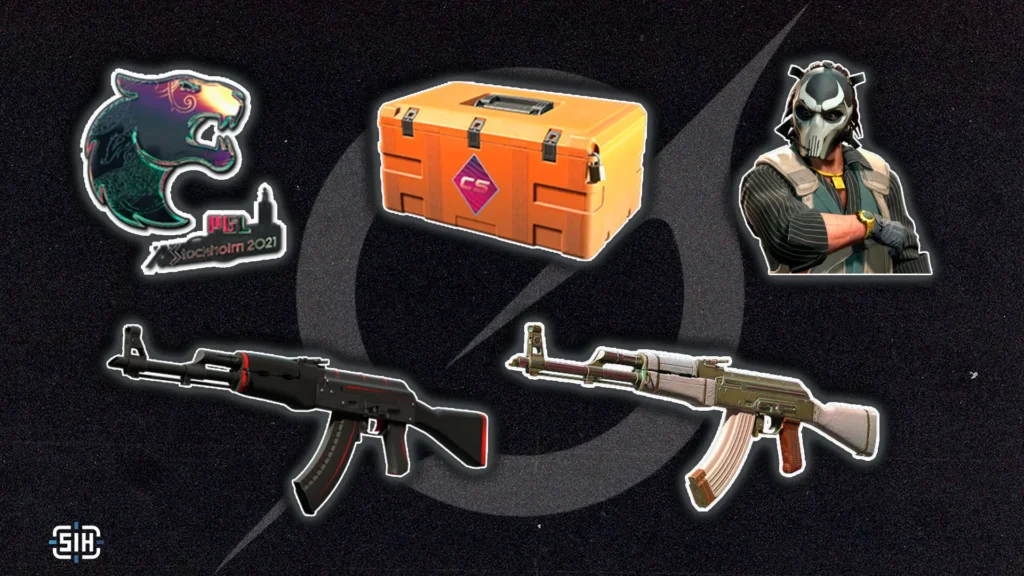
- AK-47 | Redline (Field-Tested) –$35.51
- AK-47 | Aphrodite (Field-Tested) – $17.78
- Fever Case (партия ≈10–12 шт.) – $7
- Sticker | FURIA (Holo) | Stockholm 2021 – $6.5
- Sir Bloody Skullhead Darryl | The Professionals – $45
Total: $111.79
Grok was the only one to buy a batch of ten-odd cheap Fever Cases instead of a single container, and the only one to go five years back for its sticker rather than reaching for the current news cycle. While everyone else clung to the recent Major, it took FURIA (Holo) from Stockholm 2021: supply locked long ago, an instantly recognizable holo, great in crafts, a fan base that isn’t going anywhere. Not the obvious move, which is exactly what makes it interesting.
The rest is solid without being exciting: Redline for liquidity, Aphrodite as a limited and fairly pricey covert, the Skullhead Darryl agent as a way into the category without overspending. The model laid the split out in a column itself and checked that the total added up. It only added up by its own numbers, though — at current prices the set runs to about $112 rather than the $98 it claimed. Either Grok cut a corner or genuinely got its research wrong, but the portfolio holds up and we didn’t ask it to change a thing.
Claude
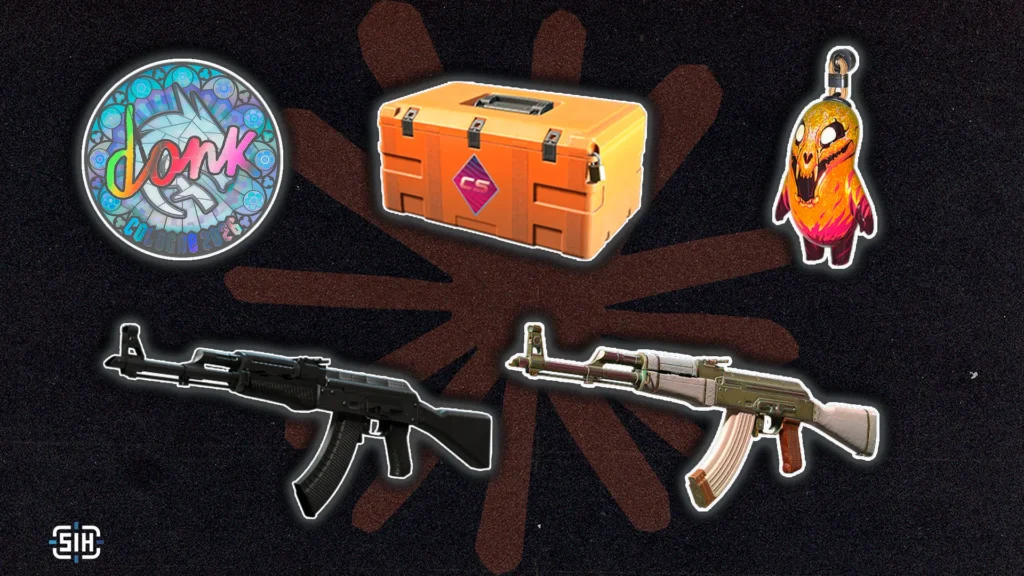
- AK-47 | Slate (Factory New) – $18.29
- AK-47 | Aphrodite (Factory New) – $33.74
- Fever Case – $0.92
- Sticker | donk (Holo) | Cologne 2026 – $25
- Charm | Hot Howl – $19.19
Total: $97.14
The only participant that specified neither wear on its skins nor a sticker type. We had to work out what it meant from the amounts it quoted, and only then could the portfolio be added up at all. By its own numbers Claude landed on exactly one hundred dollars, to the dollar, and at current prices it came to $97.
It is also the one that sent us shopping for an item that doesn’t exist, the second time that happened here. Its first sticker pick was donk (Holo) | BLAST Open Porto 2026 — a fresh win, a nice piece of reasoning, and a completely invented sticker. It didn’t try to get clever once we pointed that out: it acknowledged the mistake and offered the same donk from Cologne 2026 instead.
The logic behind the rest of the portfolio brings nothing new: the same rarity, the same fixed print run, the same lines about shrinking supply we had already heard from the four before it. The most questionable pick is the Fever Case, where the model got into the math between the case’s price in stars and its price on the market. There was one more elegant calculation in there as well — ROI on a container that still drops — though what that has to do with profit on a three-month horizon is anyone’s guess.
What stands out when you put all five answers side by side
First, all five argue the same way. “Supply is shrinking, so the price will go up” turns up in every single answer, and it gets applied to absolutely everything: old cases, Armory skins, stickers from a closed shop, agents, charms. It is the one market idea the models have absorbed properly, and they run it straight into the ground.
Second, the overlap. AK-47 | Slate picked twice, Redline twice, Aphrodite twice, Operation Breakout and Fever Case twice each. With tens of thousands of items in CS2, five independent models converged on the same short list of the most talked-about lots. That isn’t analysis, that’s the internet’s average opinion.
Third, and the worst of it, the prices. Four of the five quoted numbers with no connection to reality, and two of them sent us after items that aren’t in the game. And the reasoning sounded confident and convincing every time: any wrong pick was handed a handsome justification on the spot.
Should you trust AI with your inventory?
The real problem isn’t the pricing errors. It’s that a model goes looking for arguments, not for the truth. It needs to justify a pick, and it will justify any of them, equally smoothly and equally confidently, regardless of whether the item exists, what it costs, or whether that logic works on this market at all. It is not going to check whether its argument matches reality: either it doesn’t care or it doesn’t know enough, and from the outside those two look identical.
Bottom line: as things stand, this is guesswork in nice packaging. Genuinely solid thinking about CS2 investment is still hard to get out of an AI — all five portfolios above are built from items any topic chat would have named for you anyway, just with better delivery.
The experiment isn’t over, though. The portfolios are locked and the horizon is early 2027. We’ll come back to this piece in three or four months, check the prices, and see which of the five got lucky. Because we have already agreed that luck is what it’s going to be.

Alex
Alex is an author and esports observer with more than seven years of experience. He specializes in analyzing new releases in the world of computer games, gaming services, and in-game economies. Alex shares practical experience and an expert perspective on the development of gaming, helping readers understand complex mechanics and stay up to date with the latest news.

