Cologne Stickers Just Got 10x Cheaper: Is Valve Trying to Fix the Major’s Revenue Problem? Breaking Down the July 29 Patch

Just four days ago we published “The Major No Longer Bankrolls the Scene” where — off the back of HLTV’s investigation — we laid out an uncomfortable truth: once Valve buried the capsules and moved sticker sales to direct token purchases, team revenue fell off a cliff. And one of our core takes there was dead simple: Valve physically can’t afford to ignore a collapse like that. It doesn’t just hit their own bottom line — it drains the motivation of the entire scene the Major exists to feed. Sooner or later, the devs would have to react.
And today’s patch is, effectively, a direct answer to all of that. Valve has rolled out new versions of the team stickers: these are “team rating” stickers that now fill the entire square face of the sticker instead of the old round frame. But the look isn’t even the main story. Prices on the new versions dropped nearly tenfold — and unlike their round predecessors, they’re now fixed. Dynamic pricing has been switched off for them.
Let’s break this down: did Valve actually panic, will it save the situation, what should we expect from the Singapore Major, and what should collectors be watching right now.
Valve really is worried — and we called it
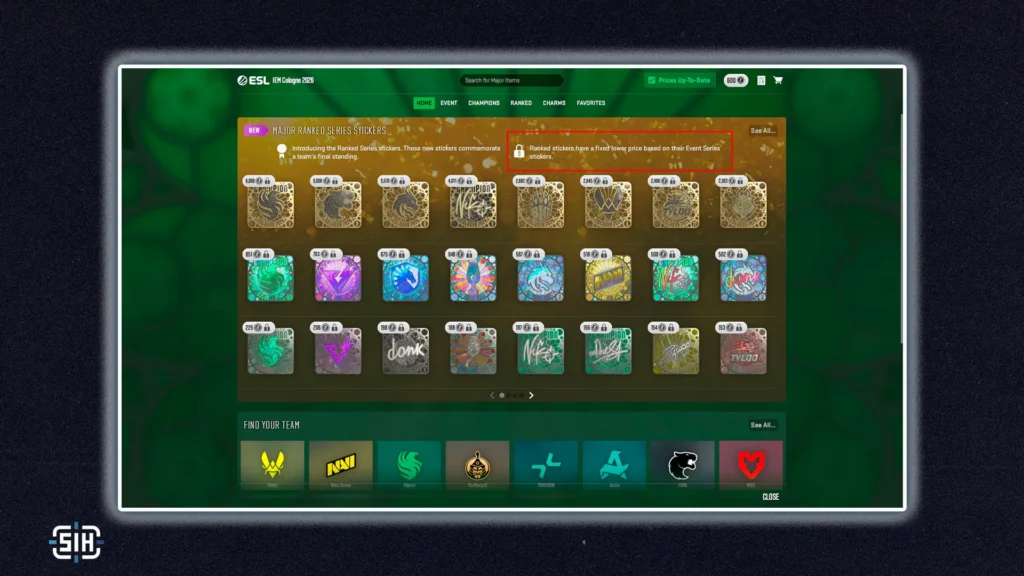
First and biggest takeaway: the devs have stirred, exactly as we predicted. Except the reaction we called “just a matter of time” in our last piece came even faster than you’d expect — rather than waiting for the Major to wrap, Valve dove in to patch its own economy mid-event. That’s the clearest proof yet that the sales numbers genuinely spooked them.
Let’s be honest: this looks like a couple of buckets of water tossed on a pretty serious fire. Cutting the price of the new versions tenfold doesn’t undo the fact that the original system already scared off a huge chunk of the audience, and the bad taste it left with lower-tier teams hasn’t gone anywhere. But when the alternative is doing nothing at all until the next Major, even a gesture like this beats silence.
It’s also worth noting how delicately this was handled. Valve didn’t break what it had built: the old floating-price system was left completely untouched. That makes sense — dynamic pricing is the exact foundation they’re testing for a future in-game marketplace, and zeroing out that experiment halfway through would be a strange call. Instead, the cheap fixed versions arrive wrapped in the friendliest possible framing: “support your favorite team, if it used to be too expensive for you.” And expensive, let’s remember, it was for almost everyone.
So did Valve fix the situation? No
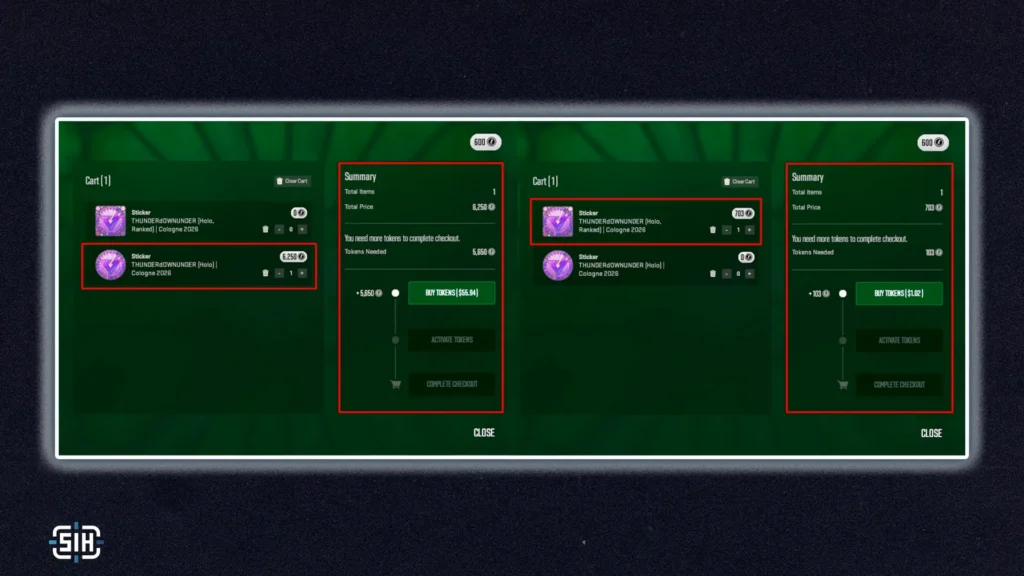
Here’s where we have to pump the brakes. What we’re seeing isn’t a strategic cure — it’s an attempt to squeeze whatever’s left out of an event that’s already underway. In practice, Valve is extending the shop’s lifespan (it stays open until September 29) while trying to hook the people who simply walked past back in May because of the price tag. Make at least something — that’s the honest way to put what’s going on.
And here’s the curious part: in form, today’s move almost exactly matches one of the scenarios we mapped out earlier. It was clear the devs would go not for tearing the model down, but for careful fine-tuning — lower the barrier to entry and raise accessibility without touching the core. That’s precisely what’s happening now: the cheap fixed versions are the lowered entry barrier, while the dynamic “exchange” sits right where it was. The only catch is that accessibility and a healthy economy are two very different things.
None of this fixes the core problem, and here’s why. The new model has a built-in contradiction that isn’t going anywhere: the market now holds two versions of the same sticker side by side. The million-dollar question — who in their right mind pays ten times more for the round version when a cheap alternative is sitting right next to it? Collectors, maybe — but the big players were already gearing up to trade those among themselves, with the mass user out of the picture, patch or no patch.
The market’s reaction, incidentally, was instant: some of the investors who’d bought into Cologne items got nervous all over again and started dumping their round versions, afraid there’ll be nobody left to resell them to. Whether that’s panic or cold calculation, time will tell — but the move itself says plenty.
And one more thing worth keeping in mind. Making this setup permanent will be tough for Valve on trust alone: if players learn that every pricey launch version gets a cheap “markdown” twin a couple of months later, they’ll stop buying at the high launch price altogether. And that undercuts the entire idea of the dynamic exchange this was all built for. You can pull a move like this once, as an emergency measure — but turning it into a rule is risky.
Will capsules come back? The odds went up
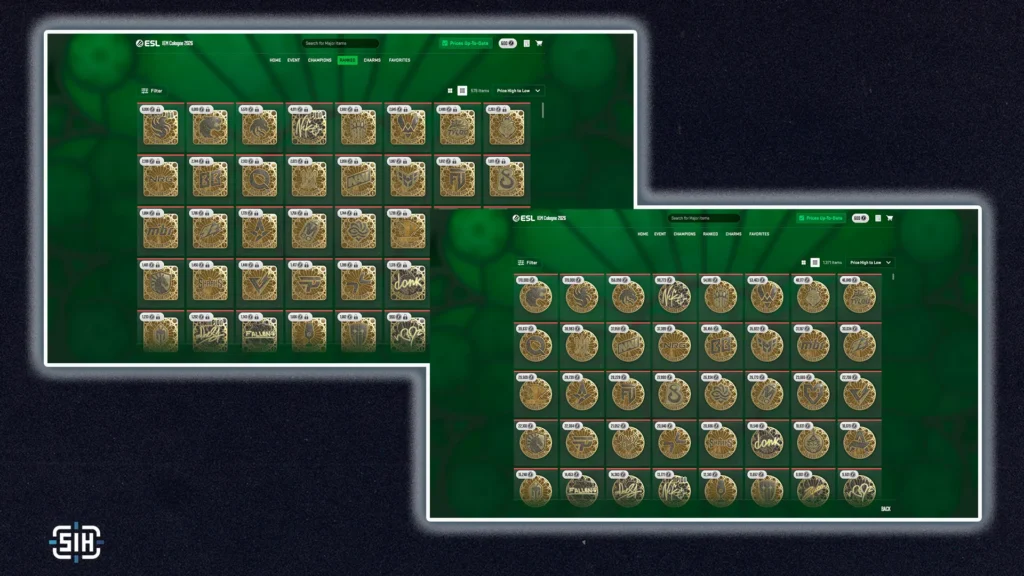
Here we’d carefully tick the “more likely now” box. The logic is simple: if Valve is live-testing several pricing mechanics at once on a hyped-up Major, then the final call hasn’t been made — they’re still searching. And as long as they’re still searching, capsules making a comeback (in some new form) would surprise us a lot less now.
We’d go further and say the odds of a hybrid system have clearly risen: part of the content sold directly at a fixed or dynamic price, and part returning to the open-a-capsule format. A model like that would have it both ways — keeping the “thrill of the open” for the people who liked it, while leaving direct purchases for everyone who was sick of the RNG.
And this, honestly, is the single best piece of news in the whole patch: the odds of seeing the old system at the next Major in Singapore have dropped noticeably. The fact that Valve is already, mid-Cologne, scrambling to patch its own model is effectively an admission that it didn’t take off in its current form. Which means Singapore will most likely bring something reworked. And that alone is reason for cautious optimism.
And note: this is good news not just for collectors. If Valve really does rebuild the model by Singapore, it also repairs that very revenue stream to the teams we were worried about last time — and that stream is exactly what keeps tier-2 and tier-3 afloat, the whole ecosystem the Major exists for.
What to buy? Look at paper, weigh the squares soberly
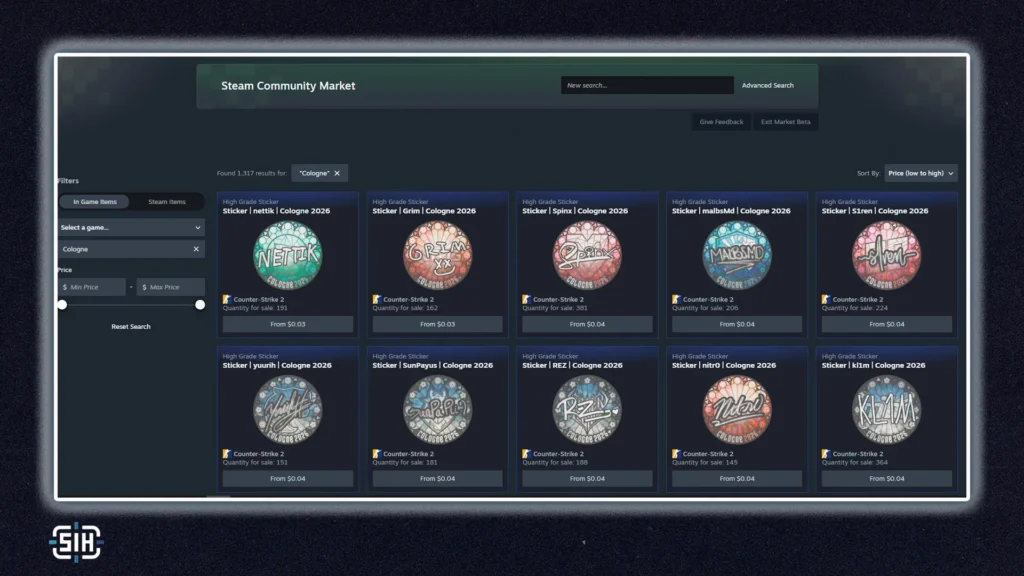
Upfront caveat: everything below is speculative — observations and hypotheses, not a guarantee of returns. The Cologne market is still jittery, so keep a cool head with any decision.
And one more important correction to ourselves. In our last piece we called Cologne stickers an interesting long-term investment, and that bet rested on two pillars: a low print run and a high barrier to entry. Valve just knocked one of them out with its own hands — it slashed the entry barrier tenfold itself. And the low print run on the round versions, as we broke down above, is hard to cash in on without demand. So the overall investment thesis doesn’t get scrapped, but it does need a real rewrite: the entry points have shifted — and here’s where to.
Paper versions. The key patch detail for the bargain hunter: the paper stickers were left without cheap square twins. All the attention and hype went to the higher tiers in the new square rating versions, and humble paper stayed in the shadows. Our bet: precisely because of that, there may be less cheap paper in circulation than usual — people just aren’t picking it up while everyone’s staring at the squares. And that’s the classic setup where an underrated, forgotten item can eventually deliver a 2–3x. It’ll cost you almost nothing, and the upside is asymmetric: little to lose, decent room to grow.
Square fixed versions. Here the logic is different. Thanks to stable fixed prices, grabbing a few of these is hardly a mistake — there won’t be a price crash like the dynamic round ones, by definition. But you dig for the gold differently. When the launch price is fixed across the board, real rarity shows up on the secondary market: watch the listings and orders, and try to spot the future “scarce” item.
Bottom line
We were right on the main point: Valve is worried, and it’s trying to react. They’re honestly squeezing everything they can out of the current Major, stretching the shop’s life another couple of months and reeling in the people the price scared off. That exact system, we most likely won’t see at the Singapore Major — and that’s probably the best news of all: it means something new is coming, maybe even that hybrid model with a partial return of capsules. And there’s still plenty worth investing in.
We’ll keep a close eye on it. The Major’s economy is in the most active phase of its rebuild in all of CS2’s history — and judging by the pace, the surprises aren’t over yet.

Alex
Alex is an author and esports observer with more than seven years of experience. He specializes in analyzing new releases in the world of computer games, gaming services, and in-game economies. Alex shares practical experience and an expert perspective on the development of gaming, helping readers understand complex mechanics and stay up to date with the latest news.

