Problems with VRS (Valve Ranking System). How to Improve It, and Will VALVE Do Anything?
On April 6, 2026, VALVE handed out the final invites to IEM Cologne 2026, and against the backdrop of this news, the community once again started talking about the system’s imperfections. In this piece, we’ll break down in detail what players and fans are unhappy about, and try to suggest ways to improve the VRS ranking.
The Problems
1. Loss of Prestige at Tier-1 Events
In the past, every team strived to perform at a tier-1 tournament. Any young roster wanted to break through to a major LAN to compete against the best and showcase their strength. Sharing a server with your idols wasn’t just a dream — it was a real goal that motivated up-and-coming players. Sure, nobody is opposed to competing against the world’s top CS talent today either, but the value and significance of that experience has dropped considerably.
Nowadays, organizations have just one objective — qualify for the Major — which leads them to endlessly grind VRS points, travelling across the globe to play in internet cafes, warehouses, and basements. You’d have to agree that this looks more like a regression than progress. Some will say it’s better than playing online qualifiers, and they’d be right — but the point here is about privilege. Showing up to a LAN used to be something special; now it’s become routine.
Remember how, back in the RMR era, that tournament was seen as “the chance of a lifetime”? Many teams would train for months leading up to it, and would arrive as complete unknowns — eyes burning with determination — and tear apart top teams, because a chance like that might never come again.
2. More Money = More Chances
This isn’t about the “bottomless wallets” of sheikhs or other private investors assembling dream teams. It’s far simpler: not everyone has the financial means to send a full roster to various events. Top-tier tournament organizers almost always cover those expenses themselves (flights, accommodation, food, etc.), while local events do not.
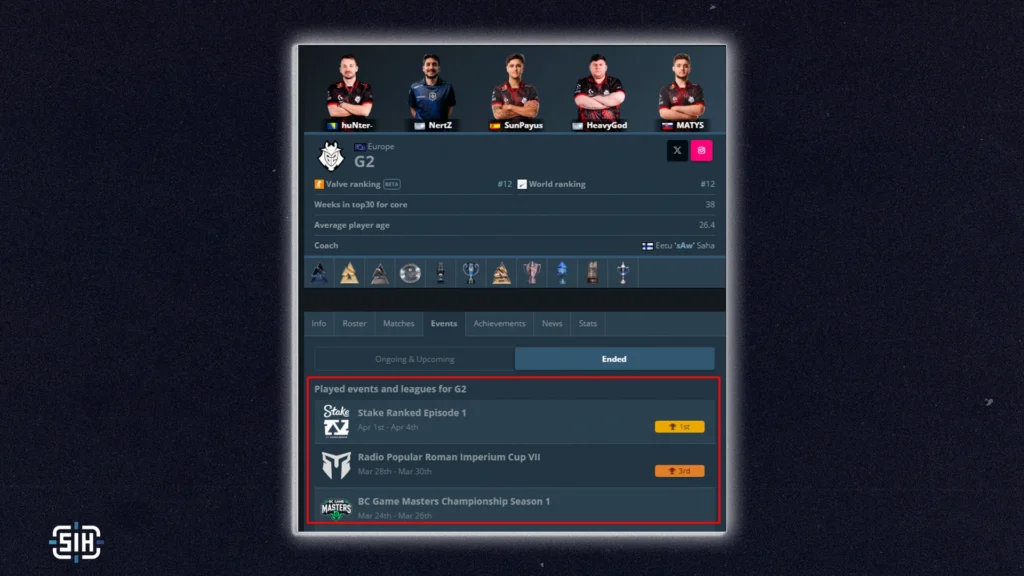
As a result, we’ve increasingly been seeing teams from the HLTV top 20 at tournaments with prize pools smaller than their monthly wage bill. World-class giants show up and simply farm VRS points, while no-name teams are forced to give up their spots. And this isn’t just an issue between giants and unknowns — it affects teams of equal skill level but with different budgets. The outcome is that tournaments are attended not by the strongest teams, but simply by those who can afford to be there.
3. Too Many Slots at Majors
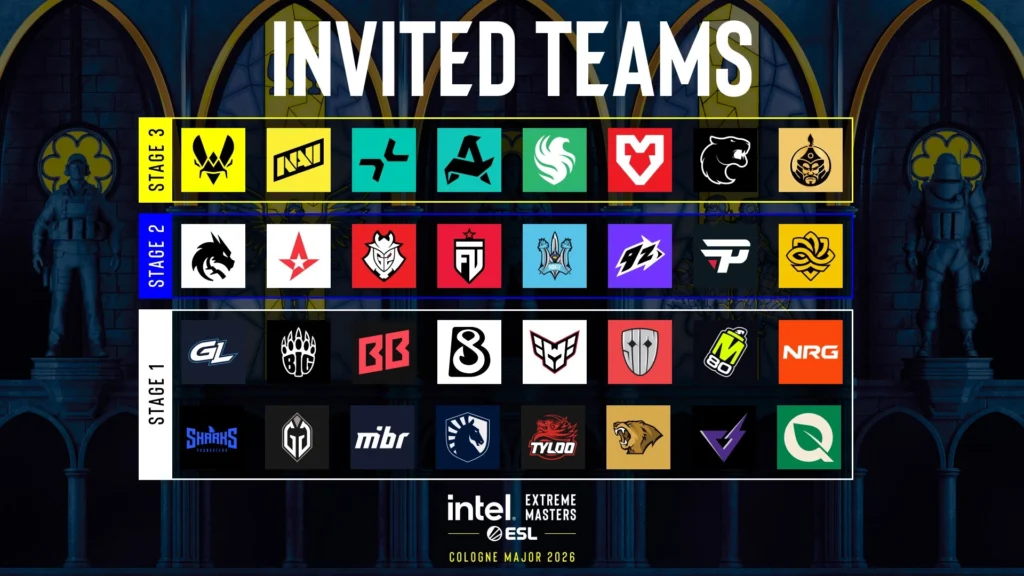
Another problem worth highlighting is the number of teams at VALVE’s flagship tournament. 32 teams is a clear excess. Who’s genuinely interested in watching the first stage of a Major? Sure, upsets happen, but are one or two such matches really worth sitting through five extra days of play?
If having your own named stickers used to be considered an achievement, today it’s the bare minimum rather than a luxury. Participation in a Major is starting to lose its meaning, and that’s genuinely sad. We already have the example of The International to look at — let’s not repeat the mistakes of our peers.
4. Confusing Points Distribution
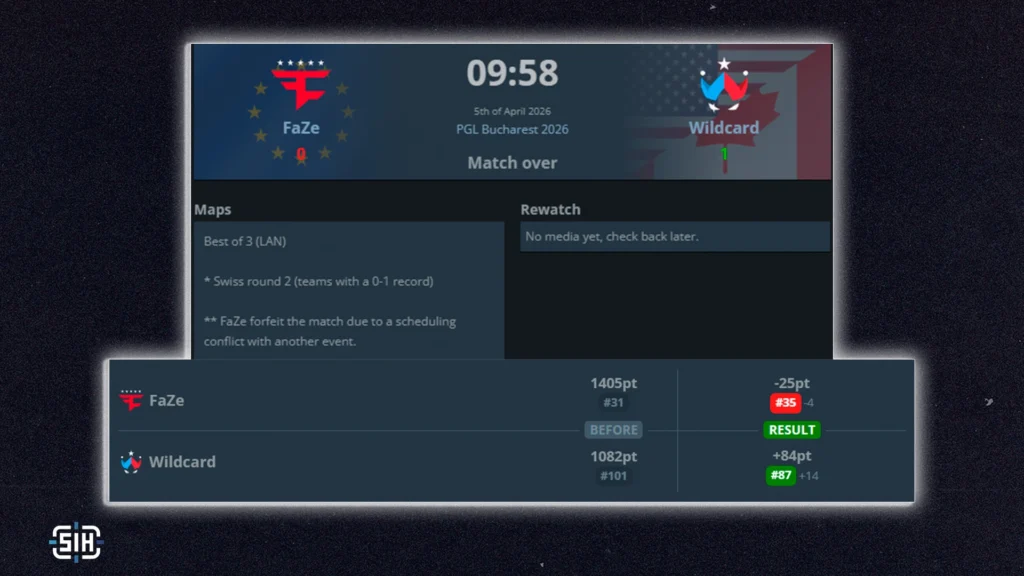
The most controversial case on this topic happened very recently, when FaZe chose to attend a LAN in Belgrade with a $15,000 prize pool instead of PGL Bucharest 2026. Karrigan’s squad decided to hold on to every last chance and missed the first two days of competition at PGL Bucharest. What’s baffling is that technical forfeits are not only not punished more harshly — they also hand out a massive number of points to the teams who were supposed to face them. FaZe lost only 25 VRS points, the same as a regular loss, while Wildcard received 85 — as if they’d beaten them in an actual match.
This is clearly absurd. At the very least, FaZe denied two other teams the chance to prove themselves in Belgrade and Bucharest by effectively competing at both simultaneously. At worst, the whole thing was done out of pure mathematical calculation, which completely destroys the competitive spirit. Having failed at one tournament, they showed up to the other purely out of formality — to avoid losing even more VRS points.
5. VALVE Controls Nothing
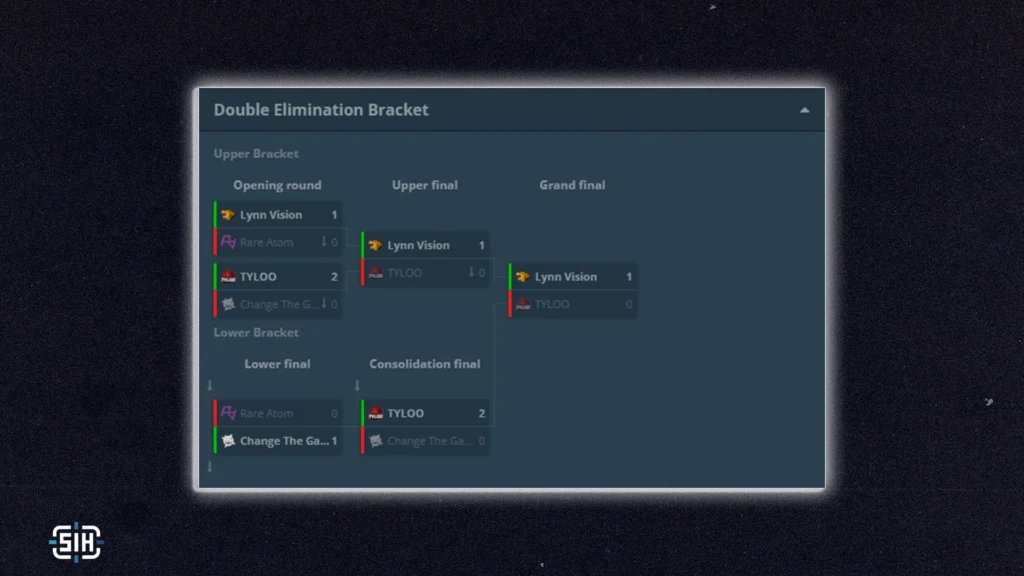
To start with, rumor has it that getting VRS status for a tournament only requires submitting an application, and if VALVE doesn’t respond with a “no,” it’s considered approved. But let’s not rely on rumors — let’s take a real example instead.
At a Chinese LAN tournament featuring only Chinese teams, something unprecedented happened during the playoffs. First, Rare Atom refused to play against Lynn Vision in the quarterfinals; then, in the semifinals and grand final (which they reached through the lower bracket), TYLOO simply didn’t show up. Lynn Vision ended up winning the tournament, earned the remaining points needed to qualify for IEM Cologne 2026, and will be attending the event.
Where was ESIC? Where were VALVE themselves? Honestly, this is the most disheartening story tied to the VRS. It almost feels pointless to come up with “solutions,” but let’s stay hopeful and do it anyway.
How Can the Problems Be Solved?
1. Punishment for Not Showing Up
Let’s follow up on recent events and address things that are lying right on the surface. A team that fails to show up for a match should lose a significant number of points and receive a conditional penalty for the next tournament. If it happens again, the penalty kicks in and can go beyond point deductions — including other consequences such as a temporary ban or a financial fine. Additionally, the opposing team should receive no points at all, or only a small fixed amount.
2. Make VRS Status Harder to Obtain
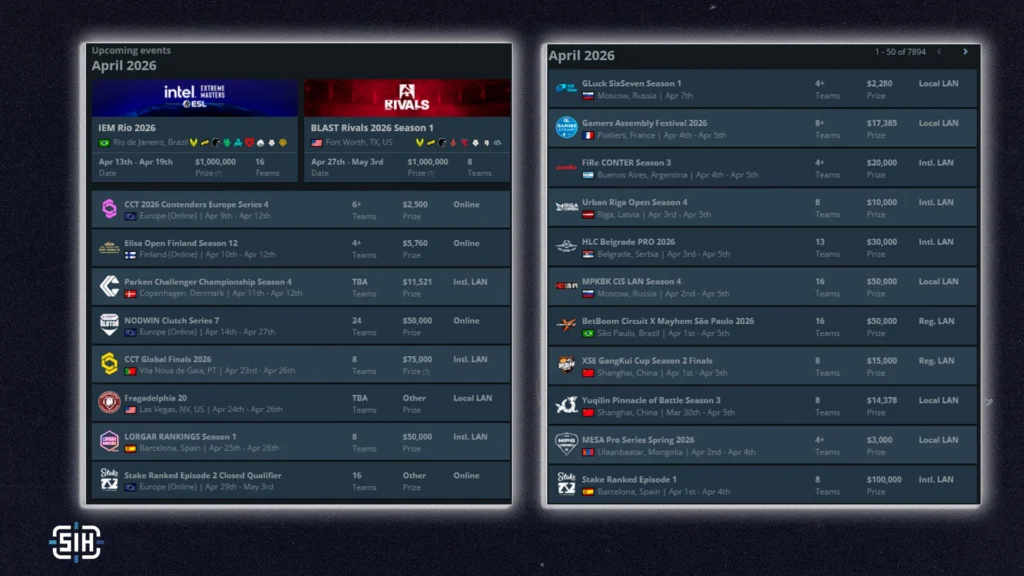
Simply put, there are so many tournaments now that it’s genuinely impossible to keep track of them all. The community is already exhausted by the sheer number of tier-1 events, and only the most dedicated fans have the energy to follow local LANs. On top of that, this doesn’t just kill viewer interest — it also affects the quality of play. In the past, tier-2 and tier-3 teams could afford to train intensively and spring surprises on top rosters; now their schedules are arguably busier than those of the world’s best teams.
A couple of years ago, those kinds of matchups motivated the top teams to keep pushing forward. These days, they coast on what they already have, because the up-and-comers can only really compete in raw aim.
So how do you make VRS status harder to obtain?
- Raise the minimum prize pool to something like $100,000. Given that all current tier-1 events exceed $1,000,000 in prize money, $100k is only 10% of the top-tier threshold.
- Introduce “international status” requirements, so that at least 15–20% of teams at a tournament come from different regions. The main goal is to make these events genuinely meaningful, rather than something along the lines of “didn’t work out here — we’ll go to the next one.”
- Set a minimum threshold for the total VRS point value represented at a tournament — say, 20,000 points — which can only be reached with a sufficient number of qualifying teams.
- Create a full season system so that the complete list of competitions is known in advance, and teams can build their own calendars with confirmed rosters. Situations where one tournament suddenly replaces another should not occur. This would also protect organizers and allow them to plan media activities and attract sponsors.
3. Additional Requirements for Major Qualification
To qualify for the Major, teams should be required to have competed in at least one tier-1 event during the season, or to have played a minimum number of matches against top-20 ranked opponents. Seeing teams at the Major that haven’t appeared in a single major tournament is rather strange. It’s hard to say right now exactly how feasible such a condition would be, but we’re confident it could be refined to fit current realities — for example, by holding separate qualifiers for the remaining spots among teams that haven’t met the requirement.
Is VRS Really That Bad? And Will VALVE Actually Change Anything?
Despite all the criticism directed at VALVE, the system has achieved its main goal — moving all matches to offline play and eliminating cheating. The problems that have emerged along the way could be fixed in the blink of an eye, and we sincerely hope VALVE will find the time to do so. The ideal moment would be the summer break, right after IEM Cologne 2026: teams would have time to plan the second half of the year, and organizers would have time to prepare their events. But let’s be realistic — no changes should be expected before 2027, even if VALVE announce them as early as this summer. So we’re in for at least one more season like this, where the situation could reach a breaking point. The race for points is exciting to watch, but sitting through an endless marathon instead of a few decisive sprints is starting to wear thin.

Alex
Alex is an author and esports observer with more than seven years of experience. He specializes in analyzing new releases in the world of computer games, gaming services, and in-game economies. Alex shares practical experience and an expert perspective on the development of gaming, helping readers understand complex mechanics and stay up to date with the latest news.

