CS:GO’s Birthday: The Things That Simply Didn’t Exist 14 Years Ago
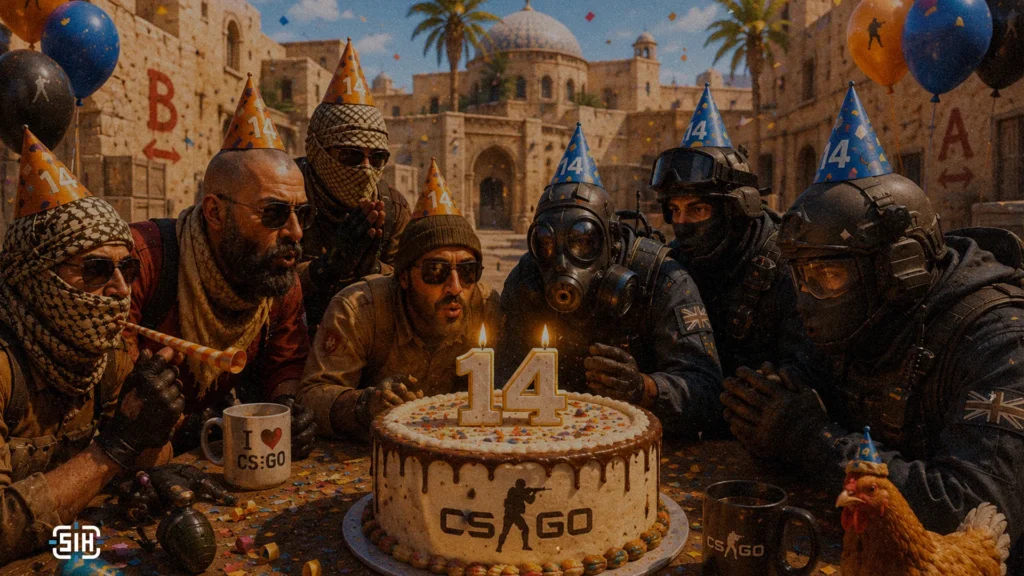
Skins in your inventory. Stickers on your gun. A line in the HLTV ranking. Your own agent in matchmaking. Free entry to the game itself. All of it feels like the baseline Counter-Strike has always run on. None of it existed fourteen years ago.
Valve released Counter-Strike: Global Offensive on 21 August 2012, and the reception was frosty. Half the scene was still on 1.6, the other half on Source, and both agreed on one thing: this wasn’t Counter-Strike. Eleven years later the game was gone — on 27 September 2023 CS2 took its place, taking most of what CS:GO had invented along with it. So let’s look back at the things that era gave us.
The Arms Deal
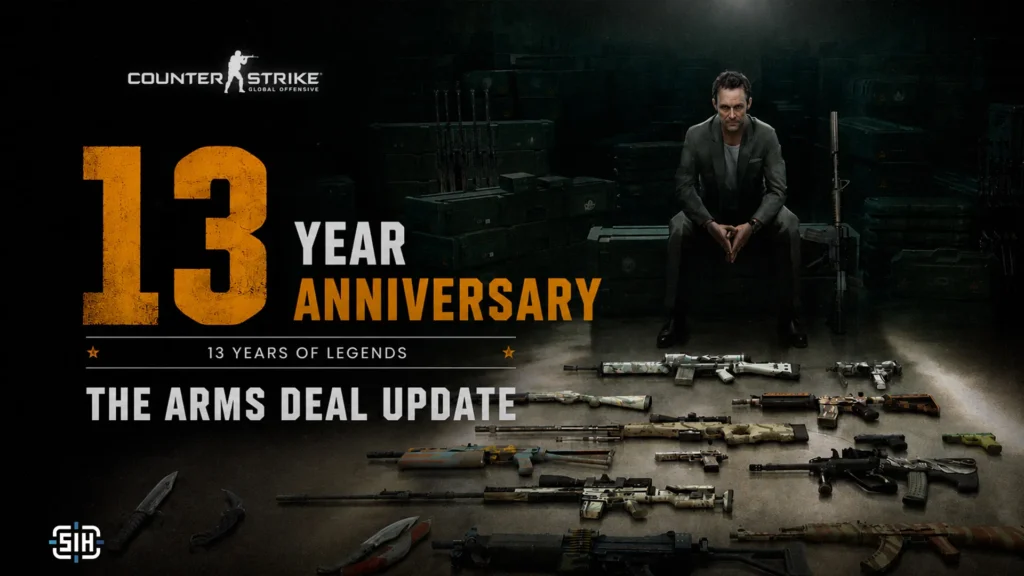
We covered this update in detail for its thirteenth anniversary, so here’s the short version. On 14 August 2013 Valve added the first case, the keys to open it and the skins inside. Before that, every gun in CS looked the same for everyone and was worth precisely nothing.
Cast your mind back to that evening — and if you weren’t there, here’s how it went. No market, no flipping, no talk of investments. Guns simply turned up in colour, and we ran around the server staring at each other’s hands. Buying a key felt like mild insanity: nearly three dollars for a shot at a picture. Then somebody on the server pulled out a knife for the first time, and the whole lobby went quiet.
Float, StatTrak, the Steam Community Market and knives worth more than the game itself all followed within the year. Valve didn’t just bolt cosmetics onto a shooter — it handed pricing over to the players. It also opened the door to the Workshop, and within a couple of years the community was drawing half the arsenal. Everything we do today — prices, patterns, investments, Workshop round-ups — grew out of one August patch. And nobody had the faintest idea what was happening at the time.
Majors and stickers
On 28 November 2013 DreamHack Winter kicked off in Jönköping: the first Major, with a $250,000 prize pool. Fnatic beat NiP in the grand final, but the more interesting part is where the money came from. Players funded it themselves — half the revenue from the eSports cases went straight into the pot, the first time buying cosmetics directly bankrolled a tournament.
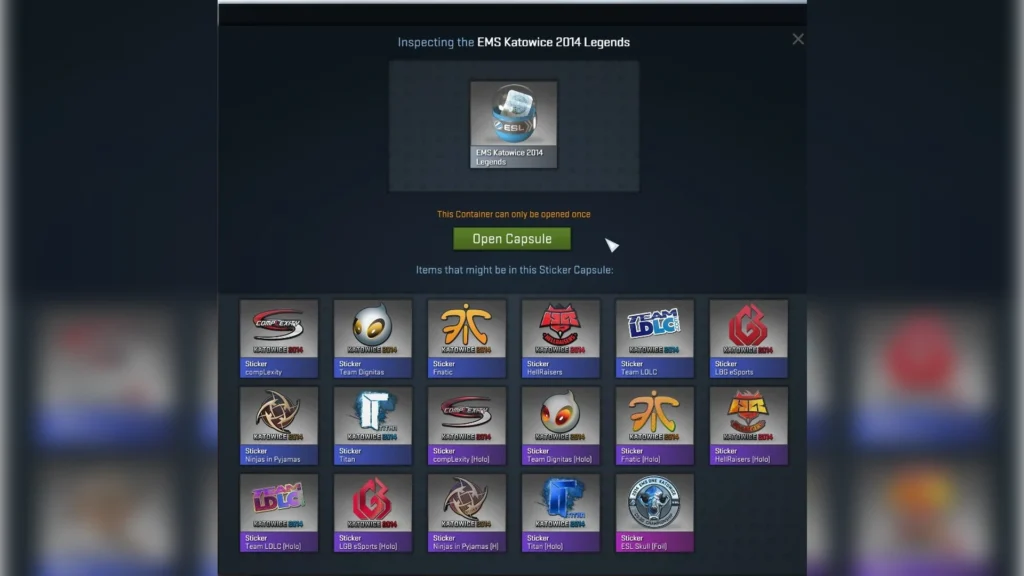
Valve’s next move came in March 2014 at EMS One Katowice: capsules with team logos, player autographs, souvenir packages. A sticker stopped being a picture on your gun and became a way of putting money behind the team you supported.
And this is where it gets good. In 2014 a capsule cost less than a dollar and nobody took stickers remotely seriously. You slapped them on whichever AK was closest, scraped them to shreds chasing a better angle, handed them to mates for nothing. An asset? It was a picture that cost pennies, bought to back your team at a tournament.
Twelve years on, those capsules are out of circulation for good, half the stickers were worn off guns back then, and the surviving Katowice 2014 holos now sell for more than a car. The people who dropped a couple of dollars into capsules in 2014 and then simply left them alone turned out to be the luckiest investors in the game’s history — without ever meaning to be.
The HLTV world ranking
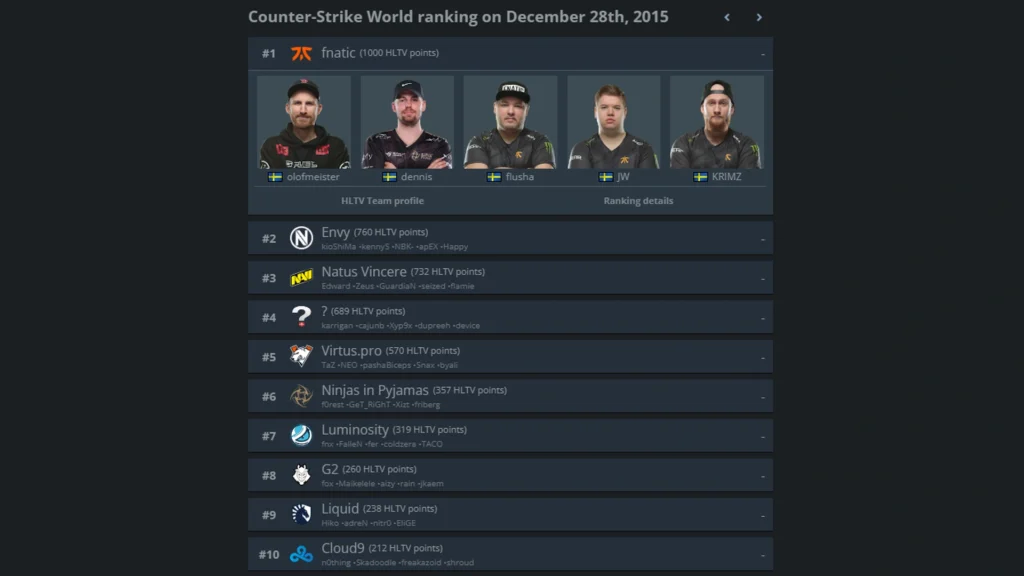
Until autumn 2015, the title of best team in the world lived entirely in comment sections. Some counted trophies, some went by the last match played, some just backed their own — and winning that argument was physically impossible, because no common ranking existed.
On 1 October, HLTV rolled out a points system: achievements over the past year with monthly decay, form over the last two months, results from the ten most recent LANs, and a three-player core requirement to hold onto the points. Fnatic took the top spot, and the argument could finally be settled with a link.
Not that anyone argued less — the fight simply moved to the formula. But the ranking became currency: invites are handed out by it, brackets are seeded by it, organisations negotiate for slots on the strength of it, and fans use it to decide whether a team’s season was a write-off. Valve eventually built its own VRS, yet the number people throw around in the comments is still HLTV’s, and that isn’t changing.
Gloves
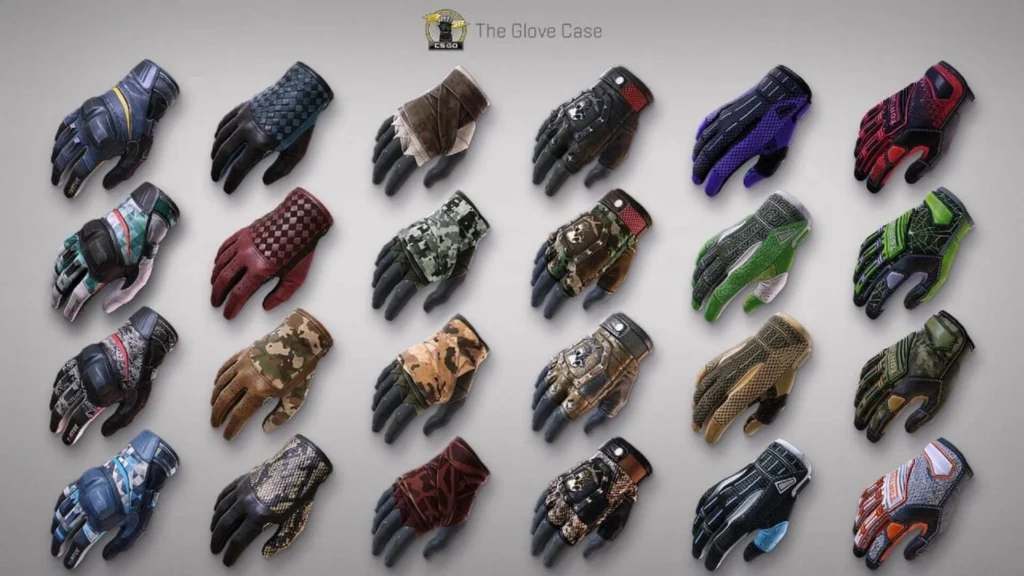
The Glove Case landed on 28 November 2016 and gave the game a new class of expensive item — the first since knives, three years earlier. Until then your hands were just part of the player model and nobody spared them a thought.
Then everybody did. Remember the feeling of seeing someone else’s gloves in inspect for the first time and realising you were missing something? People started matching colours to their gun, then the gun to the gloves, and a properly assembled loadout became a point of pride. What Valve created is an item you look at constantly and never quite see in full. Which is exactly why the top pairs comfortably go for four figures. You’re essentially paying for a couple of centimetres of screen that flicker past you every round — and somehow it works.
Danger Zone
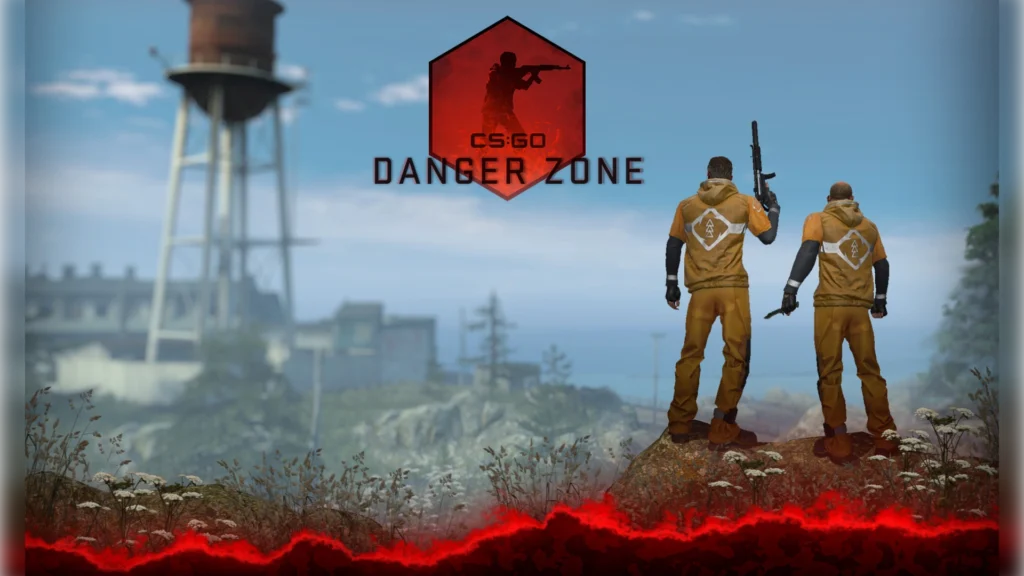
On 6 December 2018, Valve marched onto PUBG and Fortnite’s turf. Eighteen players, a tablet in place of the interface, drones delivering weapons mid-match, and a map called Blacksite. The MP5-SD and the Danger Zone Case arrived alongside it, and Prime owners earned a souvenir MP5-SD | Lab Rats for putting in the hours.
For the first week, everyone played it. You’d pile in with mates, shout over comms, buy drones, hammer doors open and die within minutes because nobody had a clue what was going on. It was genuinely brilliant fun.
Then the numbers fell off a cliff. Valve wound down support quietly, stopped touching the maps, and never brought the mode to CS2 at all. Of all CS:GO’s experiments this was the loudest at launch and the one that vanished most completely. Which is a shame, honestly: it was a proper idea, and we may never get anything like it in CS again.
Free-to-play: the day CS opened up to everyone
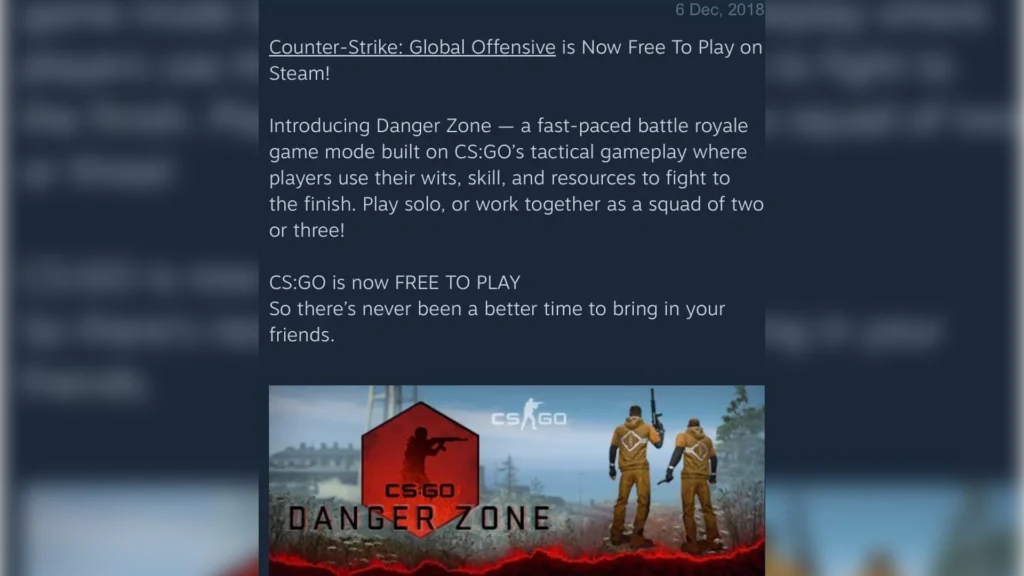
The same patch wiped the price tag off the game, and that changed everything. Anyone who had bought CS:GO previously got Prime Status and a loyalty badge. Everyone else walked in for free.
We all had that one friend who spent years being nagged to buy the game and spent years replying “nah, not for money.” In December 2018 the excuses ran out, and the servers filled up with friends like that.
The player count went vertical, cheaters and smurfs came along for the ride, and Prime went from a gift to the barrier the community still hides behind to this day. If you’re looking for the day CS became capable of pulling million-player peaks, this is it.
Agents: a character as an inventory item
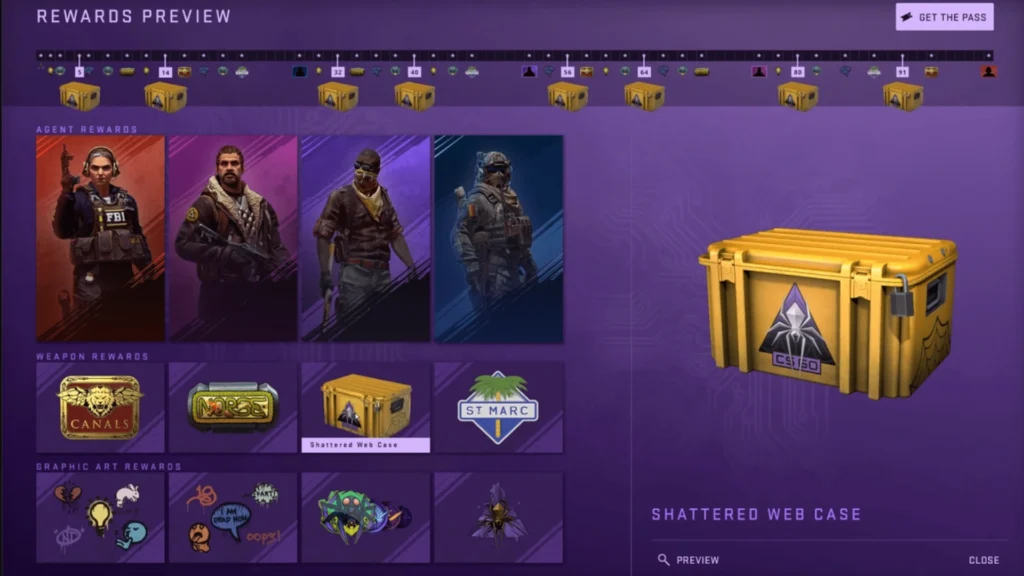
Operation Shattered Web launched on 18 November 2019: a $15 battle pass, four maps, three collections and, crucially, characters. Your model used to depend on the map — one set of operatives on Dust2, another on Overpass. Now you could pick an agent and take them anywhere.
The community split down the middle instantly. Some welcomed the new layer of customisation, others demanded agents be banned at LAN because darker models read worse against certain backgrounds, and the pay-to-win argument was being made in complete earnest.
For the market, agents turned out to be a class of their own: no wear, no pattern, no variation within the run. Every copy is identical, and the price rests purely on rarity and on the fact that some models will never drop again.
Operations: what CS:GO took with it
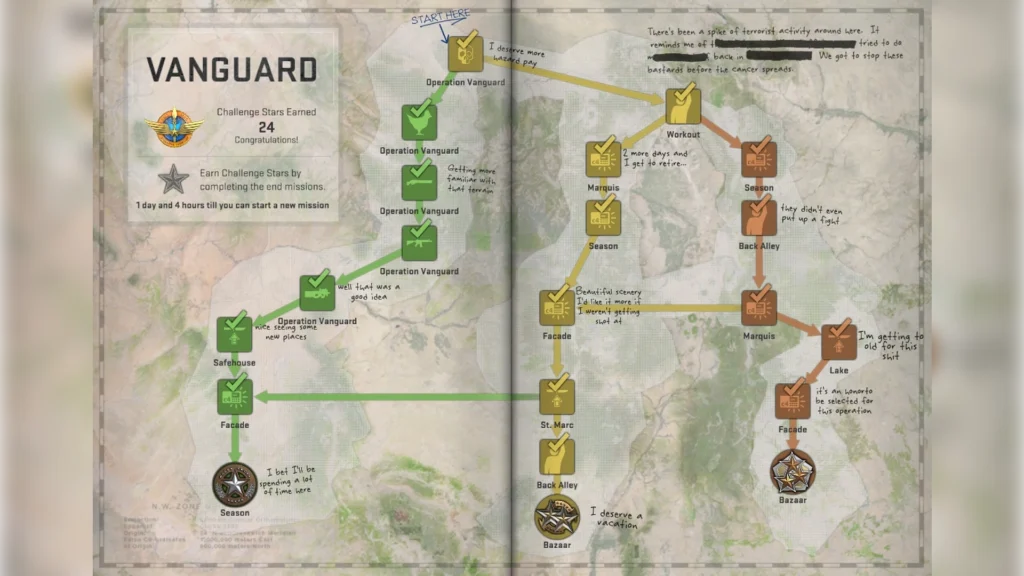
Payback came first, back in 2013. Riptide came last, launching in September 2021 and closing in February 2022. Eleven operations across eight years.
Each one brought Workshop maps, weekly missions, skin collections like Cobblestone, Cache, Norse and St. Marc, and occasionally modes that stuck around permanently: Wingman and War Games were born in Hydra, Retakes in Broken Fang.
But the content wasn’t really the point. An operation was a reason to get the group back together. Messaging a mate on a Friday with “get on, the missions reset soon,” grinding out the last few points for a star, finishing a co-op mission on the hardest difficulty purely because it paid out a coin, then flashing that coin in the lobby for the next six months.
The Armory Pass and its rotating collections are useful enough, but nobody’s rounding up their friends for it. We’ve been waiting four and a half years for an operation, and it looks like we’ll be waiting a while yet.
Trial by your peers: Overwatch
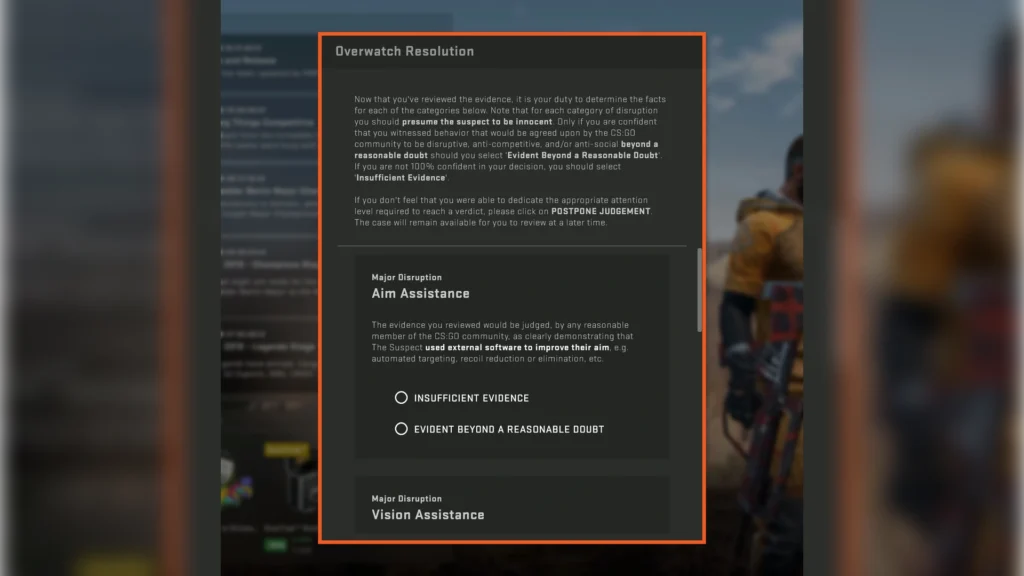
In May 2013 Valve did something you’d struggle to imagine any other developer doing: it handed out bans to the players. Rack up the hours, the rank and a clean record, and you got access to the demos of suspected cheaters. You’d be given eight rounds of somebody else’s match with the names hidden and all text and voice stripped out, judging purely on how they moved. Enough verdicts stacked up and the suspect caught a ban that Steam Support was unlikely to lift.
Overwatch has recently started making its way back: for now it’s a browser portal with limited access, where your verdicts also feed VACNet’s training. Not quite the tab in the main menu we remember, but the idea is alive — they’re still asking us to judge the cheaters.
CS:GO gave us an enormous amount: the market, the Majors, the highlights we all know by heart, the nights lost to operations, and an entire era that’s still a pleasure to look back on. For all of it, thank you.
So what stands out most for you? We’re fairly sure everyone has a moment of their own that didn’t make our list.

Alex
Alex is an author and esports observer with more than seven years of experience. He specializes in analyzing new releases in the world of computer games, gaming services, and in-game economies. Alex shares practical experience and an expert perspective on the development of gaming, helping readers understand complex mechanics and stay up to date with the latest news.

