PGL Major Singapore 2026 Stickers: Will Capsules Return After the Cologne Major Shop Flop?
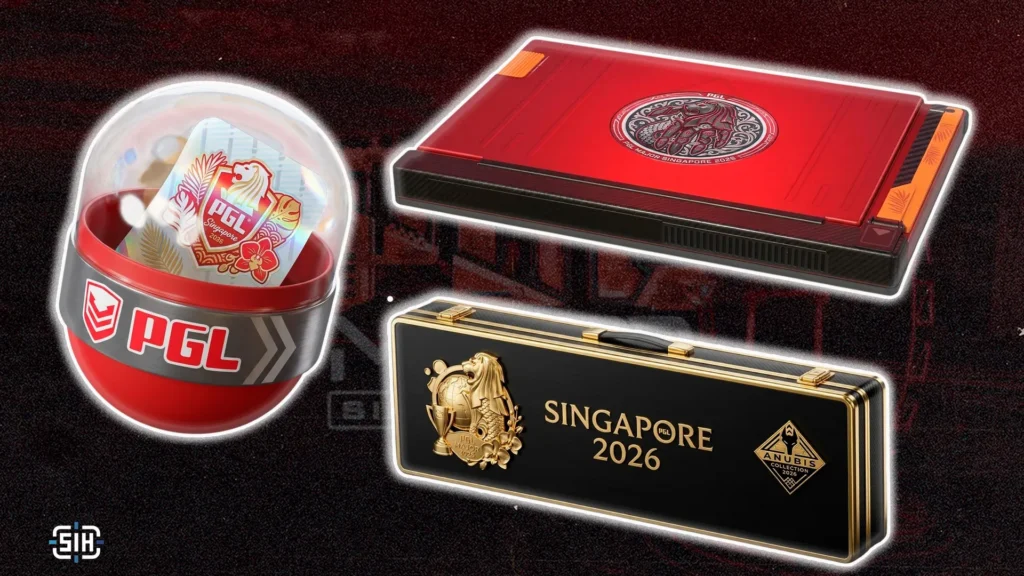
PGL Major Singapore 2026 is less than two weeks away, which means the stickers could land in-game any day now. The last three Majors – Austin, Budapest and Cologne – all got their sticker updates roughly two weeks before kickoff. If Valve sticks to that rhythm, the Singapore stickers are imminent. Then again, there have been Majors where the stickers dropped just a day or two before the first match, so we’ll see how Singapore plays out.
Normally this is the time when the community argues about autograph designs and bets on which player will have the most creative signature this time around. Not this year. After Cologne, the big question is far more down-to-earth: how are the stickers even going to be sold? Capsules are gone, tokens never caught on, teams reported dismal payouts, and Valve admitted the experiment didn’t work. We’ve gathered everything that’s known so far, looked at where the teams and organizers stand, and tried to predict what Valve will do in Singapore.
What Broke in Cologne
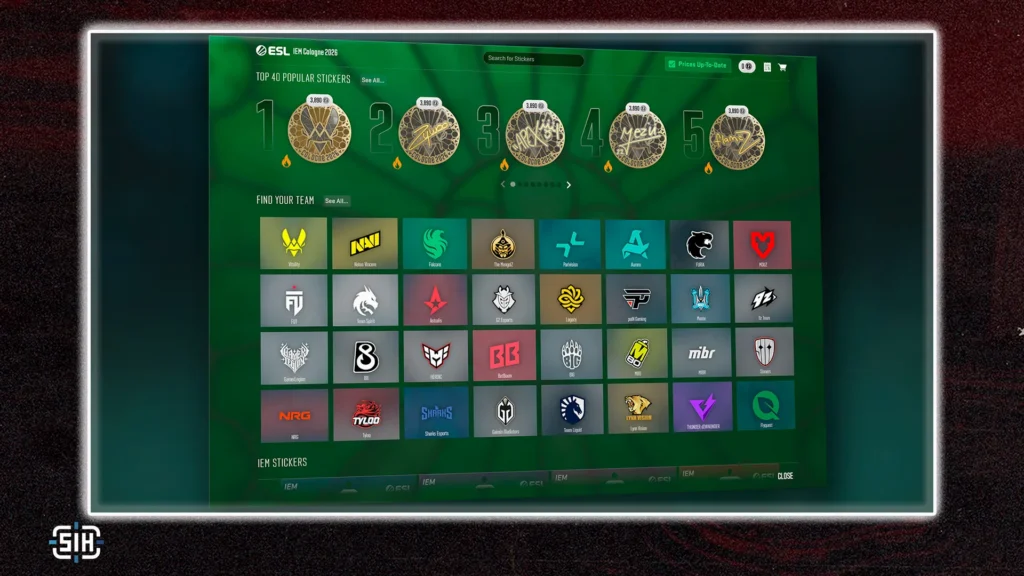
The Major Shop that replaced capsules in Cologne didn’t exactly cover itself in glory. Prices for top autographs shot past $1,000, plenty of ordinary buyers walked away, and teams earned almost ten times less than at the previous Major: according to HLTV, around $60,000 for a Stage 1 team versus roughly $600,000 in Budapest. The usual post-tournament sale never happened either. Valve did partially acknowledge the problem, though: in late July it released the Ranked Series with fixed prices and openly stated that the dynamic model “didn’t produce reasonable prices.” That’s exactly what gives us hope the system will be reworked before Singapore. We covered how the Major Shop works and what the Ranked Series changed in separate articles.
Why Valve Can't Just Hit "Undo"
The obvious question: if it went this badly, why not just bring capsules back? The answer is in Valve’s own official explanation. The company wrote that players supposedly prefer buying stickers directly, and that players in some regions can’t use capsules in their usual form at all. That second part is the key.
More and more countries are treating loot boxes as gambling, and Valve has been steadily moving away from classic loot boxes: the Sealed Terminal offers you a specific item at a set price instead of spinning a roulette, and rare cases have disappeared from the weekly drop. Against that backdrop, dropping capsules at the Major looks less like a developer whim and more like part of a long-term strategy.
There’s a glaring hole in that theory, though. On July 3 — less than two weeks after the Cologne grand final — Valve released the Jackass Sticker Capsule. A regular capsule with a random sticker inside. The Armory Pass hasn’t gone anywhere either, and its stars still get traded in for a random item from a collection. So Valve hasn’t abandoned randomness altogether — it only removed it from the one part of the economy where the biggest money and the closest regulatory attention happen to overlap. That matters for any prediction: bringing capsules back is technically possible. The question is whether Valve wants to take the risk.
What People Are Saying Ahead of Singapore
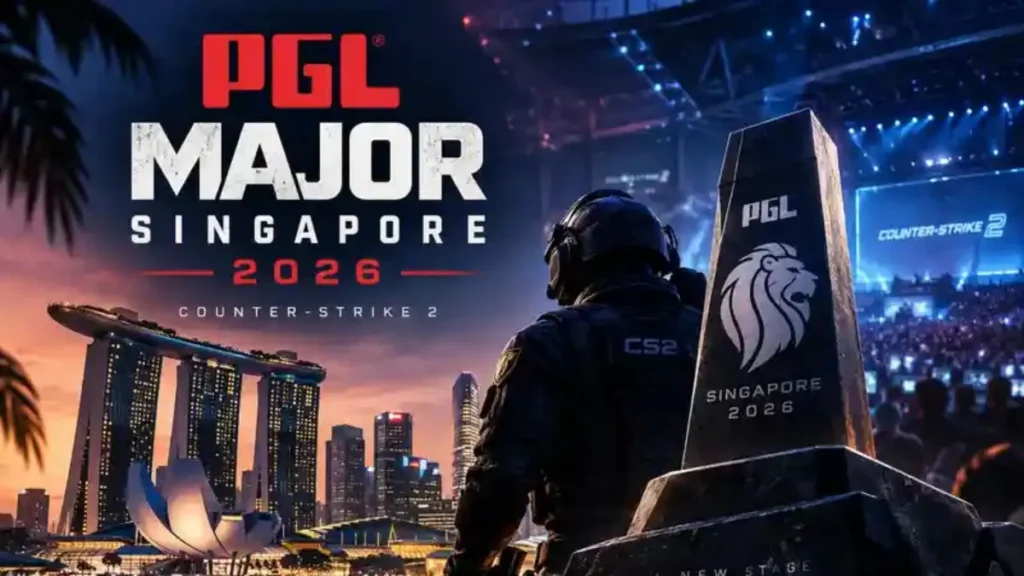
The loudest statement came from the tournament organizers. The head of FiReSPORTS, which will run the first Major of 2027 in Buenos Aires, is confident the system will be fixed in time for Singapore. According to him, PGL’s leadership has a good relationship with Valve, and together they’ll be able to improve things. It’s easy to see where organizers are coming from: they get a cut of sales too, so a failing shop hits their wallets directly.
Teams, meanwhile, are hedging their bets. Some organizations are already signing player contracts that cover both outcomes: the shop staying, and capsules coming back. In other words, nobody in the industry is convinced the Cologne system is here to stay.
The community feels the same way. Social media is full of calls to bring capsules back, or else only the richest organizations will survive. One of the most popular ideas on HLTV is to keep the shop but make prices fixed and tied to a team’s result. Other suggestions include selling stickers through terminals, the way skins are sold in the Sealed Terminal, or bringing capsules back only in countries where they’re legal.
Six Scenarios: What Valve Might Do
Scenario 1. Capsules Come Back in Full
- Our take: unlikely
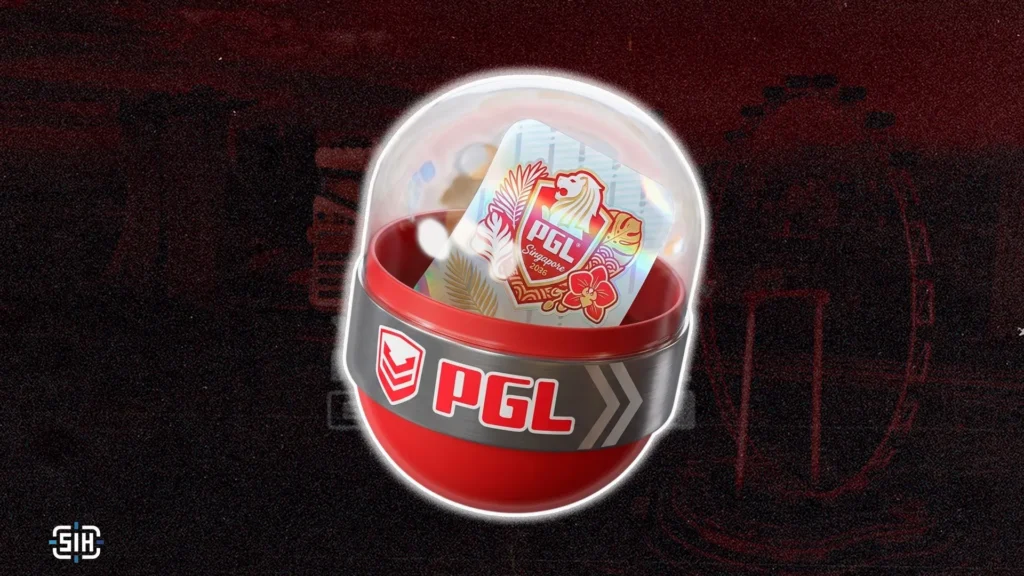
The simplest option, and the one the community wants most: Legends, Challengers and Contenders capsules back on sale for a dollar apiece, with the Major Shop vanishing as abruptly as it appeared.
There’s no shortage of arguments in favor. Capsules pulled both levers at once: the thrill of the gamble had people opening them by the dozen, while investors bought them in bulk, counting on prices rising once sales closed. Less popular teams got paid simply because their autographs sat in the same capsule as donk’s. And according to HLTV’s assessment, Valve’s own revenue took a hit too — arguably the strongest incentive of all to change something.
The case against is everything we described above. Valve publicly justified scrapping capsules with regional restrictions, and the loot box lawsuits haven’t gone away. A full rollback would mean admitting the entire May reform was a mistake, and Valve very rarely does that. Even the Ranked Series didn’t replace the old system — it was layered on top of it.
Scenario 2. A Hybrid: Team Logos in Capsules, Autographs in the Shop
- Our take: low, but not zero
A middle-ground option: team stickers return to capsules, while autographs stay in the Major Shop at dynamic or some other pricing.
It’s a compromise, but there’s logic to it. The thrill doesn’t go anywhere: you still have a shot at pulling a Gold sticker of your favorite team, which means capsules get opened by the handful again and some of that money flows back into the shared pool. Autographs stay in the shop. It’s not a full return to the old model, but it’s clearly better than nothing. The main obstacle is legal: a capsule full of logos is still a capsule, and in some regions that remains a sore subject. The most realistic form of this scenario is a regional hybrid — capsules where they can be sold, the shop where they can’t.
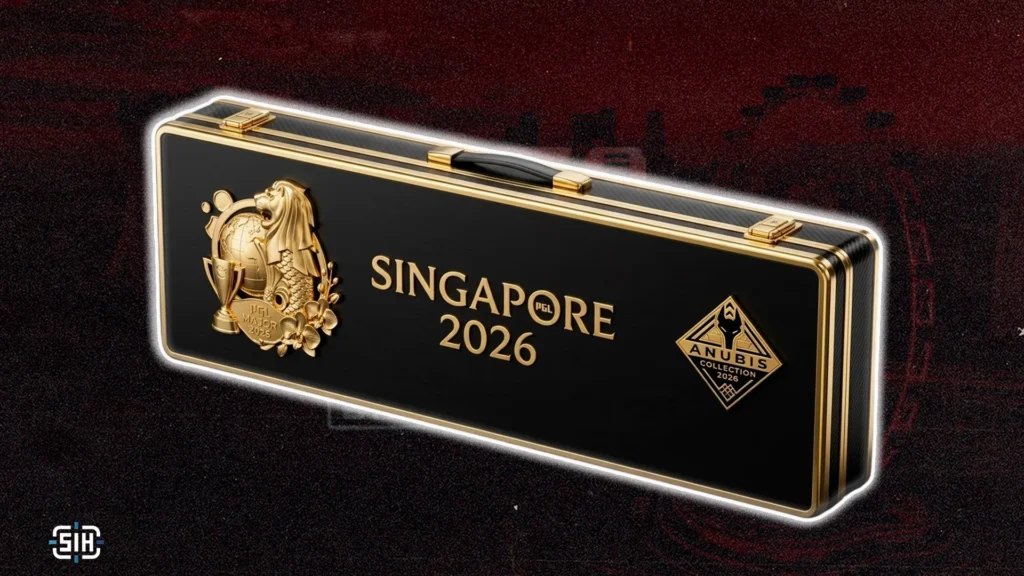
Scenario 3. Souvenir Packages Return
- Our take: medium
The Souvenir-O-Matic that replaced souvenir packages looks great on paper: pick a weapon, a match and a player, and you get exactly what you wanted. In practice, a souvenir with a top player’s autograph cost far too much, and most people simply didn’t bother.
So we think packages could come back — paid for with tokens, say, or with souvenir tokens like before. We’re also hoping they’d contain one random autograph from the ten players in that match. Once again, that would bring the thrill back: you might pull a donk signature, or you might pull a relative unknown.
Scenario 4. The Armory Pass Model
- Our take: medium
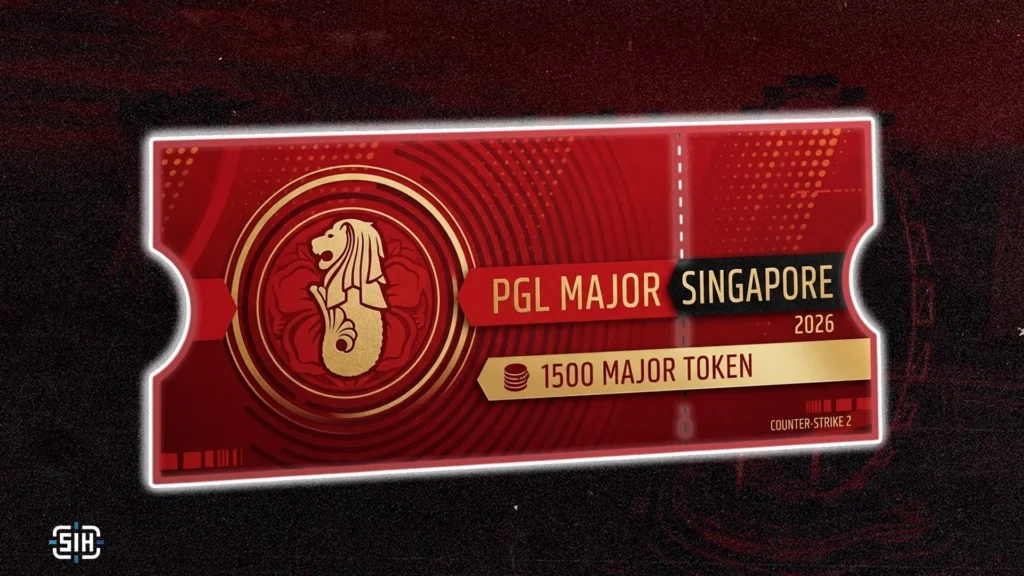
Valve already has a ready-made system it could port over to the Major: the Armory Pass.
Tokens in bundles. Tokens are sold only in large packs — 1,500 for $15, say, like the Armory Pass at $15.99. Once a player has bought the sticker they came for, they’re left with spare tokens and will spend them on something cheaper, including stickers of less popular teams. The downside: not everyone is willing to put down $15 up front, and it only works with fixed prices.
Random stickers by stage. Just like the Armory: you spend a fixed number of tokens per open and get a random sticker. Stage 1 teams drop most often, Stage 3 teams least often. It’s essentially the old capsules in new packaging: randomness and excitement are back, which is precisely what Cologne was missing.
Scenario 5. Sticker Terminals
- Our take: medium
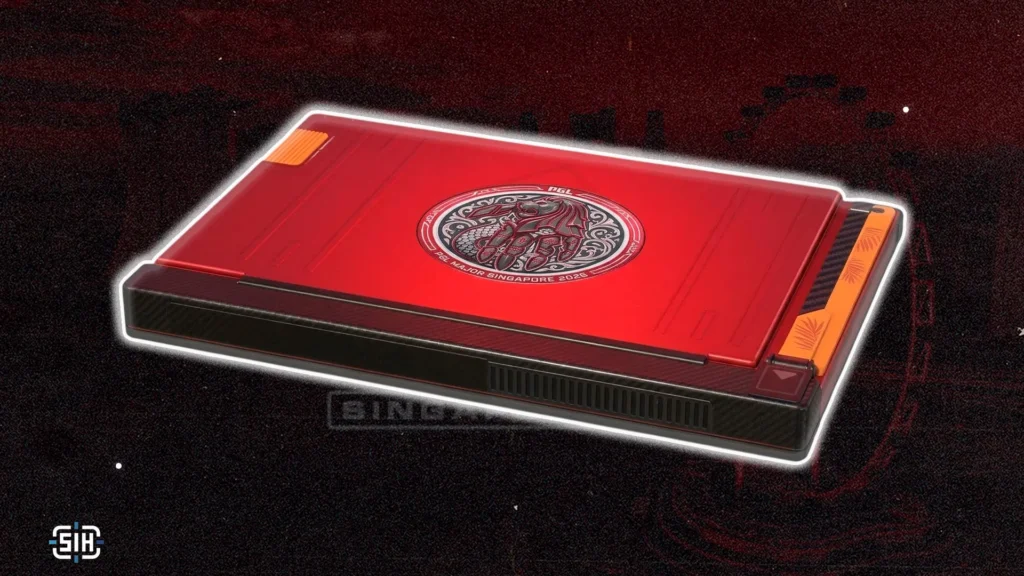
Valve already sells skins through the Sealed Terminal: you open one and get an offer to buy a specific item at a set price. The same mechanic could be applied to Major stickers. The excitement stays, because you never know whose autograph the terminal will offer you. But technically it’s no longer a loot box: whether to buy is up to you. The mechanic is already battle-tested, so Valve could roll it out quickly.
Scenario 6. Ranked Series From Day One
- Our take: below average
The shop stays, but prices are fixed from the start, as in the Ranked Series, with the most expensive stickers costing tens of dollars rather than thousands. For Valve it’s the path of least resistance: the system already exists, and there’s no randomness involved. The average player can once again pick up a sticker of their favorite team for $5–10. A post-tournament sale could be thrown in on top.
The downside is that the Major Shop’s problems don’t go away — only the barrier to entry gets lower. More stickers would be sold, but whether that actually increases what teams earn is far from certain.
Our Prediction
We’re betting that randomness comes back, just not in the form of classic capsules. Cologne proved that stickers barely sell without the thrill. A full return to capsules is something Valve is unlikely to dare. So the most probable outcome, in our view, is a compromise: bringing randomness back through mechanics that already exist — the Armory Pass, terminals, souvenir packages with a random autograph — or surprising everyone with something new.
Valve’s biggest headache right now is restoring both the excitement and the profit for everyone at once: players, teams, organizers and itself. And doing it in a new way, rather than simply rolling everything back and admitting the reform was a mistake. The one thing working in everyone’s favor is that Valve also came out of Cologne in the red, and its motivation to fix this is every bit as strong as everyone else’s.

Alex
Alex is an author and esports observer with more than seven years of experience. He specializes in analyzing new releases in the world of computer games, gaming services, and in-game economies. Alex shares practical experience and an expert perspective on the development of gaming, helping readers understand complex mechanics and stay up to date with the latest news.

