Valve Just Wiped Out Another Round of CS2 Farms. What It Means for the Skin Market
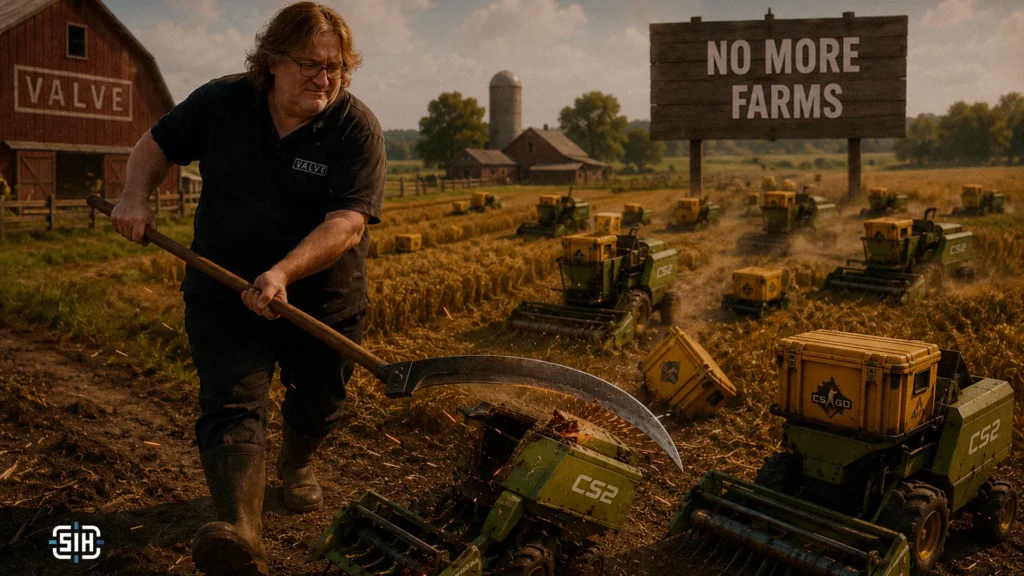
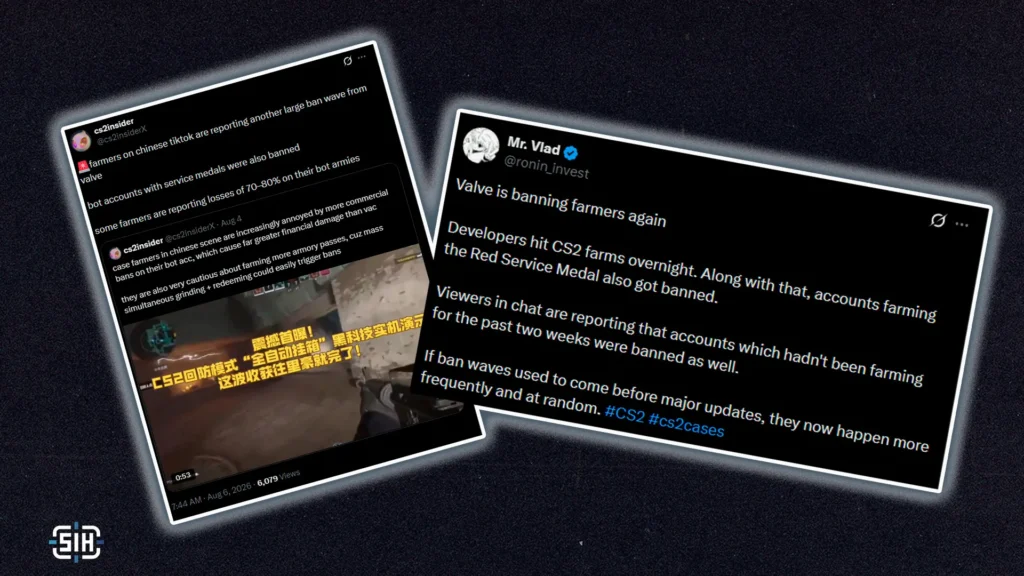
No press release. No developer post. Not a line in the patch notes. But on the night of August 6, panic broke out across Chinese farming chats and X filled up with screenshots of dead accounts. That’s what a CS2 ban wave usually looks like: Valve says nothing, and the scale has to be reconstructed from other people’s complaints and third-party tracker counts.
It was a big one. The size isn’t the interesting part, though. Valve has been hitting farms for months now, at a frequency that farm operators cannot be enjoying. It looks like the company has finally found a way to catch them cheaply and confidently, and is now running that method on repeat. That, rather than the size of any single sweep, is what will eventually move prices.
Who actually got hit
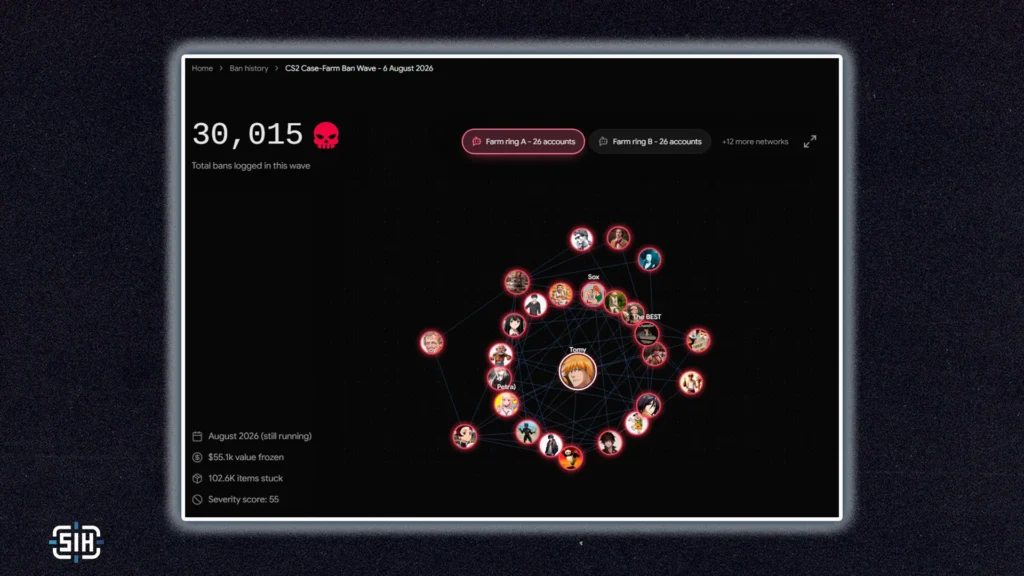
The wave came in two bursts, one overnight and one the following morning. The first count put it at 14,200 banned accounts; by the next day the tally had climbed to 21,521, and the latest version of the report has it past 26,000. The number keeps growing not because bans are still landing, but because tracker indexes are catching up with profiles they hadn’t re-checked in a while. Normal background activity for this kind of account sits at roughly 700 game bans a day, so August 6 came in at twenty times the usual rate.
The type of ban matters more than the count. Across a sample of 21,000-plus accounts there was exactly one VAC ban. Everything else was a game ban. VAC fires when the anti-cheat finds cheat software on the machine running the game. A game ban is issued by the developer for other violations, farming included. A cheating wave looks like a sea of VAC bans. This one looks nothing like that.
Nobody’s aimbot got caught on August 6. Farms did. And alongside the game bans came roughly 1,650 community bans and three dozen economy restrictions: Valve is going after the accounts that generate drops and the plumbing that turns those drops into cash.
Where the drops went, and what's frozen now
Of the nearly 21,500 inventories scanned, 19,962 were worth less than a dollar and half of them were completely empty. That doesn’t mean Valve banned junk. Disposable shells hold nothing by design, and everything they harvest gets funnelled into a handful of storage accounts. That’s where the money was: 78 accounts worth more than $100, the fattest of them sitting at $5,618.
In total, somewhere between $38,000 and $55,000 was frozen depending on how deep the scan went. The headline items are a Sport Gloves | Hedge Maze at $3,600, a Factory New Butterfly Knife | Gamma Doppler, an M4A1-S | Party Animal and a Souvenir AWP | Desert Hydra.
Frozen is the operative word. A ban doesn’t delete items, it trade-locks the inventory: the skins stay on the account and never move again. There’s no appeals process either, since a game ban only comes off if the system itself admits it made a mistake. That supply isn’t hitting the market tomorrow or a year from now. It’s out of circulation for good.
And these weren’t lone wolves running a couple of spare accounts on the side. Five thousand accounts from this wave were traced back to eleven specific owners, because accounts belonging to the same operator look like siblings: created on the same day, named by the same nickname generator, decorated identically. Nine of them carried the name of a Chinese studio, 启程网络, which advertises its services openly on Douyin. Farming in CS2 stopped being an underground hobby a long time ago. It’s an industry with brands and repeat customers.
Why Wingman keeps getting hit while Deathmatch sits untouched
Every summer wave landed on the 2v2 mode, and that’s no accident. Wingman has four slots, short matches and a small map pool, so a farm fills an entire lobby with its own accounts and never runs into a real person. Perfect conditions for a conveyor belt, and a perfect fingerprint at the same time: the same small clusters of accounts playing each other forever. In Deathmatch a bot sits mixed in with live players, where telling it apart from someone AFK is far harder, and the cost of getting it wrong is a wave of false bans on ordinary players.
Hence the community’s entirely fair complaint: Valve is scrubbing the room nobody walks into while the room everyone uses stays exactly as bad. But the company doesn’t set priorities by how annoyed players are. It sets them by what can be detected reliably and what damages the economy. Wingman ticks both boxes. Farming there is easy to spot, and the output is cases and skins, which lands squarely where Valve’s money sits.
Farms have relocated once already. They started in Deathmatch until Valve cut XP gains there; operators then spun up private lobbies with bots on both sides, and from there moved into Wingman. The chase reads like this: February brought more than 42,000 bans across two days, March 26 saw roughly 960,000 accounts in a single day (the only wave CS2 developer Ido Magal publicly confirmed), June 19 delivered over 52,000 in the middle of the Cologne Major, July 25-26 added 38,820. Then August.
The gap between waves has shrunk from months to weeks. That’s the real story here.
What this means for the market
First and most obvious: there will be less supply. Banned farms won’t be delivering drops next week, and everything they had stockpiled is frozen permanently. Don’t expect a wave this size to 10x anything, but the downward pressure on prices eases slightly.
The second point is more interesting. Farming is expensive. Getting weekly drops on an account means buying Prime for it, then grinding for months before the output stabilises. A ban burns the money and the time in one go. One operator wrote that he went from 250-plus accounts down to about ten, and farming chats are full of complaints about losing 70-80% of their fleets.
From there it’s simple arithmetic. If a farm gets caught once every six months, selling its drops covers the cost of replacing the accounts and it carries on. If it gets wiped every month, it runs at a loss and shuts down. Valve doesn’t have to catch everyone. It only has to catch them often enough that farming stops paying.
There’s a bonus in this for anyone watching the Armory. The banned accounts were grinding the pass, so every farm taken out means stars and openings that will now never exist. Arabesque and Spy Tech, which we covered recently, launched with record-low returns precisely because stockpiled stars poured into items all at once. Regular farm bans go some way toward treating that problem.
One last thing. Valve has been steadily taking control of how items enter circulation: pulling randomness out of its storefronts, moving purchases onto in-game currencies, clearing out anyone printing skins outside its economy. Dropping capsules in favour of the Major Shop and hunting farms look like two halves of the same project.
What spoils the picture
Valve’s silence isn’t a footnote. When we broke down the rebuilt Major economy, we flagged opacity as the company’s signature problem: it sets the rules, controls supply and keeps the data to itself. Same story here, except instead of sticker prices it’s the fate of tens of thousands of accounts.
Which brings us to the quality of the numbers. Private indexes compile them from public Steam data. The work is honest, but it’s a sample: for July 25 a public tracker counted 3,854 bans while an expanded index logged 21,042 for the same day. Treat headlines about “X thousand bans” accordingly.
And the big one: farms come back. Operators buy fresh accounts, tweak the software around the new detection, and a couple of weeks later the whole thing is spinning again.
What to watch next
The next sweep should logically land around an Armory Pass update or the start of a new Premier season. Valve traditionally tidies up ahead of those, and the June wave in the middle of the Major backs that up.
Your own inventory is fine. This wave hit automated fleets, not people who play a lot. If you’ve been buying cheap drops in bulk from sketchy sellers, bear in mind that economy restrictions were handed out here too, though a regular trader with a couple of purchases has nothing to worry about.
There is one signal worth keeping an eye on. If the next wave lands in Deathmatch for the first time, it means Valve has learned to separate bots from live players where it previously wouldn’t risk it. That would be a genuine turning point, as opposed to carefully weeding one flowerbed.

Alex
Alex is an author and esports observer with more than seven years of experience. He specializes in analyzing new releases in the world of computer games, gaming services, and in-game economies. Alex shares practical experience and an expert perspective on the development of gaming, helping readers understand complex mechanics and stay up to date with the latest news.

